
US Senate Approves $9 Billion Cuts to Foreign Aid and Public Broadcasting
In This Article
HIGHLIGHTS
- The US Senate passed a bill cutting $9 billion from foreign aid and public broadcasting, with a narrow 51-48 vote.
- The rescissions package, part of Trump's fiscal policy, aims to reduce government spending and now returns to the House for final approval.
- Amendments preserved $400 million for Pepfar, a global HIV/AIDS program, while other international aid cuts remain.
- The bill proposes $1.1 billion cuts to the Corporation for Public Broadcasting, affecting NPR and PBS.
- The House must approve the bill by Friday, or the Trump administration will be required to spend the funds.
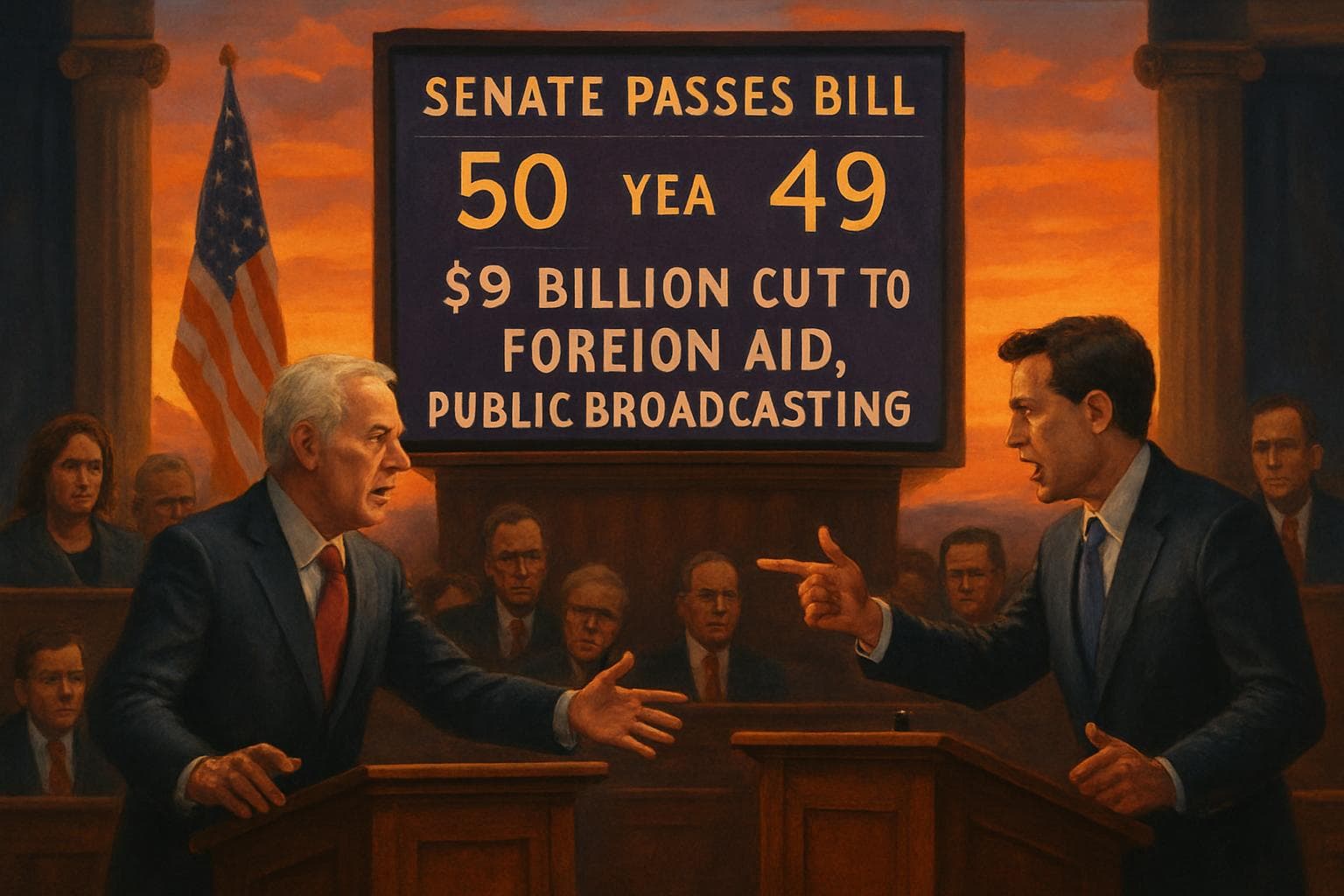
In a significant move to reshape federal spending, the US Senate has narrowly passed a bill to cut $9 billion from previously approved funds for foreign aid and public broadcasting. The vote, which took place early Thursday morning, ended with a 51-48 margin, reflecting deep partisan divides. This legislation, known as a rescissions package, is a key component of President Donald Trump's broader agenda to reduce government expenditure.
Senate's Narrow Approval
The Senate's decision followed an intense overnight session, often referred to as a "vote-a-rama," where amendments were hotly debated. The bill, which had already passed the House of Representatives in a slightly different form, now returns there for final approval. Senate Majority Leader John Thune described the package as a "small but important step toward fiscal sanity," emphasizing the need to address what he termed "waste, fraud, and abuse" in government spending.
Key Amendments and Controversies
A notable amendment preserved $400 million for Pepfar, a US-backed HIV/AIDS program credited with saving millions of lives. This concession was crucial in securing enough Republican support to pass the bill. However, the legislation still proposes significant cuts, including $8 billion from various international aid programs and $1.1 billion from the Corporation for Public Broadcasting, which funds NPR and PBS.
Opposition and Implications
The cuts have sparked considerable opposition, particularly from Democrats and some Republicans. Senator Lisa Murkowski of Alaska, one of two Republicans who voted against the bill, criticized the reductions in public broadcasting funding, highlighting its importance for rural communities. NPR President Katherine Maher echoed these concerns, stressing the potential risks to public safety and community well-being.
Next Steps for the Legislation
The bill now faces a critical deadline. The House must approve the Senate's version by Friday, or the Trump administration will be obligated to spend the funds as originally intended. House Speaker Mike Johnson has urged his colleagues to pass the bill without alterations, emphasizing the urgency of the fiscal policy changes.
WHAT THIS MIGHT MEAN
If the House approves the rescissions package, it will mark a significant victory for the Trump administration's fiscal policy, setting a precedent for future government spending cuts. However, the decision could also lead to increased political tensions, particularly with Democrats who argue that such cuts undermine essential programs and services. Experts suggest that the passage of this bill may embolden further attempts to reduce federal spending, potentially impacting future budgets and international aid commitments. As the deadline approaches, all eyes will be on the House to see if it aligns with the Senate's decision or opts for a different path.
Related Articles
Senate Blocks Resolution to Limit Trump's Military Actions in Iran
Senate Stalemate Over DHS Funding Amid Immigration Reform Dispute
Key Suspect in 2012 Benghazi Attack Taken into US Custody
Trump Signs $1.2 Trillion Budget, Ending Partial Government Shutdown
US Government Shutdown Standoff Delays Key Jobs Report
US Government Faces Partial Shutdown Amid DHS Funding Dispute
US Senate Approves $9 Billion Cuts to Foreign Aid and Public Broadcasting
In This Article
 Ethan Brooks| Published
 HIGHLIGHTS
- The US Senate passed a bill cutting $9 billion from foreign aid and public broadcasting, with a narrow 51-48 vote.
- The rescissions package, part of Trump's fiscal policy, aims to reduce government spending and now returns to the House for final approval.
- Amendments preserved $400 million for Pepfar, a global HIV/AIDS program, while other international aid cuts remain.
- The bill proposes $1.1 billion cuts to the Corporation for Public Broadcasting, affecting NPR and PBS.
- The House must approve the bill by Friday, or the Trump administration will be required to spend the funds.
In a significant move to reshape federal spending, the US Senate has narrowly passed a bill to cut $9 billion from previously approved funds for foreign aid and public broadcasting. The vote, which took place early Thursday morning, ended with a 51-48 margin, reflecting deep partisan divides. This legislation, known as a rescissions package, is a key component of President Donald Trump's broader agenda to reduce government expenditure.
Senate's Narrow Approval
The Senate's decision followed an intense overnight session, often referred to as a "vote-a-rama," where amendments were hotly debated. The bill, which had already passed the House of Representatives in a slightly different form, now returns there for final approval. Senate Majority Leader John Thune described the package as a "small but important step toward fiscal sanity," emphasizing the need to address what he termed "waste, fraud, and abuse" in government spending.
Key Amendments and Controversies
A notable amendment preserved $400 million for Pepfar, a US-backed HIV/AIDS program credited with saving millions of lives. This concession was crucial in securing enough Republican support to pass the bill. However, the legislation still proposes significant cuts, including $8 billion from various international aid programs and $1.1 billion from the Corporation for Public Broadcasting, which funds NPR and PBS.
Opposition and Implications
The cuts have sparked considerable opposition, particularly from Democrats and some Republicans. Senator Lisa Murkowski of Alaska, one of two Republicans who voted against the bill, criticized the reductions in public broadcasting funding, highlighting its importance for rural communities. NPR President Katherine Maher echoed these concerns, stressing the potential risks to public safety and community well-being.
Next Steps for the Legislation
The bill now faces a critical deadline. The House must approve the Senate's version by Friday, or the Trump administration will be obligated to spend the funds as originally intended. House Speaker Mike Johnson has urged his colleagues to pass the bill without alterations, emphasizing the urgency of the fiscal policy changes.
WHAT THIS MIGHT MEAN
If the House approves the rescissions package, it will mark a significant victory for the Trump administration's fiscal policy, setting a precedent for future government spending cuts. However, the decision could also lead to increased political tensions, particularly with Democrats who argue that such cuts undermine essential programs and services. Experts suggest that the passage of this bill may embolden further attempts to reduce federal spending, potentially impacting future budgets and international aid commitments. As the deadline approaches, all eyes will be on the House to see if it aligns with the Senate's decision or opts for a different path.
Related Articles
Senate Blocks Resolution to Limit Trump's Military Actions in Iran
Senate Stalemate Over DHS Funding Amid Immigration Reform Dispute
Key Suspect in 2012 Benghazi Attack Taken into US Custody
Trump Signs $1.2 Trillion Budget, Ending Partial Government Shutdown
US Government Shutdown Standoff Delays Key Jobs Report
US Government Faces Partial Shutdown Amid DHS Funding Dispute