
Trump Signs $1.2 Trillion Budget, Ending Partial Government Shutdown
In This Article
HIGHLIGHTS
- President Trump signed a $1.2 trillion budget to end the partial government shutdown, which began last Saturday.
- The budget funds most government agencies through September, but DHS funding is only secured until February 13.
- Democrats demand reforms to DHS, particularly ICE, following the fatal shootings of two US citizens by federal agents.
- Lawmakers face a tight deadline to negotiate DHS funding, with disagreements persisting within and between parties.
- The shutdown affected numerous government services, including delaying the Bureau of Labor Statistics' monthly jobs report.
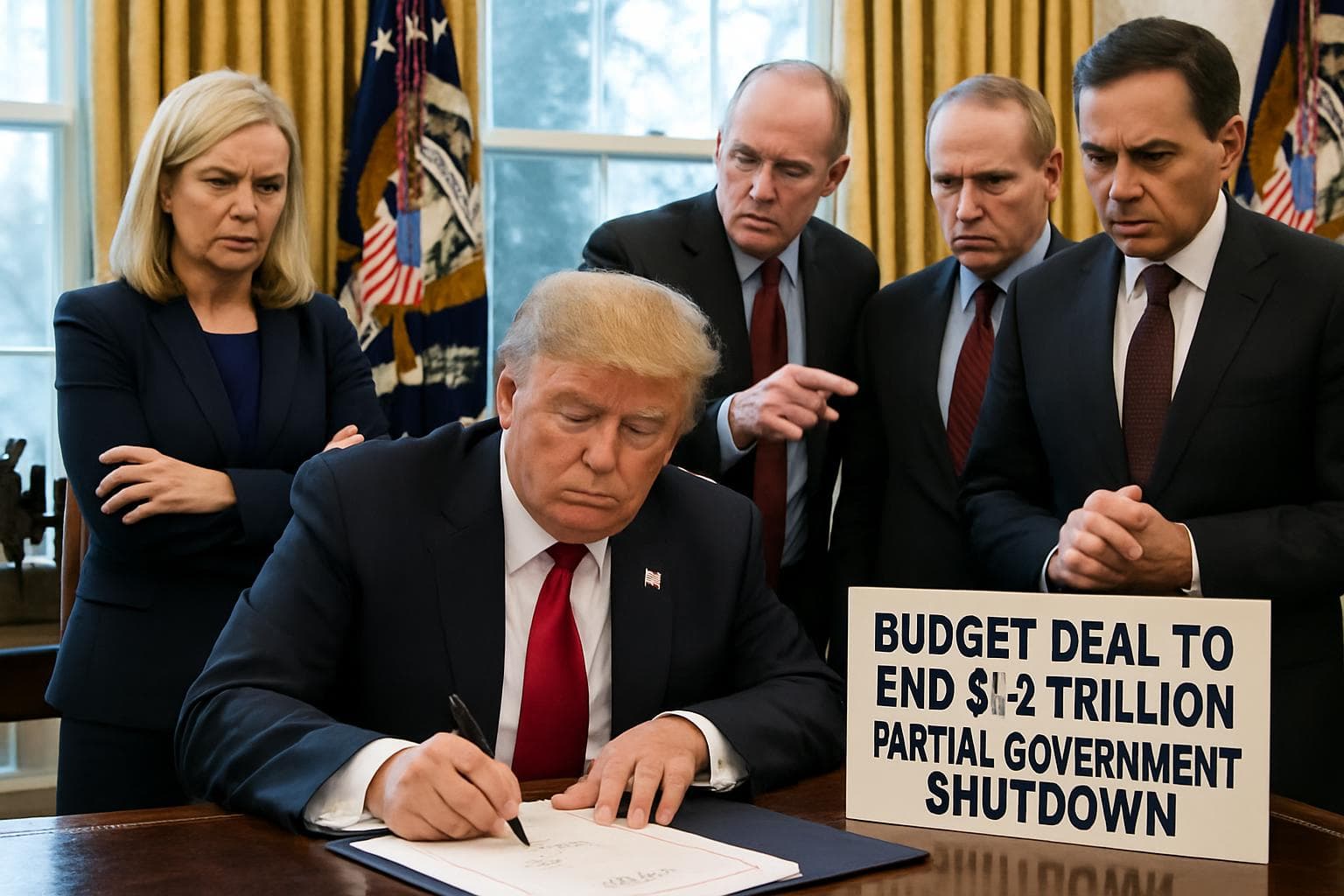
President Donald Trump has signed a $1.2 trillion budget deal, effectively ending a partial government shutdown that began last Saturday. The agreement, passed by the House of Representatives in a narrow 217-214 vote, funds most government agencies until the end of the fiscal year in September. However, funding for the Department of Homeland Security (DHS) is only secured until February 13, setting the stage for further negotiations.
DHS Funding and ICE Reforms at the Forefront
The temporary funding for DHS has become a contentious issue, with Democrats demanding significant reforms to immigration enforcement operations, particularly those conducted by Immigration and Customs Enforcement (ICE). These demands follow the fatal shootings of US citizens Alex Pretti and Renee Good by federal agents in Minneapolis. Democrats are advocating for the implementation of body cameras for agents and the cessation of mask-wearing during operations.
Senate Minority Leader Chuck Schumer emphasized the need for these "commonsense" reforms, while Democratic House Minority Leader Hakeem Jeffries highlighted the necessity of accountability and an end to what he described as "lawless, paramilitary tactics" by ICE.
Challenges Ahead for Lawmakers
The agreement to fund DHS for only two weeks has left lawmakers with a tight deadline to negotiate a long-term solution. Senate Majority Leader John Thune expressed concerns over the short timeframe, noting the difficulty in reaching a consensus given the divergent views within the Republican conference.
The shutdown had significant impacts, affecting various government services and delaying the Bureau of Labor Statistics' monthly jobs report, a critical economic indicator.
WHAT THIS MIGHT MEAN
As the February 13 deadline approaches, lawmakers face the challenge of reaching a bipartisan agreement on DHS funding and immigration enforcement reforms. The Democrats' demands for changes in ICE operations could lead to a protracted negotiation process, potentially risking another shutdown if a consensus is not reached. The Trump administration's recent steps, such as mandating body cameras for federal agents in Minneapolis, may not suffice to meet Democratic demands for nationwide reforms. The outcome of these negotiations could significantly impact the future of US immigration policy and the operational protocols of federal law enforcement agencies.
Related Articles
Senate Blocks Resolution to Limit Trump's Military Actions in Iran

Spain's Sánchez Stands Firm Against Trump's Trade Threat Over Iran Stance

Trump's New Tariff Strategy Sparks Global Trade Uncertainty

US-Iran Tensions Escalate Amid Renewed Nuclear Talks and Protests

Greenland Politely Declines Trump's Hospital Ship Offer Amid Healthcare Debate
Congress Subpoenas Attorney General Bondi in Epstein Investigation
Trump Signs $1.2 Trillion Budget, Ending Partial Government Shutdown
In This Article
 Ethan Brooks| Published
 HIGHLIGHTS
- President Trump signed a $1.2 trillion budget to end the partial government shutdown, which began last Saturday.
- The budget funds most government agencies through September, but DHS funding is only secured until February 13.
- Democrats demand reforms to DHS, particularly ICE, following the fatal shootings of two US citizens by federal agents.
- Lawmakers face a tight deadline to negotiate DHS funding, with disagreements persisting within and between parties.
- The shutdown affected numerous government services, including delaying the Bureau of Labor Statistics' monthly jobs report.
President Donald Trump has signed a $1.2 trillion budget deal, effectively ending a partial government shutdown that began last Saturday. The agreement, passed by the House of Representatives in a narrow 217-214 vote, funds most government agencies until the end of the fiscal year in September. However, funding for the Department of Homeland Security (DHS) is only secured until February 13, setting the stage for further negotiations.
DHS Funding and ICE Reforms at the Forefront
The temporary funding for DHS has become a contentious issue, with Democrats demanding significant reforms to immigration enforcement operations, particularly those conducted by Immigration and Customs Enforcement (ICE). These demands follow the fatal shootings of US citizens Alex Pretti and Renee Good by federal agents in Minneapolis. Democrats are advocating for the implementation of body cameras for agents and the cessation of mask-wearing during operations.
Senate Minority Leader Chuck Schumer emphasized the need for these "commonsense" reforms, while Democratic House Minority Leader Hakeem Jeffries highlighted the necessity of accountability and an end to what he described as "lawless, paramilitary tactics" by ICE.
Challenges Ahead for Lawmakers
The agreement to fund DHS for only two weeks has left lawmakers with a tight deadline to negotiate a long-term solution. Senate Majority Leader John Thune expressed concerns over the short timeframe, noting the difficulty in reaching a consensus given the divergent views within the Republican conference.
The shutdown had significant impacts, affecting various government services and delaying the Bureau of Labor Statistics' monthly jobs report, a critical economic indicator.
WHAT THIS MIGHT MEAN
As the February 13 deadline approaches, lawmakers face the challenge of reaching a bipartisan agreement on DHS funding and immigration enforcement reforms. The Democrats' demands for changes in ICE operations could lead to a protracted negotiation process, potentially risking another shutdown if a consensus is not reached. The Trump administration's recent steps, such as mandating body cameras for federal agents in Minneapolis, may not suffice to meet Democratic demands for nationwide reforms. The outcome of these negotiations could significantly impact the future of US immigration policy and the operational protocols of federal law enforcement agencies.
Related Articles
Senate Blocks Resolution to Limit Trump's Military Actions in Iran
Spain's Sánchez Stands Firm Against Trump's Trade Threat Over Iran Stance
Trump's New Tariff Strategy Sparks Global Trade Uncertainty
US-Iran Tensions Escalate Amid Renewed Nuclear Talks and Protests
Greenland Politely Declines Trump's Hospital Ship Offer Amid Healthcare Debate
Congress Subpoenas Attorney General Bondi in Epstein Investigation