
South Korean President Proposes Health Insurance Coverage for Hair Loss Treatments
In This Article
HIGHLIGHTS
- South Korean President Lee Jae Myung proposes expanding public health insurance to cover hair loss treatments, citing baldness as a "matter of survival."
- The proposal has sparked debate, with critics labeling it as populist and questioning its financial viability given the insurance scheme's existing deficit.
- South Korea's health insurance currently covers hair loss due to medical conditions but excludes hereditary baldness, which affects millions.
- The Korean Medical Association and conservative voices argue that funds should prioritize serious diseases over cosmetic issues.
- The proposal highlights South Korea's cultural emphasis on physical appearance and the stigma associated with baldness.
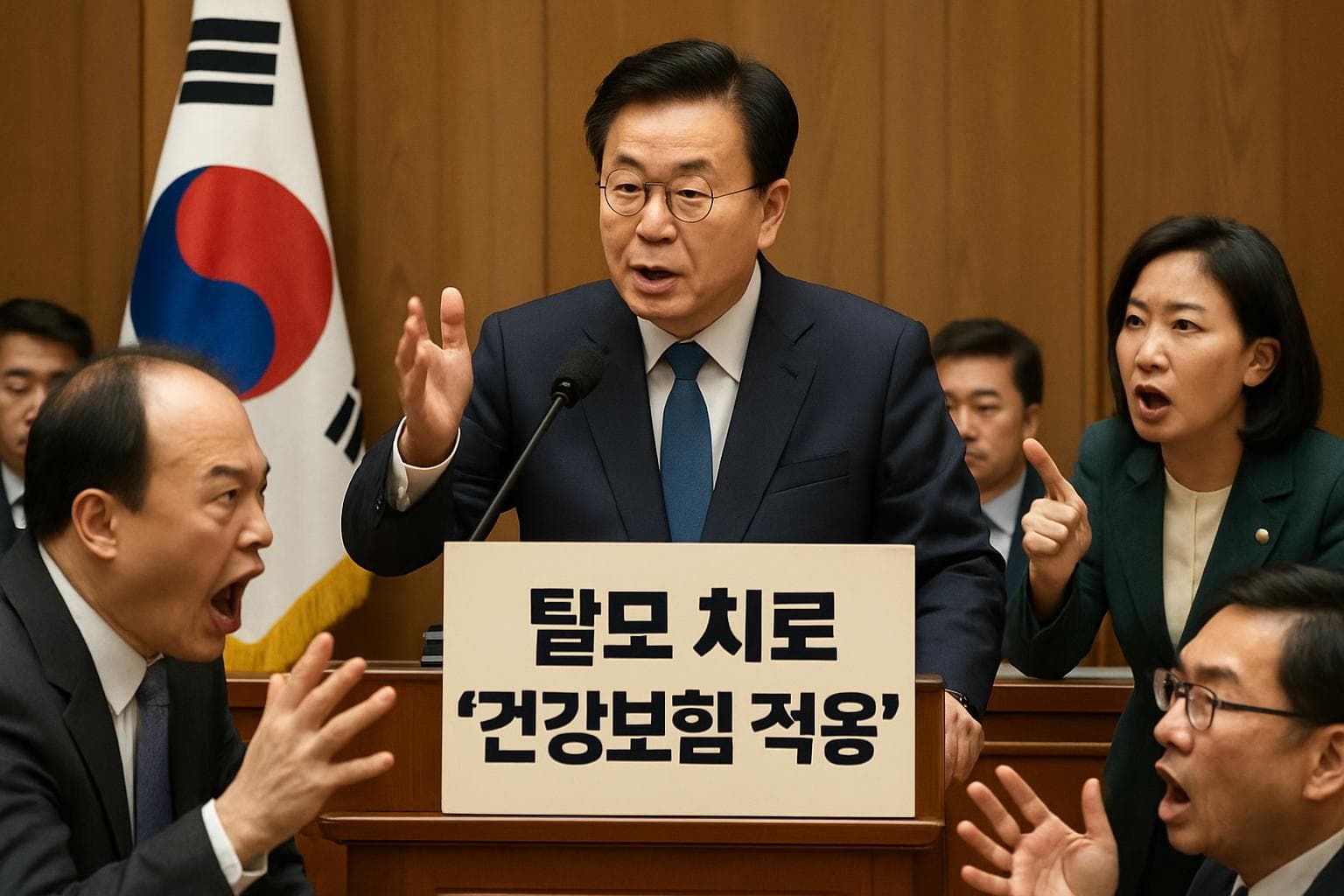
South Korean President Lee Jae Myung has ignited a national debate by proposing that the country's public health insurance scheme should cover hair loss treatments. This initiative, announced during a policy briefing, aims to address what Lee describes as a "matter of survival" for many young people facing baldness. The proposal seeks to extend coverage beyond the current limitations, which only include hair loss caused by medical conditions like alopecia areata.
Cultural and Economic Context
In South Korea, a nation known for its stringent beauty standards, baldness carries a significant stigma, particularly affecting young adults. According to government data, 40% of the 240,000 individuals who sought medical help for hair loss last year were in their 20s or 30s. The cultural pressure to maintain a certain appearance is immense, with a 2024 survey revealing that 98% of young adults believe attractive individuals receive social advantages.
Despite the cultural significance, the proposal has faced backlash from various quarters. Critics, including the Korean Medical Association, argue that health insurance funds should prioritize more severe health issues, such as cancer, over what they perceive as cosmetic concerns. The association emphasized that aligning insurance coverage with serious diseases would better reflect the principles of public health policy.
Financial Implications and Public Reaction
The financial strain on South Korea's universal insurance scheme, which recorded a deficit of 11.4 trillion won ($7.7 billion) last year, is a major concern. Health Minister Jeong Eun-kyeong expressed caution, noting that expanding coverage to include hair loss treatments would require a thorough financial analysis. Conservative media outlets have also criticized the proposal, suggesting it is a populist move lacking public consensus.
Public opinion is divided. While some social media users have praised President Lee as the "best president in history" for his empathetic approach, others, like Seoul resident Song Ji-hoon, view the proposal as unnecessary, given the relatively low annual cost of hair loss medication. The timing of the proposal is particularly sensitive, as projections indicate the insurance system could face deficits as large as 4.1 trillion won by 2026.
WHAT THIS MIGHT MEAN
The proposal's future remains uncertain, as it navigates the complex landscape of public opinion and financial feasibility. If implemented, it could set a precedent for redefining cosmetic issues as medical necessities within public health policy. However, the financial implications could exacerbate the existing deficit, prompting further debate on the sustainability of South Korea's health insurance system.
Experts suggest that a comprehensive analysis of the proposal's impact on both the insurance scheme and societal perceptions of baldness is crucial. As discussions continue, the outcome could influence broader conversations about the role of public health insurance in addressing cosmetic and psychological well-being.
Related Articles
K-pop Diplomacy: South Korea and Japan Leaders Drum Up Unity
Kim Jong Un's Daughter Poised as North Korea's Future Leader, South Korean Intelligence Suggests

Labour's Push for Closer EU Ties Sparks Debate
Sanae Takaichi's Snap Election Gamble: Will Japan's First Female Prime Minister Secure a Landslide Victory?

Gold and Silver Prices Plummet Amid Market Volatility

South Korea's Former First Lady Sentenced for Bribery Amid Political Turmoil
South Korean President Proposes Health Insurance Coverage for Hair Loss Treatments
In This Article
 Maya Singh| Published
 HIGHLIGHTS
- South Korean President Lee Jae Myung proposes expanding public health insurance to cover hair loss treatments, citing baldness as a "matter of survival."
- The proposal has sparked debate, with critics labeling it as populist and questioning its financial viability given the insurance scheme's existing deficit.
- South Korea's health insurance currently covers hair loss due to medical conditions but excludes hereditary baldness, which affects millions.
- The Korean Medical Association and conservative voices argue that funds should prioritize serious diseases over cosmetic issues.
- The proposal highlights South Korea's cultural emphasis on physical appearance and the stigma associated with baldness.
South Korean President Lee Jae Myung has ignited a national debate by proposing that the country's public health insurance scheme should cover hair loss treatments. This initiative, announced during a policy briefing, aims to address what Lee describes as a "matter of survival" for many young people facing baldness. The proposal seeks to extend coverage beyond the current limitations, which only include hair loss caused by medical conditions like alopecia areata.
Cultural and Economic Context
In South Korea, a nation known for its stringent beauty standards, baldness carries a significant stigma, particularly affecting young adults. According to government data, 40% of the 240,000 individuals who sought medical help for hair loss last year were in their 20s or 30s. The cultural pressure to maintain a certain appearance is immense, with a 2024 survey revealing that 98% of young adults believe attractive individuals receive social advantages.
Despite the cultural significance, the proposal has faced backlash from various quarters. Critics, including the Korean Medical Association, argue that health insurance funds should prioritize more severe health issues, such as cancer, over what they perceive as cosmetic concerns. The association emphasized that aligning insurance coverage with serious diseases would better reflect the principles of public health policy.
Financial Implications and Public Reaction
The financial strain on South Korea's universal insurance scheme, which recorded a deficit of 11.4 trillion won ($7.7 billion) last year, is a major concern. Health Minister Jeong Eun-kyeong expressed caution, noting that expanding coverage to include hair loss treatments would require a thorough financial analysis. Conservative media outlets have also criticized the proposal, suggesting it is a populist move lacking public consensus.
Public opinion is divided. While some social media users have praised President Lee as the "best president in history" for his empathetic approach, others, like Seoul resident Song Ji-hoon, view the proposal as unnecessary, given the relatively low annual cost of hair loss medication. The timing of the proposal is particularly sensitive, as projections indicate the insurance system could face deficits as large as 4.1 trillion won by 2026.
WHAT THIS MIGHT MEAN
The proposal's future remains uncertain, as it navigates the complex landscape of public opinion and financial feasibility. If implemented, it could set a precedent for redefining cosmetic issues as medical necessities within public health policy. However, the financial implications could exacerbate the existing deficit, prompting further debate on the sustainability of South Korea's health insurance system.
Experts suggest that a comprehensive analysis of the proposal's impact on both the insurance scheme and societal perceptions of baldness is crucial. As discussions continue, the outcome could influence broader conversations about the role of public health insurance in addressing cosmetic and psychological well-being.
Related Articles
K-pop Diplomacy: South Korea and Japan Leaders Drum Up Unity
Kim Jong Un's Daughter Poised as North Korea's Future Leader, South Korean Intelligence Suggests
Labour's Push for Closer EU Ties Sparks Debate
Sanae Takaichi's Snap Election Gamble: Will Japan's First Female Prime Minister Secure a Landslide Victory?
Gold and Silver Prices Plummet Amid Market Volatility
South Korea's Former First Lady Sentenced for Bribery Amid Political Turmoil