
Sanae Takaichi's Snap Election Gamble: Will Japan's First Female Prime Minister Secure a Landslide Victory?
In This Article
HIGHLIGHTS
- Japan's first female prime minister, Sanae Takaichi, is leading the Liberal Democratic Party (LDP) into a snap election, hoping to secure a decisive victory.
- Takaichi's approval ratings are notably high, with polls suggesting she could lead the LDP to a two-thirds majority in the lower house.
- Her leadership style, characterized by high-profile international engagements and a strong social media presence, has resonated with both conservative and younger voters.
- Despite controversies, including ties to the Unification Church and contentious policies, Takaichi's popularity remains strong, bolstered by endorsements from figures like Donald Trump.
- The election outcome could significantly impact Japan's political landscape, particularly concerning constitutional revisions and traditional values.
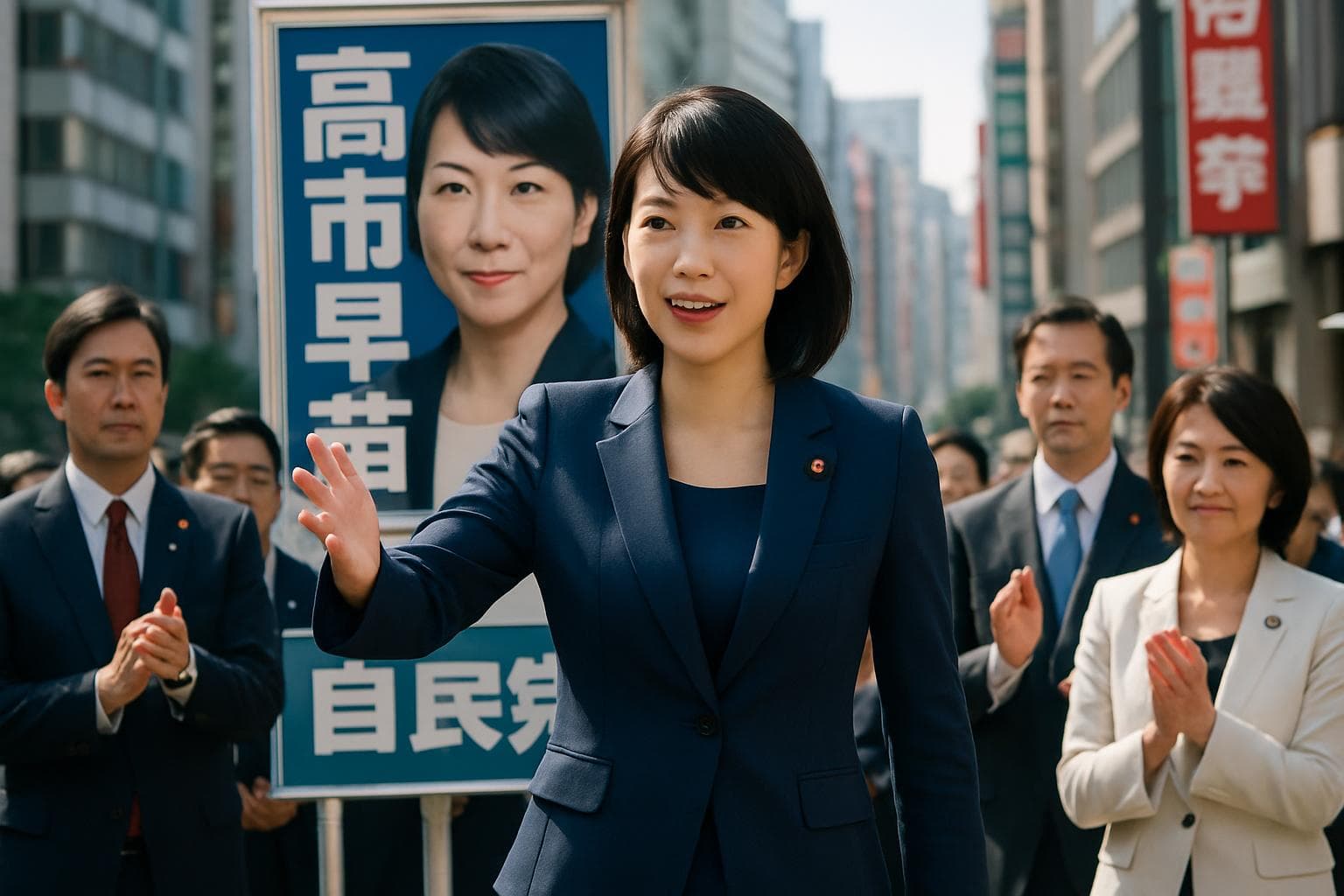
As Japan approaches its second general election in as many years, all eyes are on Sanae Takaichi, the country's first female prime minister, who is leading the Liberal Democratic Party (LDP) into a high-stakes snap election. The election, set for Sunday, has caught many by surprise, but Takaichi is banking on her soaring popularity to deliver a decisive victory for the long-dominant yet recently beleaguered LDP.
A Rising Political Star
Since assuming office last October, Takaichi has captured the public's attention not through legislative achievements but through her dynamic political presence. Her approval ratings have consistently outpaced those of her predecessors, with some polls placing her support as high as 70%. This surge in popularity is attributed to her energetic leadership style, which contrasts sharply with the more subdued image of past leaders.
Takaichi's tenure has been marked by a series of high-profile international engagements. Notably, she hosted former U.S. President Donald Trump aboard the USS George Washington, where he praised her as a "strong, powerful, and wise leader." Her surprise drum performance with South Korea's president and viral social media moments have further cemented her image as a charismatic and modern leader.
Conservative Roots and Youth Appeal
Takaichi has successfully consolidated support within the LDP's conservative base by reviving long-standing goals such as constitutional revision and emphasizing traditional values. "She's positioned herself as the leader who brings the LDP back to its conservative origins," says Rintaro Nishimura, an analyst at The Asia Group.
Despite her conservative stance, Takaichi has also managed to connect with younger voters through a savvy social media campaign that highlights her as a break from the traditional, male-dominated political landscape. This dual appeal has positioned her as a formidable force in Japanese politics.
Controversies and Endorsements
Takaichi's rise has not been without controversy. Her links to the disgraced Unification Church and her stance on issues like the role of women in the imperial family have drawn criticism. However, these controversies have not significantly dented her popularity, thanks in part to strong endorsements from influential figures like Donald Trump, who has invited her to the White House in March.
Opinion polls suggest that the LDP, along with its coalition partner, the Japan Innovation Party, could secure more than 300 of the 465 seats in the lower house, granting them a two-thirds majority. This would enable them to control parliamentary committees and push forward their legislative agenda.
WHAT THIS MIGHT MEAN
Should Takaichi secure a landslide victory, it could herald a new era in Japanese politics, with potential implications for constitutional revisions and traditional values. Her leadership could also influence Japan's diplomatic relations, particularly with key allies and neighboring countries. However, the controversies surrounding her policies and affiliations may continue to pose challenges, requiring careful navigation to maintain her broad base of support. As Japan watches closely, the outcome of this election could redefine the nation's political landscape for years to come.
Related Articles

Spain's Sánchez Stands Firm Against Trump's Trade Threat Over Iran Stance

Senate Blocks Resolution to Limit Trump's Military Actions in Iran

US Supreme Court Ruling Sparks Trade Uncertainty in Asia and Beyond

Trump's New Tariff Strategy Sparks Global Trade Uncertainty

US-Iran Tensions Escalate Amid Renewed Nuclear Talks and Protests

Greenland Politely Declines Trump's Hospital Ship Offer Amid Healthcare Debate
Sanae Takaichi's Snap Election Gamble: Will Japan's First Female Prime Minister Secure a Landslide Victory?
In This Article
 Ethan Brooks| Published
 HIGHLIGHTS
- Japan's first female prime minister, Sanae Takaichi, is leading the Liberal Democratic Party (LDP) into a snap election, hoping to secure a decisive victory.
- Takaichi's approval ratings are notably high, with polls suggesting she could lead the LDP to a two-thirds majority in the lower house.
- Her leadership style, characterized by high-profile international engagements and a strong social media presence, has resonated with both conservative and younger voters.
- Despite controversies, including ties to the Unification Church and contentious policies, Takaichi's popularity remains strong, bolstered by endorsements from figures like Donald Trump.
- The election outcome could significantly impact Japan's political landscape, particularly concerning constitutional revisions and traditional values.
As Japan approaches its second general election in as many years, all eyes are on Sanae Takaichi, the country's first female prime minister, who is leading the Liberal Democratic Party (LDP) into a high-stakes snap election. The election, set for Sunday, has caught many by surprise, but Takaichi is banking on her soaring popularity to deliver a decisive victory for the long-dominant yet recently beleaguered LDP.
A Rising Political Star
Since assuming office last October, Takaichi has captured the public's attention not through legislative achievements but through her dynamic political presence. Her approval ratings have consistently outpaced those of her predecessors, with some polls placing her support as high as 70%. This surge in popularity is attributed to her energetic leadership style, which contrasts sharply with the more subdued image of past leaders.
Takaichi's tenure has been marked by a series of high-profile international engagements. Notably, she hosted former U.S. President Donald Trump aboard the USS George Washington, where he praised her as a "strong, powerful, and wise leader." Her surprise drum performance with South Korea's president and viral social media moments have further cemented her image as a charismatic and modern leader.
Conservative Roots and Youth Appeal
Takaichi has successfully consolidated support within the LDP's conservative base by reviving long-standing goals such as constitutional revision and emphasizing traditional values. "She's positioned herself as the leader who brings the LDP back to its conservative origins," says Rintaro Nishimura, an analyst at The Asia Group.
Despite her conservative stance, Takaichi has also managed to connect with younger voters through a savvy social media campaign that highlights her as a break from the traditional, male-dominated political landscape. This dual appeal has positioned her as a formidable force in Japanese politics.
Controversies and Endorsements
Takaichi's rise has not been without controversy. Her links to the disgraced Unification Church and her stance on issues like the role of women in the imperial family have drawn criticism. However, these controversies have not significantly dented her popularity, thanks in part to strong endorsements from influential figures like Donald Trump, who has invited her to the White House in March.
Opinion polls suggest that the LDP, along with its coalition partner, the Japan Innovation Party, could secure more than 300 of the 465 seats in the lower house, granting them a two-thirds majority. This would enable them to control parliamentary committees and push forward their legislative agenda.
WHAT THIS MIGHT MEAN
Should Takaichi secure a landslide victory, it could herald a new era in Japanese politics, with potential implications for constitutional revisions and traditional values. Her leadership could also influence Japan's diplomatic relations, particularly with key allies and neighboring countries. However, the controversies surrounding her policies and affiliations may continue to pose challenges, requiring careful navigation to maintain her broad base of support. As Japan watches closely, the outcome of this election could redefine the nation's political landscape for years to come.
Related Articles
Spain's Sánchez Stands Firm Against Trump's Trade Threat Over Iran Stance
Senate Blocks Resolution to Limit Trump's Military Actions in Iran
US Supreme Court Ruling Sparks Trade Uncertainty in Asia and Beyond
Trump's New Tariff Strategy Sparks Global Trade Uncertainty
US-Iran Tensions Escalate Amid Renewed Nuclear Talks and Protests
Greenland Politely Declines Trump's Hospital Ship Offer Amid Healthcare Debate