
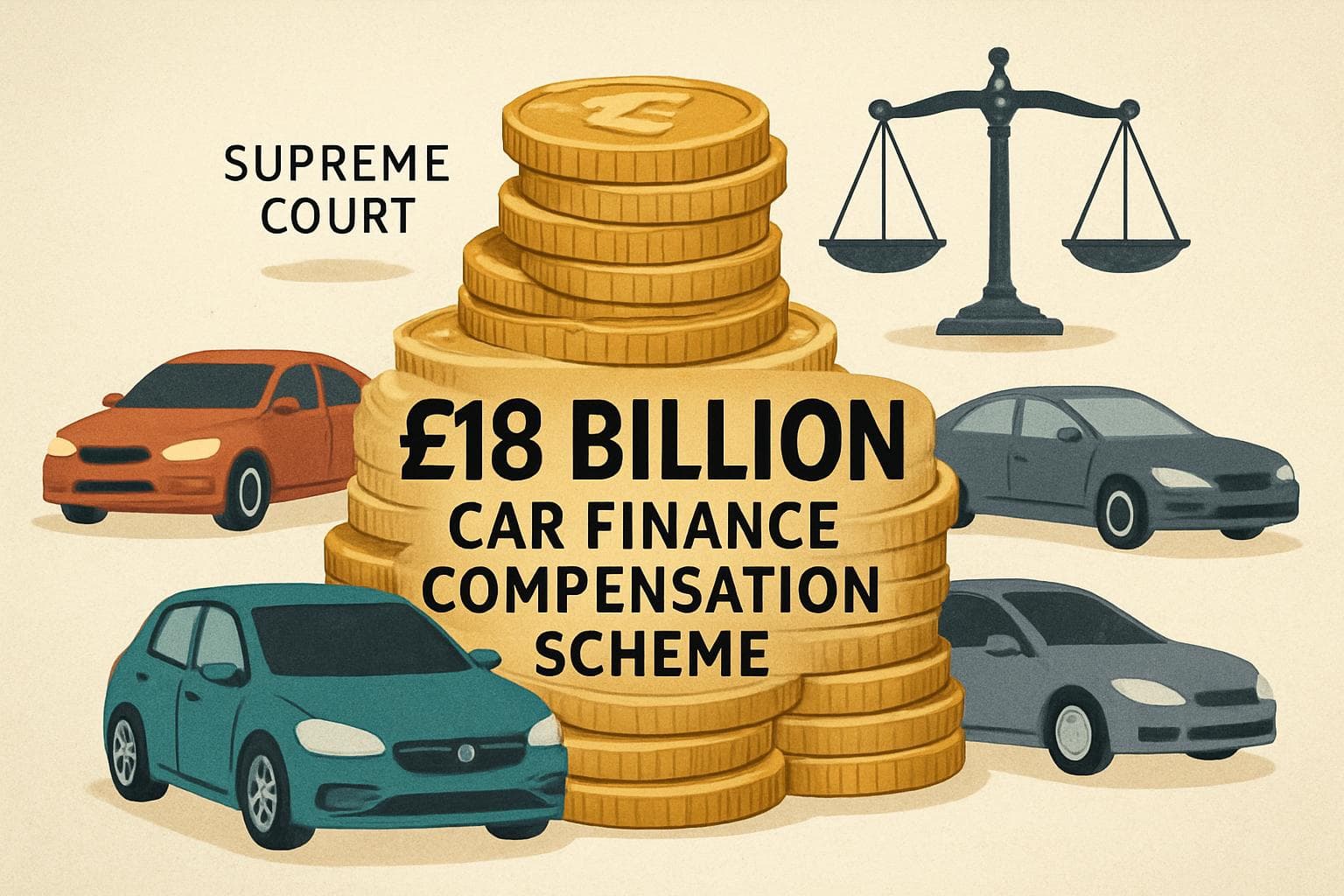
Supreme Court Ruling Spurs £18bn Car Finance Compensation Scheme
In This Article
HIGHLIGHTS
- The Supreme Court ruled that hidden commissions on car loans are not unlawful, but left room for claims on excessively high commissions.
- The Financial Conduct Authority (FCA) plans to consult on a compensation scheme, potentially costing between £9bn and £18bn.
- Millions of motorists affected by car finance mis-selling could receive less than £950 per claim.
- The FCA aims to start consultations by October, covering agreements dating back to 2007.
- Discretionary commissions, banned in 2021, inflated car finance costs, affecting approximately 14.6 million contracts.
Millions of UK motorists could soon be eligible for compensation following a Supreme Court ruling on car finance mis-selling. The Financial Conduct Authority (FCA) announced plans to consult on a redress scheme that could cost the industry between £9 billion and £18 billion. This follows the court's decision that, while hidden commissions on car loans are not inherently unlawful, excessively high commissions could warrant compensation.
Supreme Court Ruling and Its Implications
On Friday, the Supreme Court largely overturned previous rulings that deemed hidden commissions illegal. However, it acknowledged that extremely high commissions, such as the 55% commission in the case involving Marcus Johnson, were unfair. This ruling has prompted the FCA to consider a compensation scheme, with payouts expected to begin next year.
FCA's Proposed Compensation Scheme
The FCA's proposed scheme aims to address the financial impact on consumers affected by discretionary commissions, which were banned in 2021. These commissions allowed dealers to earn more by placing customers on loans with higher interest rates. The scheme is expected to cover agreements dating back to 2007, potentially affecting millions of contracts.
Industry and Political Reactions
The potential compensation scheme has sparked significant industry concern, with the Finance & Leasing Association questioning the feasibility of a fair redress scheme for agreements dating back to 2007. Meanwhile, Liberal Democrat MP Bobby Dean described the situation as "the biggest consumer finance scandal since PPI," urging the industry to prioritize honesty.
Consumer Guidance and Next Steps
The FCA advises consumers who believe they were mis-sold car finance to contact their loan providers directly, rather than using claims management companies. The regulator plans to begin consultations in October, aiming to ensure a fair and accessible compensation process.
WHAT THIS MIGHT MEAN
The Supreme Court's ruling and the FCA's subsequent actions could have significant implications for both consumers and the car finance industry. If the compensation scheme proceeds as planned, it could set a precedent for handling similar financial mis-selling cases in the future. Industry stakeholders may need to reassess their practices to prevent further regulatory scrutiny. Politically, the case underscores the importance of consumer protection in financial markets, potentially influencing future legislative measures. As consultations begin, the FCA's approach will be closely watched by both consumers and industry players, eager to see how the redress scheme unfolds.
Related Articles
UK Achieves Record Budget Surplus Amid Calls for Fiscal Policy Reform
Trump Raises Import Tariffs to 15% After Supreme Court Setback

Breakthrough Drug Offers Hope for Children with Severe Epilepsy
Trump's New Tariff Strategy Sparks Global Trade Uncertainty

Government Unveils Ambitious Plan to Halve Attainment Gap in England's Schools

Arrest of Andrew Mountbatten-Windsor Captured in Iconic Photograph
Supreme Court Ruling Spurs £18bn Car Finance Compensation Scheme
In This Article
 Daniel Rivera| Published
 HIGHLIGHTS
- The Supreme Court ruled that hidden commissions on car loans are not unlawful, but left room for claims on excessively high commissions.
- The Financial Conduct Authority (FCA) plans to consult on a compensation scheme, potentially costing between £9bn and £18bn.
- Millions of motorists affected by car finance mis-selling could receive less than £950 per claim.
- The FCA aims to start consultations by October, covering agreements dating back to 2007.
- Discretionary commissions, banned in 2021, inflated car finance costs, affecting approximately 14.6 million contracts.
Millions of UK motorists could soon be eligible for compensation following a Supreme Court ruling on car finance mis-selling. The Financial Conduct Authority (FCA) announced plans to consult on a redress scheme that could cost the industry between £9 billion and £18 billion. This follows the court's decision that, while hidden commissions on car loans are not inherently unlawful, excessively high commissions could warrant compensation.
Supreme Court Ruling and Its Implications
On Friday, the Supreme Court largely overturned previous rulings that deemed hidden commissions illegal. However, it acknowledged that extremely high commissions, such as the 55% commission in the case involving Marcus Johnson, were unfair. This ruling has prompted the FCA to consider a compensation scheme, with payouts expected to begin next year.
FCA's Proposed Compensation Scheme
The FCA's proposed scheme aims to address the financial impact on consumers affected by discretionary commissions, which were banned in 2021. These commissions allowed dealers to earn more by placing customers on loans with higher interest rates. The scheme is expected to cover agreements dating back to 2007, potentially affecting millions of contracts.
Industry and Political Reactions
The potential compensation scheme has sparked significant industry concern, with the Finance & Leasing Association questioning the feasibility of a fair redress scheme for agreements dating back to 2007. Meanwhile, Liberal Democrat MP Bobby Dean described the situation as "the biggest consumer finance scandal since PPI," urging the industry to prioritize honesty.
Consumer Guidance and Next Steps
The FCA advises consumers who believe they were mis-sold car finance to contact their loan providers directly, rather than using claims management companies. The regulator plans to begin consultations in October, aiming to ensure a fair and accessible compensation process.
WHAT THIS MIGHT MEAN
The Supreme Court's ruling and the FCA's subsequent actions could have significant implications for both consumers and the car finance industry. If the compensation scheme proceeds as planned, it could set a precedent for handling similar financial mis-selling cases in the future. Industry stakeholders may need to reassess their practices to prevent further regulatory scrutiny. Politically, the case underscores the importance of consumer protection in financial markets, potentially influencing future legislative measures. As consultations begin, the FCA's approach will be closely watched by both consumers and industry players, eager to see how the redress scheme unfolds.
Related Articles
UK Achieves Record Budget Surplus Amid Calls for Fiscal Policy Reform
Trump Raises Import Tariffs to 15% After Supreme Court Setback
Breakthrough Drug Offers Hope for Children with Severe Epilepsy
Trump's New Tariff Strategy Sparks Global Trade Uncertainty
Government Unveils Ambitious Plan to Halve Attainment Gap in England's Schools
Arrest of Andrew Mountbatten-Windsor Captured in Iconic Photograph