
Tesla Eyes UK Electricity Market Amid Declining EV Sales
In This Article
HIGHLIGHTS
- Tesla has applied for a licence from Ofgem to supply electricity to homes and businesses in the UK, potentially launching as early as next year.
- The move could allow Tesla to leverage its existing customer base of electric vehicle and home battery owners in the UK.
- Tesla's application comes amid a decline in its electric vehicle sales across Europe, with UK sales dropping by nearly 60% in July.
- The company already operates a similar energy supply business in Texas, offering competitive rates and incentives for surplus energy.
- Elon Musk's political affiliations have sparked controversy, potentially impacting Tesla's brand perception in Europe.
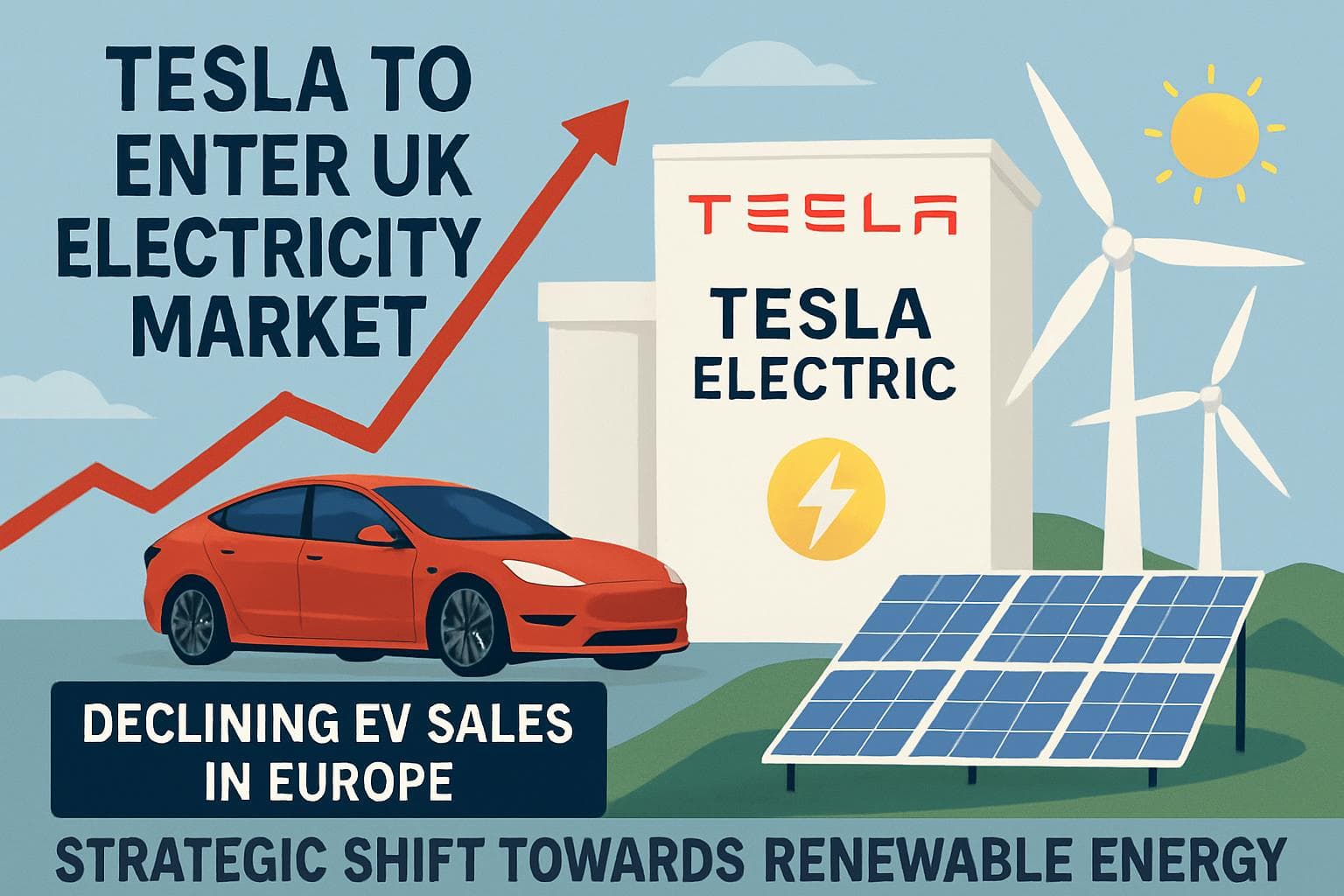
Elon Musk's Tesla is poised to enter the UK electricity market, having applied for a licence from the energy regulator Ofgem to supply power to homes and businesses across England, Scotland, and Wales. This strategic move could see Tesla Electric, the company's energy supply arm, operational in the UK as early as next year, challenging established energy firms.
Expanding Energy Horizons
Tesla, renowned for its electric vehicles (EVs), is also a significant player in the renewable energy sector, with a focus on solar energy and battery storage. The application, submitted by Andrew Payne, head of Tesla's European energy operations, marks a potential expansion of Tesla's energy business, which already includes a power supplier in Texas. There, Tesla offers competitive charging rates for EV owners and compensates them for feeding surplus electricity back into the grid.
Leveraging Existing Customer Base
Tesla's entry into the UK energy market could be bolstered by its existing customer base, which includes over a quarter of a million EV owners and tens of thousands of home battery users. This could provide a ready market for Tesla Electric, especially among those who already own Tesla products. However, the company will not cater to households on dual-fuel contracts, as it is only applying for an electricity licence.
Challenges Amidst Declining Sales
The timing of Tesla's application coincides with a notable decline in its EV sales across Europe. In the UK, Tesla's car registrations plummeted by nearly 60% in July, reducing its market share significantly. This downturn is attributed to increased competition from other EV manufacturers, such as China's BYD, and possibly to Musk's controversial political engagements, which have drawn criticism in Europe.
A Strategic Pivot
Tesla's foray into the UK energy market is not entirely unexpected. The company signaled its intentions two years ago with a job listing for a head of operations in the UK energy sector. It first entered the British energy market in 2020 when it was granted a licence to generate electricity. The current application represents a strategic pivot to diversify its offerings amid fluctuating EV sales.
WHAT THIS MIGHT MEAN
If approved, Tesla's entry into the UK electricity market could disrupt the current energy landscape, offering consumers more choices and potentially driving down prices. The company's focus on renewable energy and storage solutions aligns with global trends towards sustainability, which could enhance its appeal.
However, Tesla's success in this new venture may hinge on overcoming the challenges posed by its declining EV sales and the potential impact of Musk's political controversies. As the energy market becomes increasingly competitive, Tesla's ability to innovate and adapt will be crucial in securing a foothold in the UK.
Related Articles

Saharan Dust to Illuminate UK Skies with Vivid Sunrises and Sunsets
Elon Musk Defends Tweets in Twitter Takeover Trial
Middle East Conflict Drives UK Energy Prices to New Highs

Police Federation Chief Arrested Amid Fraud Investigation

Canada and Australia Forge Strategic Partnership Amid Global Uncertainty

UK Government to Reform Asylum Seeker Support and Employment Policies
Tesla Eyes UK Electricity Market Amid Declining EV Sales
In This Article
 Daniel Rivera| Published
 HIGHLIGHTS
- Tesla has applied for a licence from Ofgem to supply electricity to homes and businesses in the UK, potentially launching as early as next year.
- The move could allow Tesla to leverage its existing customer base of electric vehicle and home battery owners in the UK.
- Tesla's application comes amid a decline in its electric vehicle sales across Europe, with UK sales dropping by nearly 60% in July.
- The company already operates a similar energy supply business in Texas, offering competitive rates and incentives for surplus energy.
- Elon Musk's political affiliations have sparked controversy, potentially impacting Tesla's brand perception in Europe.
Elon Musk's Tesla is poised to enter the UK electricity market, having applied for a licence from the energy regulator Ofgem to supply power to homes and businesses across England, Scotland, and Wales. This strategic move could see Tesla Electric, the company's energy supply arm, operational in the UK as early as next year, challenging established energy firms.
Expanding Energy Horizons
Tesla, renowned for its electric vehicles (EVs), is also a significant player in the renewable energy sector, with a focus on solar energy and battery storage. The application, submitted by Andrew Payne, head of Tesla's European energy operations, marks a potential expansion of Tesla's energy business, which already includes a power supplier in Texas. There, Tesla offers competitive charging rates for EV owners and compensates them for feeding surplus electricity back into the grid.
Leveraging Existing Customer Base
Tesla's entry into the UK energy market could be bolstered by its existing customer base, which includes over a quarter of a million EV owners and tens of thousands of home battery users. This could provide a ready market for Tesla Electric, especially among those who already own Tesla products. However, the company will not cater to households on dual-fuel contracts, as it is only applying for an electricity licence.
Challenges Amidst Declining Sales
The timing of Tesla's application coincides with a notable decline in its EV sales across Europe. In the UK, Tesla's car registrations plummeted by nearly 60% in July, reducing its market share significantly. This downturn is attributed to increased competition from other EV manufacturers, such as China's BYD, and possibly to Musk's controversial political engagements, which have drawn criticism in Europe.
A Strategic Pivot
Tesla's foray into the UK energy market is not entirely unexpected. The company signaled its intentions two years ago with a job listing for a head of operations in the UK energy sector. It first entered the British energy market in 2020 when it was granted a licence to generate electricity. The current application represents a strategic pivot to diversify its offerings amid fluctuating EV sales.
WHAT THIS MIGHT MEAN
If approved, Tesla's entry into the UK electricity market could disrupt the current energy landscape, offering consumers more choices and potentially driving down prices. The company's focus on renewable energy and storage solutions aligns with global trends towards sustainability, which could enhance its appeal.
However, Tesla's success in this new venture may hinge on overcoming the challenges posed by its declining EV sales and the potential impact of Musk's political controversies. As the energy market becomes increasingly competitive, Tesla's ability to innovate and adapt will be crucial in securing a foothold in the UK.
Related Articles
Saharan Dust to Illuminate UK Skies with Vivid Sunrises and Sunsets
Elon Musk Defends Tweets in Twitter Takeover Trial
Middle East Conflict Drives UK Energy Prices to New Highs
Police Federation Chief Arrested Amid Fraud Investigation
Canada and Australia Forge Strategic Partnership Amid Global Uncertainty
UK Government to Reform Asylum Seeker Support and Employment Policies