
Tesla's Robotaxi Launch Under Scrutiny Following Safety Concerns
In This Article
HIGHLIGHTS
- The NHTSA is investigating Tesla's robotaxi launch in Austin, Texas, after videos showed erratic driving behavior.
- Tesla's robotaxis, which rely on in-car cameras, were seen speeding and veering into wrong lanes during their debut.
- Elon Musk has heavily promoted the robotaxi project as central to Tesla's future, despite safety concerns.
- The launch involved a limited number of vehicles with safety drivers and was attended by influencers and analysts.
- Tesla's approach to autonomous vehicles differs from competitors like Waymo and Zoox, which use radar and sensors.
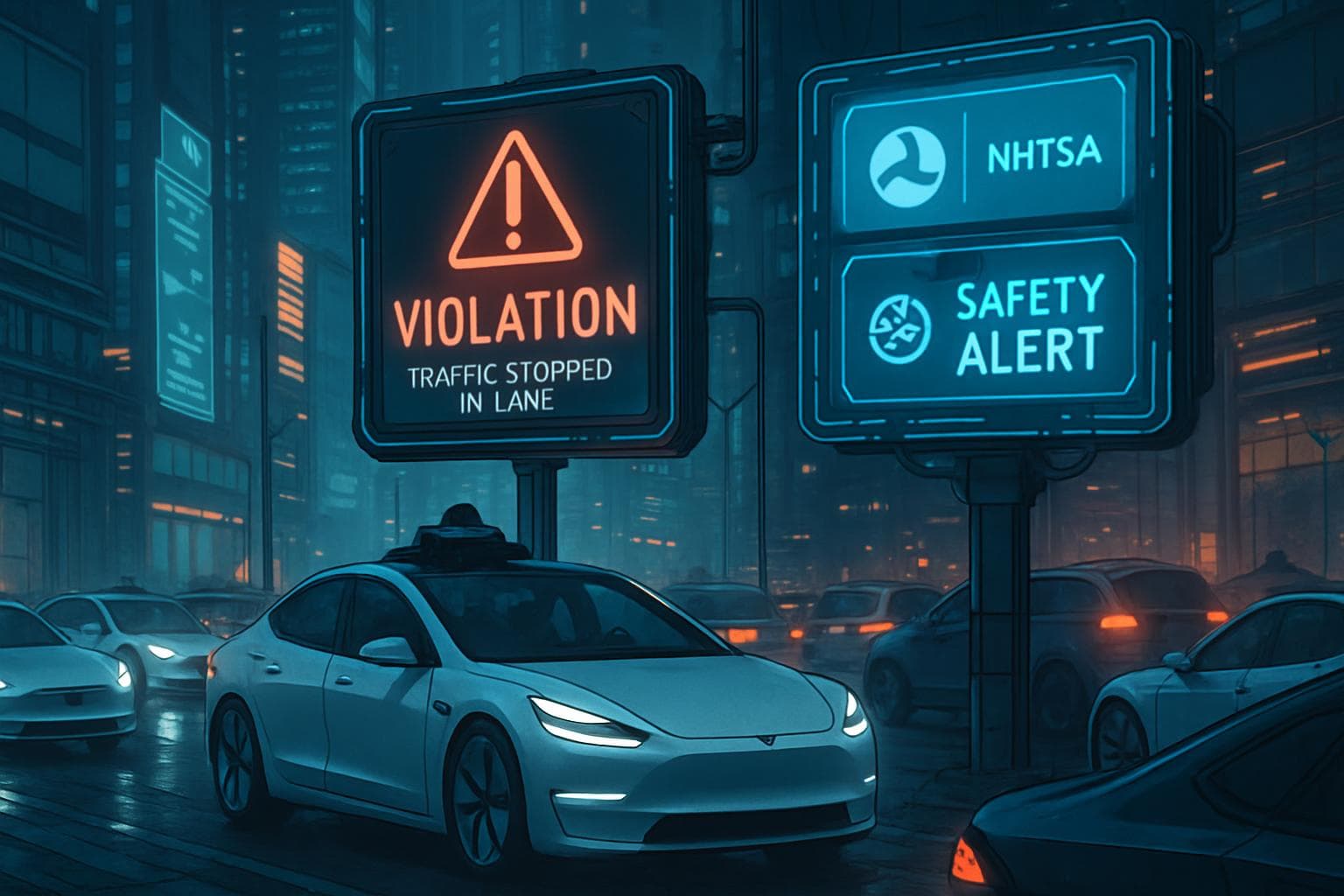
The U.S. National Highway Traffic Safety Administration (NHTSA) has initiated an inquiry into Tesla's newly launched robotaxi service in Austin, Texas, following the release of videos showing the vehicles violating traffic laws. The footage, shared widely on social media, depicts Tesla's self-driving cars, which are central to CEO Elon Musk's vision for the company's future, behaving erratically on public roads.
Launch and Initial Reactions
Tesla's robotaxi service, which debuted over the weekend, was initially rolled out with a limited fleet of about 12 vehicles. These cars, equipped with safety drivers in the passenger seat, were tested in a controlled area of Austin. Despite Musk's praise for the launch as a culmination of a decade's work, the event was low-key, attended by a select group of analysts, influencers, and shareholders.
Safety Concerns and NHTSA's Response
The NHTSA has confirmed it is aware of the incidents and is in contact with Tesla to gather more information. Videos from the launch show the robotaxis struggling with real-world scenarios, such as abruptly stopping near a parked police car and veering into incorrect lanes. The agency emphasized that it does not pre-approve new technologies but investigates potential safety defects post-launch.
Tesla's Unique Approach to Autonomous Driving
Unlike its competitors, Tesla's autonomous vehicles rely solely on in-car cameras rather than the radar and sensors used by companies like Waymo and Zoox. This approach, Musk argues, will ultimately be more cost-effective and appealing to consumers. However, the recent incidents have raised questions about the safety and readiness of Tesla's technology.
Market Competition and Future Prospects
Tesla faces stiff competition from established players like Waymo and Zoox, which already offer self-driving taxi services in multiple U.S. cities. While fully driverless cars have logged millions of miles globally, the debate over their safety compared to human-driven vehicles continues.
WHAT THIS MIGHT MEAN
The NHTSA's investigation into Tesla's robotaxi launch could lead to regulatory scrutiny and potential adjustments to Tesla's autonomous vehicle technology. If safety concerns persist, Tesla may face challenges in scaling its robotaxi service and gaining consumer trust. Industry experts suggest that Tesla's reliance on camera-based technology might need reevaluation to meet safety standards. As the autonomous vehicle market evolves, Tesla's ability to address these issues will be crucial in maintaining its competitive edge and realizing Musk's vision of a driverless future.
Related Articles
Elon Musk Defends Tweets in Twitter Takeover Trial
Russian Drone Strike Kills 12 Miners in Ukraine Amid Renewed Peace Efforts
Epstein Files Continue to Cast Long Shadows Over Prominent Figures
SpaceX and xAI Merge in $1.25 Trillion Deal to Propel Space-Based AI Innovation
New Epstein Files Reveal Extensive Ties to Influential Figures Amid Allegations of Document Withholding
Epstein Files Reveal High-Profile Connections Amidst New Allegations
Tesla's Robotaxi Launch Under Scrutiny Following Safety Concerns
In This Article
 Ethan Brooks| Published
 HIGHLIGHTS
- The NHTSA is investigating Tesla's robotaxi launch in Austin, Texas, after videos showed erratic driving behavior.
- Tesla's robotaxis, which rely on in-car cameras, were seen speeding and veering into wrong lanes during their debut.
- Elon Musk has heavily promoted the robotaxi project as central to Tesla's future, despite safety concerns.
- The launch involved a limited number of vehicles with safety drivers and was attended by influencers and analysts.
- Tesla's approach to autonomous vehicles differs from competitors like Waymo and Zoox, which use radar and sensors.
The U.S. National Highway Traffic Safety Administration (NHTSA) has initiated an inquiry into Tesla's newly launched robotaxi service in Austin, Texas, following the release of videos showing the vehicles violating traffic laws. The footage, shared widely on social media, depicts Tesla's self-driving cars, which are central to CEO Elon Musk's vision for the company's future, behaving erratically on public roads.
Launch and Initial Reactions
Tesla's robotaxi service, which debuted over the weekend, was initially rolled out with a limited fleet of about 12 vehicles. These cars, equipped with safety drivers in the passenger seat, were tested in a controlled area of Austin. Despite Musk's praise for the launch as a culmination of a decade's work, the event was low-key, attended by a select group of analysts, influencers, and shareholders.
Safety Concerns and NHTSA's Response
The NHTSA has confirmed it is aware of the incidents and is in contact with Tesla to gather more information. Videos from the launch show the robotaxis struggling with real-world scenarios, such as abruptly stopping near a parked police car and veering into incorrect lanes. The agency emphasized that it does not pre-approve new technologies but investigates potential safety defects post-launch.
Tesla's Unique Approach to Autonomous Driving
Unlike its competitors, Tesla's autonomous vehicles rely solely on in-car cameras rather than the radar and sensors used by companies like Waymo and Zoox. This approach, Musk argues, will ultimately be more cost-effective and appealing to consumers. However, the recent incidents have raised questions about the safety and readiness of Tesla's technology.
Market Competition and Future Prospects
Tesla faces stiff competition from established players like Waymo and Zoox, which already offer self-driving taxi services in multiple U.S. cities. While fully driverless cars have logged millions of miles globally, the debate over their safety compared to human-driven vehicles continues.
WHAT THIS MIGHT MEAN
The NHTSA's investigation into Tesla's robotaxi launch could lead to regulatory scrutiny and potential adjustments to Tesla's autonomous vehicle technology. If safety concerns persist, Tesla may face challenges in scaling its robotaxi service and gaining consumer trust. Industry experts suggest that Tesla's reliance on camera-based technology might need reevaluation to meet safety standards. As the autonomous vehicle market evolves, Tesla's ability to address these issues will be crucial in maintaining its competitive edge and realizing Musk's vision of a driverless future.
Related Articles
Elon Musk Defends Tweets in Twitter Takeover Trial
Russian Drone Strike Kills 12 Miners in Ukraine Amid Renewed Peace Efforts
Epstein Files Continue to Cast Long Shadows Over Prominent Figures
SpaceX and xAI Merge in $1.25 Trillion Deal to Propel Space-Based AI Innovation
New Epstein Files Reveal Extensive Ties to Influential Figures Amid Allegations of Document Withholding
Epstein Files Reveal High-Profile Connections Amidst New Allegations