
US-EU Trade Tensions Escalate Amid Greenland Dispute and Market Turmoil
In This Article
HIGHLIGHTS
- The European Parliament plans to suspend approval of a US trade deal, escalating US-EU trade tensions.
- Stock markets in the US and Europe fell sharply, with the Dow Jones and S&P 500 both dropping over 1.7%.
- Trump's threats to impose tariffs over Greenland acquisition have revived fears of a trade war.
- Precious metals like gold and silver saw price increases amid market uncertainty.
- US Commerce Secretary Howard Lutnick downplayed trade war fears, suggesting diplomacy is likely.
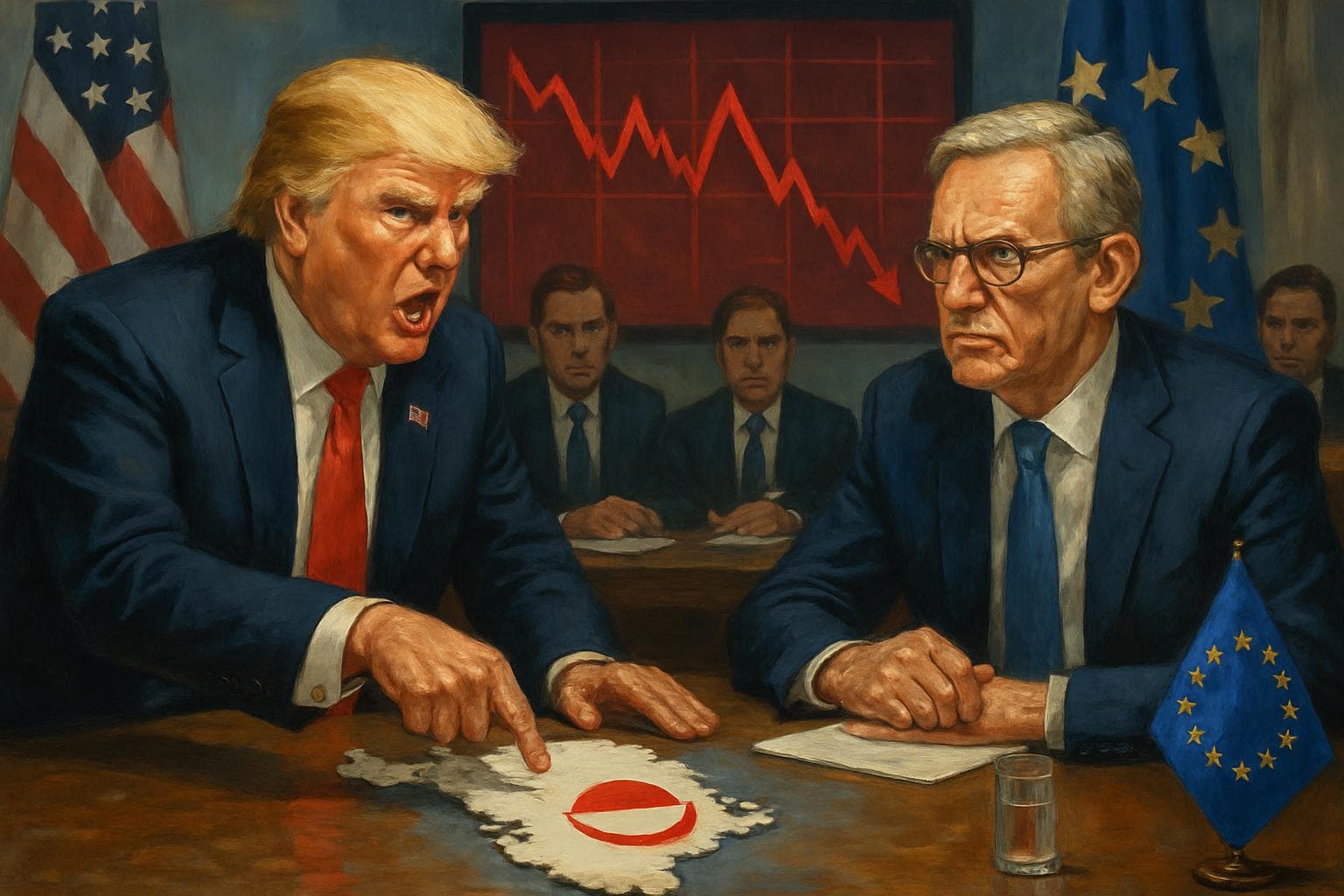
The European Parliament is poised to suspend its approval of a US trade deal, a move that could further strain US-EU trade relations. This decision, expected to be announced in Strasbourg, France, comes in response to President Donald Trump's recent threats to impose tariffs over his controversial interest in acquiring Greenland. The suspension marks a significant escalation in the ongoing trade tensions between the two economic giants.
Market Reactions and Economic Impact
The uncertainty surrounding the trade deal has rattled global financial markets. On Tuesday, Wall Street experienced its worst day since October, with the Dow Jones Industrial Average and the S&P 500 both dropping over 1.7%. The tech-heavy Nasdaq also fell by 2.4%, with major companies like Amazon and Tesla seeing significant declines. European markets mirrored this downturn, with Germany's DAX and France's CAC both closing lower.
In the Asia-Pacific region, market reactions were mixed, with some indexes in Japan and Hong Kong trading slightly lower, while others in mainland China saw modest gains. Amid this volatility, the price of gold surged above $4,800 an ounce, reflecting its status as a safe-haven asset during times of economic uncertainty.
Diplomatic and Political Context
The trade tensions have been exacerbated by Trump's threats to impose tariffs on eight European countries, including Germany, France, and the UK. These threats have revived fears of a trade war, reminiscent of previous tariff disputes. However, US Commerce Secretary Howard Lutnick, speaking at the World Economic Forum in Davos, downplayed the likelihood of a full-blown trade conflict. He emphasized that tariffs are a tool for initiating diplomatic discussions, suggesting that the situation could lead to negotiations rather than confrontation.
UK Chancellor Rachel Reeves echoed this sentiment, urging for calm and emphasizing the importance of maintaining strong alliances. She highlighted the need for de-escalation, particularly concerning the future of Greenland, which she stated should be determined by its people.
Future of the US-EU Trade Deal
The European Parliament's decision to suspend the trade deal approval stems from concerns over US actions perceived as undermining EU sovereignty. Manfred Weber, a prominent German MEP, and Bernd Lange, chair of the European Parliament's trade committee, have both expressed that the suspension is necessary until the US adopts a more cooperative stance.
The trade deal, initially agreed upon in July, aimed to reduce US tariffs on European goods and increase European investment in the US. However, the recent developments have cast doubt on its future, with the European Parliament's approval now uncertain.
WHAT THIS MIGHT MEAN
The suspension of the trade deal approval could lead to prolonged economic uncertainty and further volatility in global markets. If the US and EU fail to reach a diplomatic resolution, the risk of a trade war could increase, potentially impacting global trade flows and economic growth. Experts suggest that both sides may eventually return to the negotiating table, as the economic stakes are high for both regions.
In the political arena, Trump's Greenland ambitions may continue to strain US-EU relations, with European leaders likely to resist any perceived threats to their territorial integrity. The situation underscores the complex interplay between economic policy and geopolitical interests, highlighting the need for careful diplomacy in navigating these challenges.
Related Articles
Elon Musk Defends Tweets in Twitter Takeover Trial

UK Faces Dilemmas Amid Iran Conflict and China Spying Allegations
Senate Blocks Resolution to Limit Trump's Military Actions in Iran

UK-Iran Tensions: Starmer Defends Cautious Approach Amid Trump Criticism
Spain's Sánchez Stands Firm Against Trump's Trade Threat Over Iran Stance
Tech Giants Pledge to Cover AI Data Center Energy Costs Amid Rising Electricity Concerns
US-EU Trade Tensions Escalate Amid Greenland Dispute and Market Turmoil
In This Article
 Ethan Brooks| Published
 HIGHLIGHTS
- The European Parliament plans to suspend approval of a US trade deal, escalating US-EU trade tensions.
- Stock markets in the US and Europe fell sharply, with the Dow Jones and S&P 500 both dropping over 1.7%.
- Trump's threats to impose tariffs over Greenland acquisition have revived fears of a trade war.
- Precious metals like gold and silver saw price increases amid market uncertainty.
- US Commerce Secretary Howard Lutnick downplayed trade war fears, suggesting diplomacy is likely.
The European Parliament is poised to suspend its approval of a US trade deal, a move that could further strain US-EU trade relations. This decision, expected to be announced in Strasbourg, France, comes in response to President Donald Trump's recent threats to impose tariffs over his controversial interest in acquiring Greenland. The suspension marks a significant escalation in the ongoing trade tensions between the two economic giants.
Market Reactions and Economic Impact
The uncertainty surrounding the trade deal has rattled global financial markets. On Tuesday, Wall Street experienced its worst day since October, with the Dow Jones Industrial Average and the S&P 500 both dropping over 1.7%. The tech-heavy Nasdaq also fell by 2.4%, with major companies like Amazon and Tesla seeing significant declines. European markets mirrored this downturn, with Germany's DAX and France's CAC both closing lower.
In the Asia-Pacific region, market reactions were mixed, with some indexes in Japan and Hong Kong trading slightly lower, while others in mainland China saw modest gains. Amid this volatility, the price of gold surged above $4,800 an ounce, reflecting its status as a safe-haven asset during times of economic uncertainty.
Diplomatic and Political Context
The trade tensions have been exacerbated by Trump's threats to impose tariffs on eight European countries, including Germany, France, and the UK. These threats have revived fears of a trade war, reminiscent of previous tariff disputes. However, US Commerce Secretary Howard Lutnick, speaking at the World Economic Forum in Davos, downplayed the likelihood of a full-blown trade conflict. He emphasized that tariffs are a tool for initiating diplomatic discussions, suggesting that the situation could lead to negotiations rather than confrontation.
UK Chancellor Rachel Reeves echoed this sentiment, urging for calm and emphasizing the importance of maintaining strong alliances. She highlighted the need for de-escalation, particularly concerning the future of Greenland, which she stated should be determined by its people.
Future of the US-EU Trade Deal
The European Parliament's decision to suspend the trade deal approval stems from concerns over US actions perceived as undermining EU sovereignty. Manfred Weber, a prominent German MEP, and Bernd Lange, chair of the European Parliament's trade committee, have both expressed that the suspension is necessary until the US adopts a more cooperative stance.
The trade deal, initially agreed upon in July, aimed to reduce US tariffs on European goods and increase European investment in the US. However, the recent developments have cast doubt on its future, with the European Parliament's approval now uncertain.
WHAT THIS MIGHT MEAN
The suspension of the trade deal approval could lead to prolonged economic uncertainty and further volatility in global markets. If the US and EU fail to reach a diplomatic resolution, the risk of a trade war could increase, potentially impacting global trade flows and economic growth. Experts suggest that both sides may eventually return to the negotiating table, as the economic stakes are high for both regions.
In the political arena, Trump's Greenland ambitions may continue to strain US-EU relations, with European leaders likely to resist any perceived threats to their territorial integrity. The situation underscores the complex interplay between economic policy and geopolitical interests, highlighting the need for careful diplomacy in navigating these challenges.
Related Articles
Elon Musk Defends Tweets in Twitter Takeover Trial
UK Faces Dilemmas Amid Iran Conflict and China Spying Allegations
Senate Blocks Resolution to Limit Trump's Military Actions in Iran
UK-Iran Tensions: Starmer Defends Cautious Approach Amid Trump Criticism
Spain's Sánchez Stands Firm Against Trump's Trade Threat Over Iran Stance
Tech Giants Pledge to Cover AI Data Center Energy Costs Amid Rising Electricity Concerns