
Thailand's Political Landscape Shifts as Parliament Dissolved Amid Border Tensions
In This Article
HIGHLIGHTS
- Thailand's Prime Minister Anutin Charnvirakul dissolved parliament amid political deadlock and border clashes with Cambodia.
- The dissolution paves the way for elections within 45 to 60 days, as endorsed by King Maha Vajiralongkorn.
- Anutin's minority government faced criticism over handling domestic issues, including severe flooding and the Cambodia conflict.
- The People's Party withdrew support from Anutin, citing unmet demands for constitutional reforms.
- Anutin is Thailand's third prime minister since August 2023, reflecting ongoing political instability.
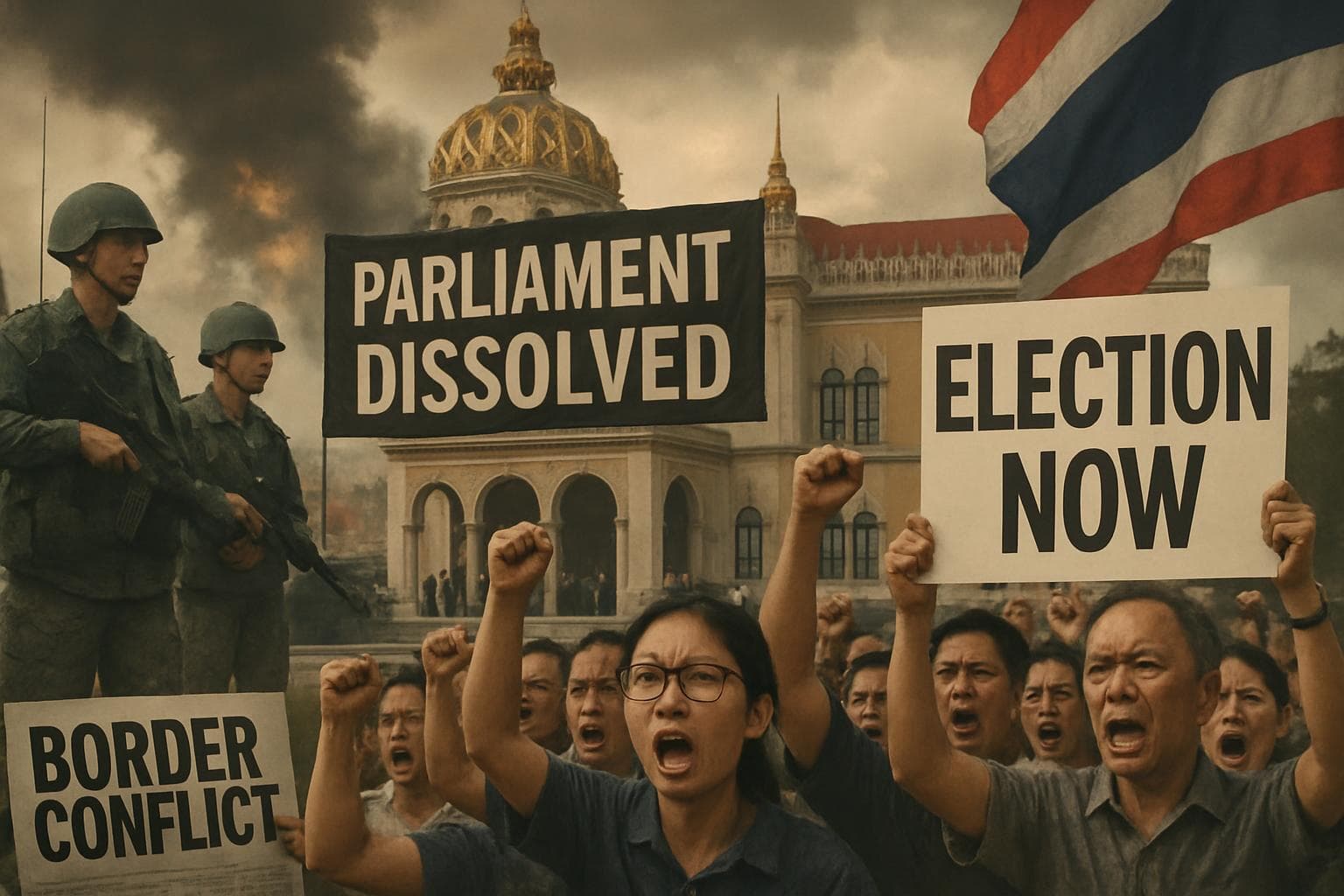
In a dramatic turn of events, Thailand's Prime Minister Anutin Charnvirakul has dissolved the country's parliament, setting the stage for early elections amid escalating political and border tensions. The decision, announced on Thursday and officially endorsed by King Maha Vajiralongkorn on Friday, mandates elections within 45 to 60 days.
Political Deadlock and Border Clashes
The dissolution comes against a backdrop of renewed clashes along the Thai-Cambodian border, which have resulted in at least 20 fatalities and nearly 200 injuries. Anutin, who assumed office in September 2023, cited the ongoing border conflict and domestic challenges as key reasons for the dissolution. "The appropriate solution is to dissolve parliament, which is a way to return political power to the people," Anutin stated.
Strained Alliances and Unmet Demands
Anutin's minority government has struggled to maintain stability, particularly after losing the support of the People's Party, the largest parliamentary group. The People's Party had initially backed Anutin's premiership with conditions, including constitutional reforms and a timely dissolution of parliament. However, the party accused Anutin's Bhumjaithai party of failing to honor these commitments, prompting their withdrawal of support and a planned no-confidence motion.
Domestic Challenges and Criticism
The government has faced significant criticism over its handling of domestic crises, including severe flooding in southern Thailand that claimed 176 lives. Anutin's administration has been unable to effectively address these issues, further exacerbating political instability. "Running the country requires stability," Anutin acknowledged in the royal decree.
A History of Political Instability
Anutin is Thailand's third prime minister since August 2023, following the dismissals of his predecessors due to ethical violations. This political volatility has taken a toll on Thailand's economy, which is grappling with external pressures such as US tariffs and internal challenges like high household debt.
WHAT THIS MIGHT MEAN
As Thailand prepares for early elections, the political landscape remains uncertain. The upcoming elections could either stabilize the government or further deepen the political divide, depending on the outcome. The People's Party's push for constitutional reforms may gain momentum if they secure a significant electoral victory. Meanwhile, the ongoing border conflict with Cambodia poses a continuous threat to regional stability, potentially influencing voter sentiment. Experts suggest that a clear electoral mandate could provide the necessary stability to address both domestic and international challenges effectively.
Related Articles
Geneva Peace Talks Between Russia and Ukraine End Without Breakthrough
Canada and Australia Forge Strategic Partnership Amid Global Uncertainty

Tech Giants Pledge to Cover AI Data Center Energy Costs Amid Rising Electricity Concerns
Middle East Conflict Drives UK Energy Prices to New Highs

US and Israel Intensify Military Campaign as Iran's Capabilities Dwindle
Intensified US-Israel Strikes on Iran Spark Global Outcry
Thailand's Political Landscape Shifts as Parliament Dissolved Amid Border Tensions
In This Article
 Alex Carter| Published
 HIGHLIGHTS
- Thailand's Prime Minister Anutin Charnvirakul dissolved parliament amid political deadlock and border clashes with Cambodia.
- The dissolution paves the way for elections within 45 to 60 days, as endorsed by King Maha Vajiralongkorn.
- Anutin's minority government faced criticism over handling domestic issues, including severe flooding and the Cambodia conflict.
- The People's Party withdrew support from Anutin, citing unmet demands for constitutional reforms.
- Anutin is Thailand's third prime minister since August 2023, reflecting ongoing political instability.
In a dramatic turn of events, Thailand's Prime Minister Anutin Charnvirakul has dissolved the country's parliament, setting the stage for early elections amid escalating political and border tensions. The decision, announced on Thursday and officially endorsed by King Maha Vajiralongkorn on Friday, mandates elections within 45 to 60 days.
Political Deadlock and Border Clashes
The dissolution comes against a backdrop of renewed clashes along the Thai-Cambodian border, which have resulted in at least 20 fatalities and nearly 200 injuries. Anutin, who assumed office in September 2023, cited the ongoing border conflict and domestic challenges as key reasons for the dissolution. "The appropriate solution is to dissolve parliament, which is a way to return political power to the people," Anutin stated.
Strained Alliances and Unmet Demands
Anutin's minority government has struggled to maintain stability, particularly after losing the support of the People's Party, the largest parliamentary group. The People's Party had initially backed Anutin's premiership with conditions, including constitutional reforms and a timely dissolution of parliament. However, the party accused Anutin's Bhumjaithai party of failing to honor these commitments, prompting their withdrawal of support and a planned no-confidence motion.
Domestic Challenges and Criticism
The government has faced significant criticism over its handling of domestic crises, including severe flooding in southern Thailand that claimed 176 lives. Anutin's administration has been unable to effectively address these issues, further exacerbating political instability. "Running the country requires stability," Anutin acknowledged in the royal decree.
A History of Political Instability
Anutin is Thailand's third prime minister since August 2023, following the dismissals of his predecessors due to ethical violations. This political volatility has taken a toll on Thailand's economy, which is grappling with external pressures such as US tariffs and internal challenges like high household debt.
WHAT THIS MIGHT MEAN
As Thailand prepares for early elections, the political landscape remains uncertain. The upcoming elections could either stabilize the government or further deepen the political divide, depending on the outcome. The People's Party's push for constitutional reforms may gain momentum if they secure a significant electoral victory. Meanwhile, the ongoing border conflict with Cambodia poses a continuous threat to regional stability, potentially influencing voter sentiment. Experts suggest that a clear electoral mandate could provide the necessary stability to address both domestic and international challenges effectively.
Related Articles
Geneva Peace Talks Between Russia and Ukraine End Without Breakthrough
Canada and Australia Forge Strategic Partnership Amid Global Uncertainty
Tech Giants Pledge to Cover AI Data Center Energy Costs Amid Rising Electricity Concerns
Middle East Conflict Drives UK Energy Prices to New Highs
US and Israel Intensify Military Campaign as Iran's Capabilities Dwindle
Intensified US-Israel Strikes on Iran Spark Global Outcry