
Torres Strait Elders' Climate Case Dismissed by Australian Court
In This Article
HIGHLIGHTS
- A Federal Court dismissed a landmark climate case filed by Torres Strait elders against the Australian government, citing that climate policy is a matter for parliament.
- The case argued the government breached its duty of care by not protecting the islands from climate change impacts, including rising sea levels.
- Justice Michael Wigney acknowledged the severe climate threats but stated current negligence laws do not support compensation for cultural losses.
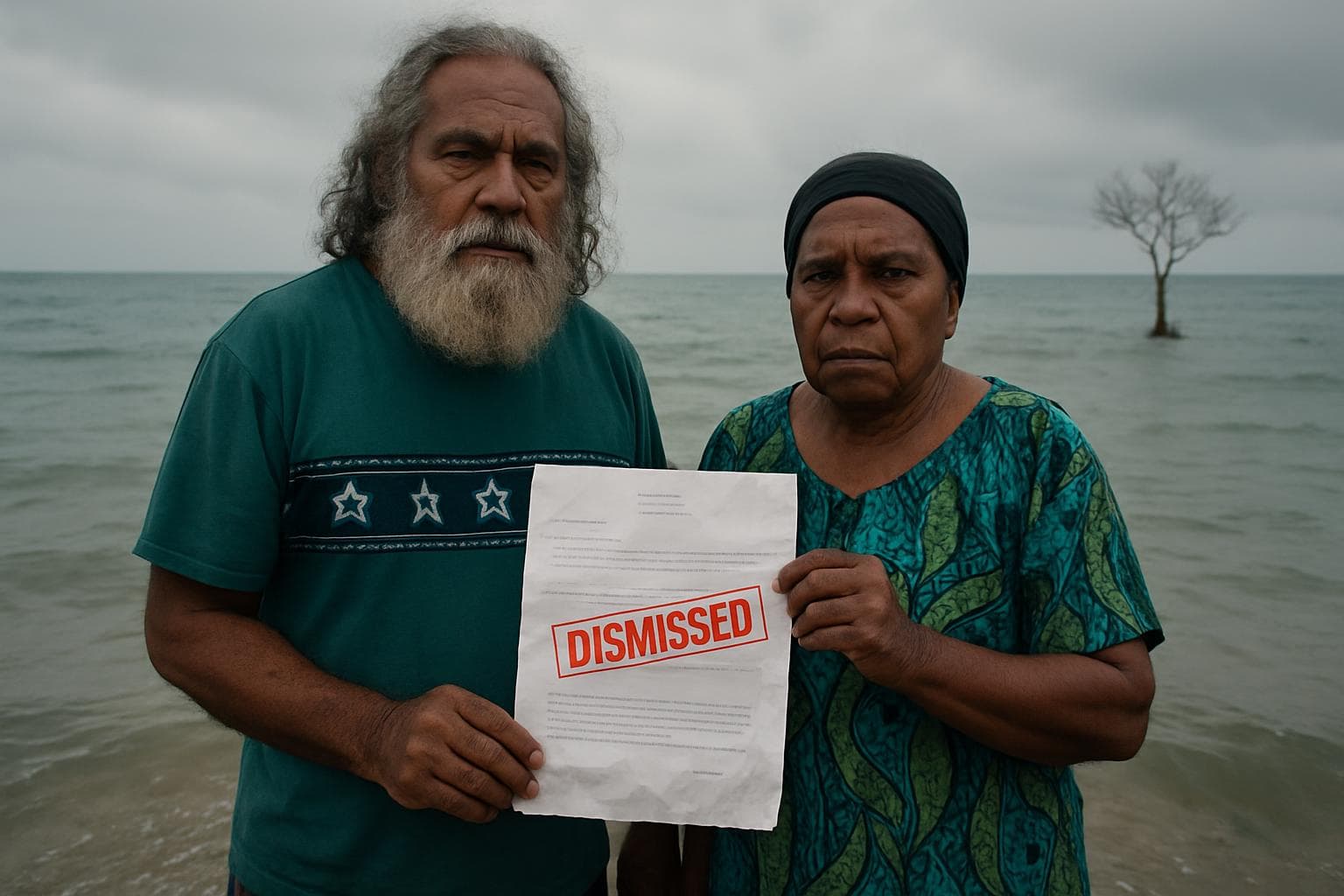
- The plaintiffs, Uncle Pabai Pabai and Uncle Paul Kabai, expressed deep disappointment and plan to explore appeal options.
- The court's decision underscores the legal challenges faced by Indigenous communities in seeking climate justice.
In a significant legal ruling, the Federal Court of Australia has dismissed a landmark climate change lawsuit brought by Torres Strait Islander elders against the Australian government. The case, initiated in 2021 by community leaders Uncle Pabai Pabai and Uncle Paul Kabai, argued that the government had breached its duty of care by failing to adequately protect the Torres Strait Islands from the adverse effects of climate change, such as rising sea levels.
Legal Context and Court's Decision
The plaintiffs sought judicial orders compelling the government to take decisive action, including reducing greenhouse gas emissions in line with scientific recommendations. However, Justice Michael Wigney ruled that climate policy decisions fall within the purview of parliament, not the judiciary. He noted the absence of a legal framework within current negligence laws to address the cultural and environmental losses experienced by the islanders.
Justice Wigney acknowledged the "devastating impact" of climate change on the islands, which are home to a unique culture known as Ailan Kastom. He recognized that without urgent action, the islands and their inhabitants face a "bleak future." Despite this, he concluded that the common law of negligence does not provide a viable legal avenue for such claims.
Community Reaction and Future Steps
The decision has left the plaintiffs and their communities in profound distress. Uncle Pabai expressed his heartbreak, stating, "My heart is broken for my family and my community." Similarly, Uncle Paul voiced his shock and concern for all those affected by climate change, both Indigenous and non-Indigenous. The legal team representing the elders, led by Brett Spiegel of Phi Finney McDonald, is considering an appeal, with plans to review the judgment thoroughly.
Cultural and Environmental Stakes
The Torres Strait Islands, located between northern Queensland and Papua New Guinea, are experiencing sea level rises significantly higher than the global average. The islands' residents, predominantly Indigenous Australians, maintain a deep spiritual connection to their land and waters. The court heard that climate change has already damaged sacred sites and burial grounds, threatening the cultural heritage of the islanders.
WHAT THIS MIGHT MEAN
The dismissal of this case highlights the complex intersection of climate change, Indigenous rights, and legal frameworks. As the plaintiffs explore potential appeals, the case underscores the need for legislative reforms to address climate-related grievances effectively. The ruling also emphasizes the role of public advocacy and political engagement in driving climate action. Moving forward, the outcome of any appeal could set a precedent for future climate litigation, potentially influencing both national and international legal landscapes.
Related Articles

Australia Bars IS-Linked Citizen from Returning Amidst Repatriation Debate
Angus Taylor Challenges Sussan Ley for Leadership of Australia's Liberal Party

Queensland Man Faces 596 Child Abuse Charges in Global Online Grooming Case
Coroner Highlights Psychiatric Care Failures in Bondi Junction Stabbing Case

Tragic Death of Canadian Backpacker on K'Gari Island Sparks Investigation

Australia Moves Forward with Gun Control Reforms Amid State Opposition
Torres Strait Elders' Climate Case Dismissed by Australian Court
In This Article
 Leila Hassan| Published
 HIGHLIGHTS
- A Federal Court dismissed a landmark climate case filed by Torres Strait elders against the Australian government, citing that climate policy is a matter for parliament.
- The case argued the government breached its duty of care by not protecting the islands from climate change impacts, including rising sea levels.
- Justice Michael Wigney acknowledged the severe climate threats but stated current negligence laws do not support compensation for cultural losses.
- The plaintiffs, Uncle Pabai Pabai and Uncle Paul Kabai, expressed deep disappointment and plan to explore appeal options.
- The court's decision underscores the legal challenges faced by Indigenous communities in seeking climate justice.
In a significant legal ruling, the Federal Court of Australia has dismissed a landmark climate change lawsuit brought by Torres Strait Islander elders against the Australian government. The case, initiated in 2021 by community leaders Uncle Pabai Pabai and Uncle Paul Kabai, argued that the government had breached its duty of care by failing to adequately protect the Torres Strait Islands from the adverse effects of climate change, such as rising sea levels.
Legal Context and Court's Decision
The plaintiffs sought judicial orders compelling the government to take decisive action, including reducing greenhouse gas emissions in line with scientific recommendations. However, Justice Michael Wigney ruled that climate policy decisions fall within the purview of parliament, not the judiciary. He noted the absence of a legal framework within current negligence laws to address the cultural and environmental losses experienced by the islanders.
Justice Wigney acknowledged the "devastating impact" of climate change on the islands, which are home to a unique culture known as Ailan Kastom. He recognized that without urgent action, the islands and their inhabitants face a "bleak future." Despite this, he concluded that the common law of negligence does not provide a viable legal avenue for such claims.
Community Reaction and Future Steps
The decision has left the plaintiffs and their communities in profound distress. Uncle Pabai expressed his heartbreak, stating, "My heart is broken for my family and my community." Similarly, Uncle Paul voiced his shock and concern for all those affected by climate change, both Indigenous and non-Indigenous. The legal team representing the elders, led by Brett Spiegel of Phi Finney McDonald, is considering an appeal, with plans to review the judgment thoroughly.
Cultural and Environmental Stakes
The Torres Strait Islands, located between northern Queensland and Papua New Guinea, are experiencing sea level rises significantly higher than the global average. The islands' residents, predominantly Indigenous Australians, maintain a deep spiritual connection to their land and waters. The court heard that climate change has already damaged sacred sites and burial grounds, threatening the cultural heritage of the islanders.
WHAT THIS MIGHT MEAN
The dismissal of this case highlights the complex intersection of climate change, Indigenous rights, and legal frameworks. As the plaintiffs explore potential appeals, the case underscores the need for legislative reforms to address climate-related grievances effectively. The ruling also emphasizes the role of public advocacy and political engagement in driving climate action. Moving forward, the outcome of any appeal could set a precedent for future climate litigation, potentially influencing both national and international legal landscapes.
Related Articles
Australia Bars IS-Linked Citizen from Returning Amidst Repatriation Debate
Angus Taylor Challenges Sussan Ley for Leadership of Australia's Liberal Party
Queensland Man Faces 596 Child Abuse Charges in Global Online Grooming Case
Coroner Highlights Psychiatric Care Failures in Bondi Junction Stabbing Case
Tragic Death of Canadian Backpacker on K'Gari Island Sparks Investigation
Australia Moves Forward with Gun Control Reforms Amid State Opposition