
Trump's 50% Tariff on Brazil Escalates Tensions Over Bolsonaro Trial
In This Article
HIGHLIGHTS
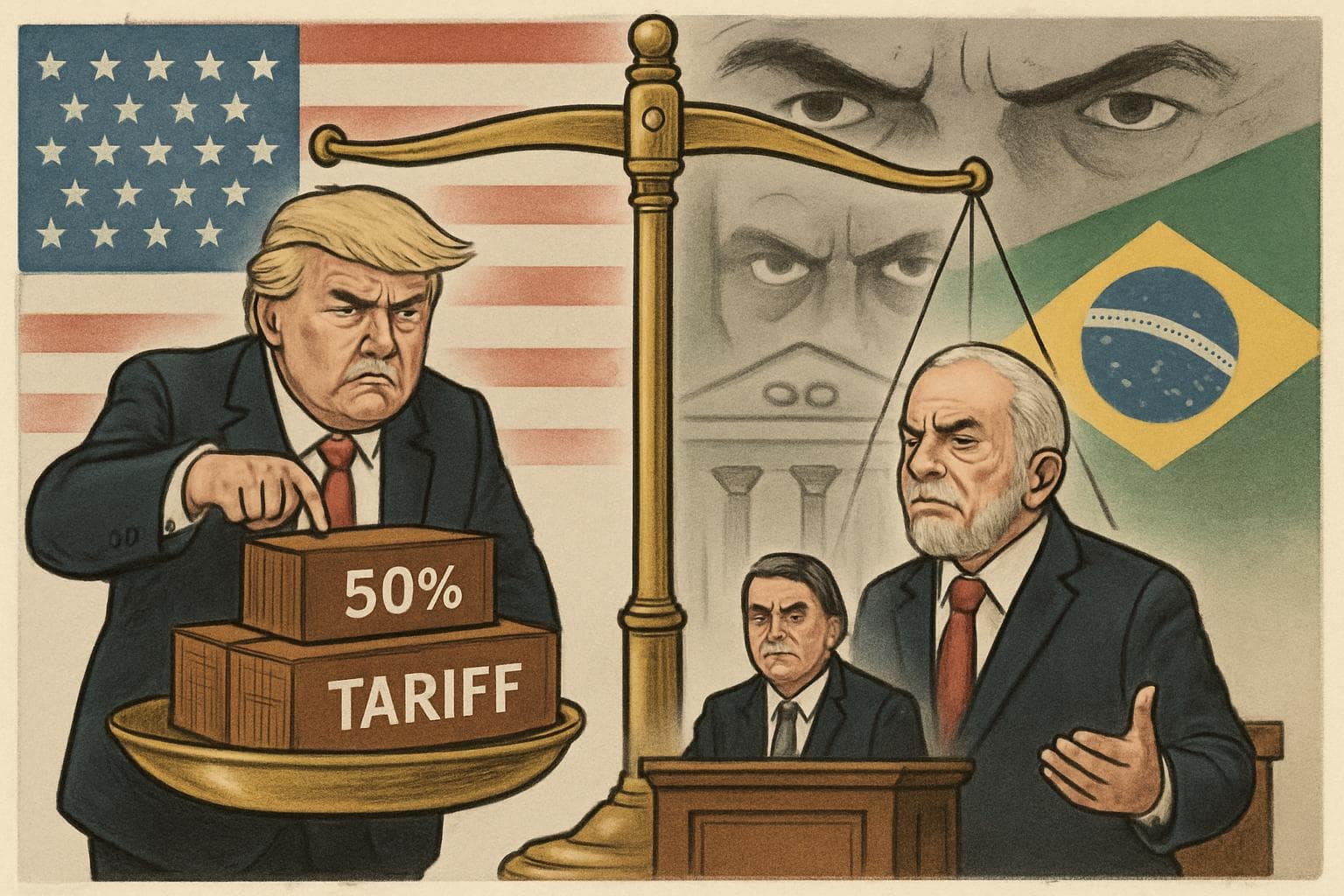
- President Donald Trump announced a 50% tariff on Brazilian goods, citing the trial of former President Jair Bolsonaro as a "witch hunt."
- Brazilian President Luiz Inácio Lula da Silva rejected Trump's demands to halt Bolsonaro's trial, emphasizing Brazil's judicial independence.
- Trump accused Brazil of unfair digital trade practices and plans a 301 investigation, which could lead to further tariffs.
- The tariffs are part of a broader move by Trump, targeting multiple countries with increased trade levies starting August 1.
- Brazil's currency, the real, fell over 2% against the dollar following the tariff announcement.
In a significant escalation of trade tensions, U.S. President Donald Trump has announced a 50% tariff on Brazilian imports, linking the move to what he describes as a "witch hunt" against former Brazilian President Jair Bolsonaro. The announcement, made via a letter posted on Trump's Truth Social platform, comes amid a broader wave of tariffs targeting several countries, set to take effect on August 1.
Tariffs and Accusations
Trump's decision to impose the hefty tariff on Brazil is a departure from his standard approach, as he directly criticized the ongoing trial of Bolsonaro, who faces charges related to an alleged plot to overturn the 2022 election results. Trump, who has previously hosted Bolsonaro at his Mar-a-Lago resort, called for an immediate end to the trial, describing it as unjust.
The U.S. president also accused Brazil of engaging in unfair digital trade practices, prompting a planned 301 investigation. This legal mechanism, historically used to address trade imbalances, could pave the way for additional tariffs on Brazilian goods.
Brazilian Response
Brazilian President Luiz Inácio Lula da Silva swiftly rejected Trump's demands, asserting the independence of Brazil's judiciary. In a statement, Lula emphasized that the charges against Bolsonaro fall under Brazil's legal jurisdiction and are not subject to external influence. He also refuted Trump's claim of a trade deficit, noting that the U.S. actually enjoys a trade surplus with Brazil.
Lula further defended Brazil's regulatory actions against U.S. tech companies, which Trump labeled as censorship. "Freedom of expression must not be confused with aggression or violent practices," Lula stated, underscoring that all companies must comply with Brazilian law.
Economic Impact
The announcement of the tariffs has already impacted Brazil's economy, with the real currency dropping more than 2% against the dollar. The tariffs are expected to hit various sectors, including Brazil's beef industry, which heavily relies on exports to the U.S.
WHAT THIS MIGHT MEAN
The imposition of tariffs could strain U.S.-Brazil relations, potentially leading to retaliatory measures from Brazil. Lula's firm stance against external interference may bolster his domestic support, especially if he frames the tariffs as an attack on Brazil's sovereignty. Meanwhile, the planned 301 investigation could further complicate trade negotiations, as it signals a more aggressive U.S. trade policy under Trump. Experts suggest that if Lula navigates the situation effectively, it could enhance his political standing ahead of future elections.
Related Articles
Cuba Faces Widespread Blackout Amid Deepening Fuel Crisis
Spain's Sánchez Stands Firm Against Trump's Trade Threat Over Iran Stance

Armed Intruder Fatally Shot at Mar-a-Lago by Secret Service

Greenland Politely Declines Trump's Hospital Ship Offer Amid Healthcare Debate

St Francis of Assisi's Bones Draw Global Pilgrims to Italy

Tech Giants Pledge to Cover AI Data Center Energy Costs Amid Rising Electricity Concerns
Trump's 50% Tariff on Brazil Escalates Tensions Over Bolsonaro Trial
In This Article
HIGHLIGHTS
- President Donald Trump announced a 50% tariff on Brazilian goods, citing the trial of former President Jair Bolsonaro as a "witch hunt."
- Brazilian President Luiz Inácio Lula da Silva rejected Trump's demands to halt Bolsonaro's trial, emphasizing Brazil's judicial independence.
- Trump accused Brazil of unfair digital trade practices and plans a 301 investigation, which could lead to further tariffs.
- The tariffs are part of a broader move by Trump, targeting multiple countries with increased trade levies starting August 1.
- Brazil's currency, the real, fell over 2% against the dollar following the tariff announcement.
In a significant escalation of trade tensions, U.S. President Donald Trump has announced a 50% tariff on Brazilian imports, linking the move to what he describes as a "witch hunt" against former Brazilian President Jair Bolsonaro. The announcement, made via a letter posted on Trump's Truth Social platform, comes amid a broader wave of tariffs targeting several countries, set to take effect on August 1.
Tariffs and Accusations
Trump's decision to impose the hefty tariff on Brazil is a departure from his standard approach, as he directly criticized the ongoing trial of Bolsonaro, who faces charges related to an alleged plot to overturn the 2022 election results. Trump, who has previously hosted Bolsonaro at his Mar-a-Lago resort, called for an immediate end to the trial, describing it as unjust.
The U.S. president also accused Brazil of engaging in unfair digital trade practices, prompting a planned 301 investigation. This legal mechanism, historically used to address trade imbalances, could pave the way for additional tariffs on Brazilian goods.
Brazilian Response
Brazilian President Luiz Inácio Lula da Silva swiftly rejected Trump's demands, asserting the independence of Brazil's judiciary. In a statement, Lula emphasized that the charges against Bolsonaro fall under Brazil's legal jurisdiction and are not subject to external influence. He also refuted Trump's claim of a trade deficit, noting that the U.S. actually enjoys a trade surplus with Brazil.
Lula further defended Brazil's regulatory actions against U.S. tech companies, which Trump labeled as censorship. "Freedom of expression must not be confused with aggression or violent practices," Lula stated, underscoring that all companies must comply with Brazilian law.
Economic Impact
The announcement of the tariffs has already impacted Brazil's economy, with the real currency dropping more than 2% against the dollar. The tariffs are expected to hit various sectors, including Brazil's beef industry, which heavily relies on exports to the U.S.
WHAT THIS MIGHT MEAN
The imposition of tariffs could strain U.S.-Brazil relations, potentially leading to retaliatory measures from Brazil. Lula's firm stance against external interference may bolster his domestic support, especially if he frames the tariffs as an attack on Brazil's sovereignty. Meanwhile, the planned 301 investigation could further complicate trade negotiations, as it signals a more aggressive U.S. trade policy under Trump. Experts suggest that if Lula navigates the situation effectively, it could enhance his political standing ahead of future elections.
Related Articles
Cuba Faces Widespread Blackout Amid Deepening Fuel Crisis
Spain's Sánchez Stands Firm Against Trump's Trade Threat Over Iran Stance
Armed Intruder Fatally Shot at Mar-a-Lago by Secret Service
Greenland Politely Declines Trump's Hospital Ship Offer Amid Healthcare Debate
St Francis of Assisi's Bones Draw Global Pilgrims to Italy
Tech Giants Pledge to Cover AI Data Center Energy Costs Amid Rising Electricity Concerns