
Global Trade Shaken by New Trump Tariffs
In This Article
HIGHLIGHTS
- President Donald Trump announced new tariffs affecting over 90 countries, reshaping global trade dynamics.
- Canada faces increased tariffs from 25% to 35%, while Mexico has a 90-day reprieve to negotiate terms.
- Asian economies, including Japan and South Korea, reduced proposed tariffs from 25% to 15% through negotiations.
- European countries face a tariff increase to 15%, impacting sectors like agriculture and automotive.
- Stock markets worldwide reacted negatively, with significant declines in major indices amid economic uncertainty.
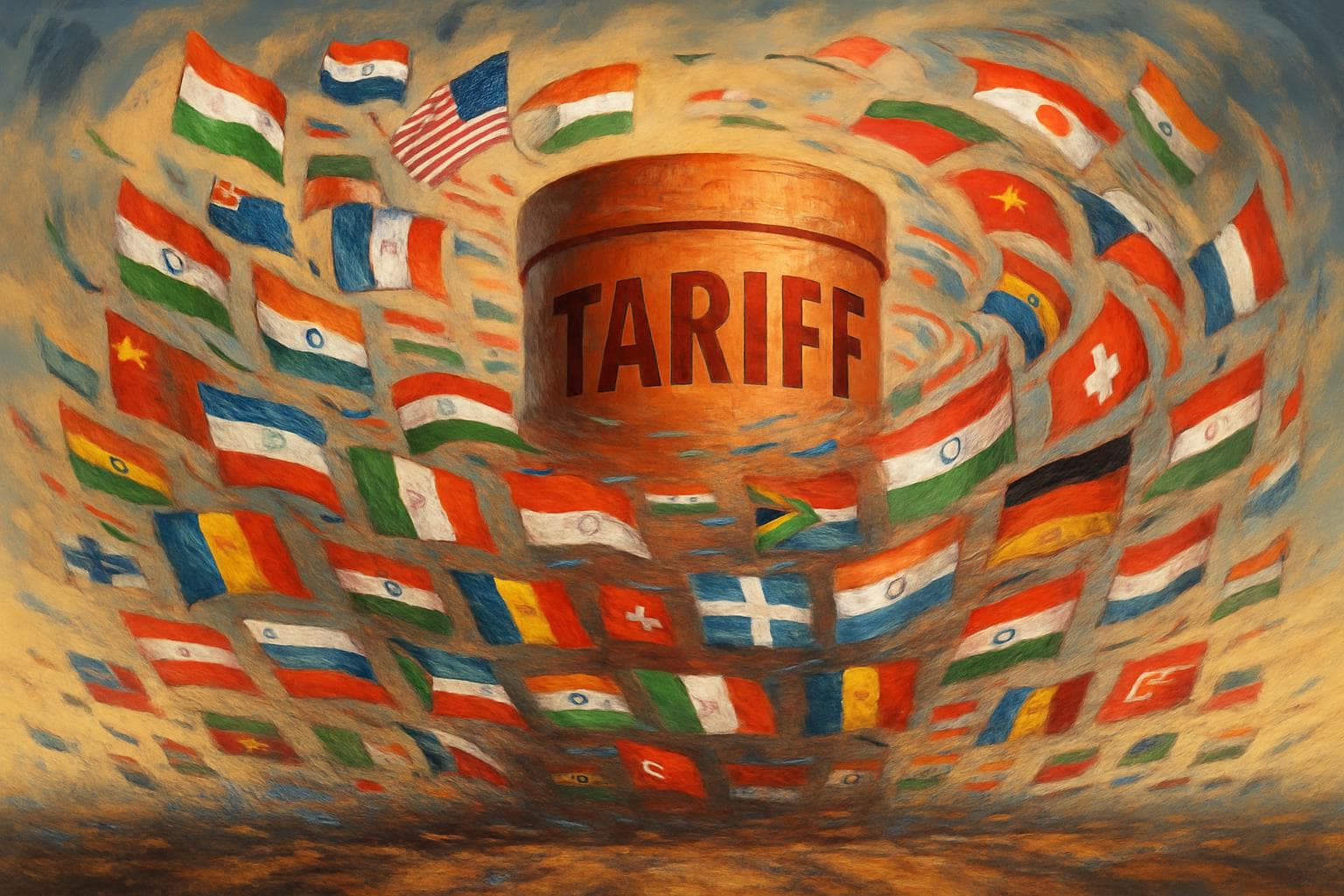
President Donald Trump's latest tariff announcement has sent shockwaves through global markets, affecting over 90 countries and prompting a flurry of diplomatic negotiations. The new tariffs, part of an executive order signed late Thursday, aim to pressure countries into revising trade agreements with the United States.
North American Trade Dynamics
Canada, a key US trading partner, faces a steep tariff increase from 25% to 35%, prompting disappointment from Canadian Prime Minister Mark Carney. In contrast, Mexico has been granted a 90-day extension to negotiate terms, offering a temporary reprieve for businesses reliant on cross-border trade. Jaime Chamberlain, president of Chamberlain Distributing in Arizona, expressed relief over the extension, emphasizing the importance of maintaining calm negotiations.
Asian Economies and Trade Adjustments
Asian countries, particularly those with export-driven economies, have been significantly impacted. Japan and South Korea, both vital to US markets for cars and semiconductors, successfully negotiated a reduction in proposed tariffs from 25% to 15%. Taiwan, another key player in the semiconductor industry, saw its tariffs reduced from 32% to 20%, though further negotiations are anticipated.
European and Global Reactions
European nations, initially facing a potential doubling of tariffs, managed to secure a deal keeping rates at 15%. However, this still marks a substantial increase from previous levels, affecting sectors such as agriculture and pharmaceuticals. The Italian Institute of International Political Studies warns of potential GDP declines as a result.
Market Reactions and Economic Concerns
The announcement has triggered volatility in global stock markets, with significant declines in indices such as the Dow Jones and FTSE 100. Investors are concerned about the broader economic impact, including potential inflationary pressures in the US. The Swiss franc and Canadian dollar have also weakened in response to the tariff changes.
WHAT THIS MIGHT MEAN
The coming months will be crucial as countries scramble to negotiate favorable trade terms with the US. The 90-day reprieve for Mexico and the ongoing talks with China suggest that further adjustments to tariffs may occur. Economists warn that prolonged trade tensions could lead to increased costs for consumers and businesses, potentially slowing global economic growth. As countries navigate these challenges, the international community will closely watch how these tariffs reshape trade relationships and economic policies worldwide.
Images from the Web

Related Articles

UK Faces Dilemmas Amid Iran Conflict and China Spying Allegations
Canada Calls for De-escalation Amid US-Israel Strikes on Iran
China Sets Lowest GDP Growth Target in Decades Amid Economic Challenges
Canada and Australia Forge Strategic Partnership Amid Global Uncertainty
Cuba Faces Widespread Blackout Amid Deepening Fuel Crisis

El Mencho's Death Sparks Violent Unrest Across Mexico
Global Trade Shaken by New Trump Tariffs
In This Article
HIGHLIGHTS
- President Donald Trump announced new tariffs affecting over 90 countries, reshaping global trade dynamics.
- Canada faces increased tariffs from 25% to 35%, while Mexico has a 90-day reprieve to negotiate terms.
- Asian economies, including Japan and South Korea, reduced proposed tariffs from 25% to 15% through negotiations.
- European countries face a tariff increase to 15%, impacting sectors like agriculture and automotive.
- Stock markets worldwide reacted negatively, with significant declines in major indices amid economic uncertainty.
President Donald Trump's latest tariff announcement has sent shockwaves through global markets, affecting over 90 countries and prompting a flurry of diplomatic negotiations. The new tariffs, part of an executive order signed late Thursday, aim to pressure countries into revising trade agreements with the United States.
North American Trade Dynamics
Canada, a key US trading partner, faces a steep tariff increase from 25% to 35%, prompting disappointment from Canadian Prime Minister Mark Carney. In contrast, Mexico has been granted a 90-day extension to negotiate terms, offering a temporary reprieve for businesses reliant on cross-border trade. Jaime Chamberlain, president of Chamberlain Distributing in Arizona, expressed relief over the extension, emphasizing the importance of maintaining calm negotiations.
Asian Economies and Trade Adjustments
Asian countries, particularly those with export-driven economies, have been significantly impacted. Japan and South Korea, both vital to US markets for cars and semiconductors, successfully negotiated a reduction in proposed tariffs from 25% to 15%. Taiwan, another key player in the semiconductor industry, saw its tariffs reduced from 32% to 20%, though further negotiations are anticipated.
European and Global Reactions
European nations, initially facing a potential doubling of tariffs, managed to secure a deal keeping rates at 15%. However, this still marks a substantial increase from previous levels, affecting sectors such as agriculture and pharmaceuticals. The Italian Institute of International Political Studies warns of potential GDP declines as a result.
Market Reactions and Economic Concerns
The announcement has triggered volatility in global stock markets, with significant declines in indices such as the Dow Jones and FTSE 100. Investors are concerned about the broader economic impact, including potential inflationary pressures in the US. The Swiss franc and Canadian dollar have also weakened in response to the tariff changes.
WHAT THIS MIGHT MEAN
The coming months will be crucial as countries scramble to negotiate favorable trade terms with the US. The 90-day reprieve for Mexico and the ongoing talks with China suggest that further adjustments to tariffs may occur. Economists warn that prolonged trade tensions could lead to increased costs for consumers and businesses, potentially slowing global economic growth. As countries navigate these challenges, the international community will closely watch how these tariffs reshape trade relationships and economic policies worldwide.
Images from the Web
Related Articles
UK Faces Dilemmas Amid Iran Conflict and China Spying Allegations
Canada Calls for De-escalation Amid US-Israel Strikes on Iran
China Sets Lowest GDP Growth Target in Decades Amid Economic Challenges
Canada and Australia Forge Strategic Partnership Amid Global Uncertainty
Cuba Faces Widespread Blackout Amid Deepening Fuel Crisis
El Mencho's Death Sparks Violent Unrest Across Mexico