
Excavation Begins at Tuam Mother and Baby Home Site to Uncover Infant Remains
In This Article
HIGHLIGHTS
- Excavation work has begun at the Tuam site in County Galway, linked to a former mother and baby home run by the Bon Secours Sisters.
- The site is believed to contain the remains of nearly 800 infants, discovered in a disused sewage tank, with no burial records.
- The Office of the Director of Authorised Intervention (ODAIT) is overseeing the excavation under the Irish Institutional Burials Act 2022.
- The work, expected to last 24 months, aims to recover, analyze, and respectfully rebury the remains.
- Catherine Corless, a local historian, uncovered the burial site's existence, prompting a government investigation and a formal apology in 2021.
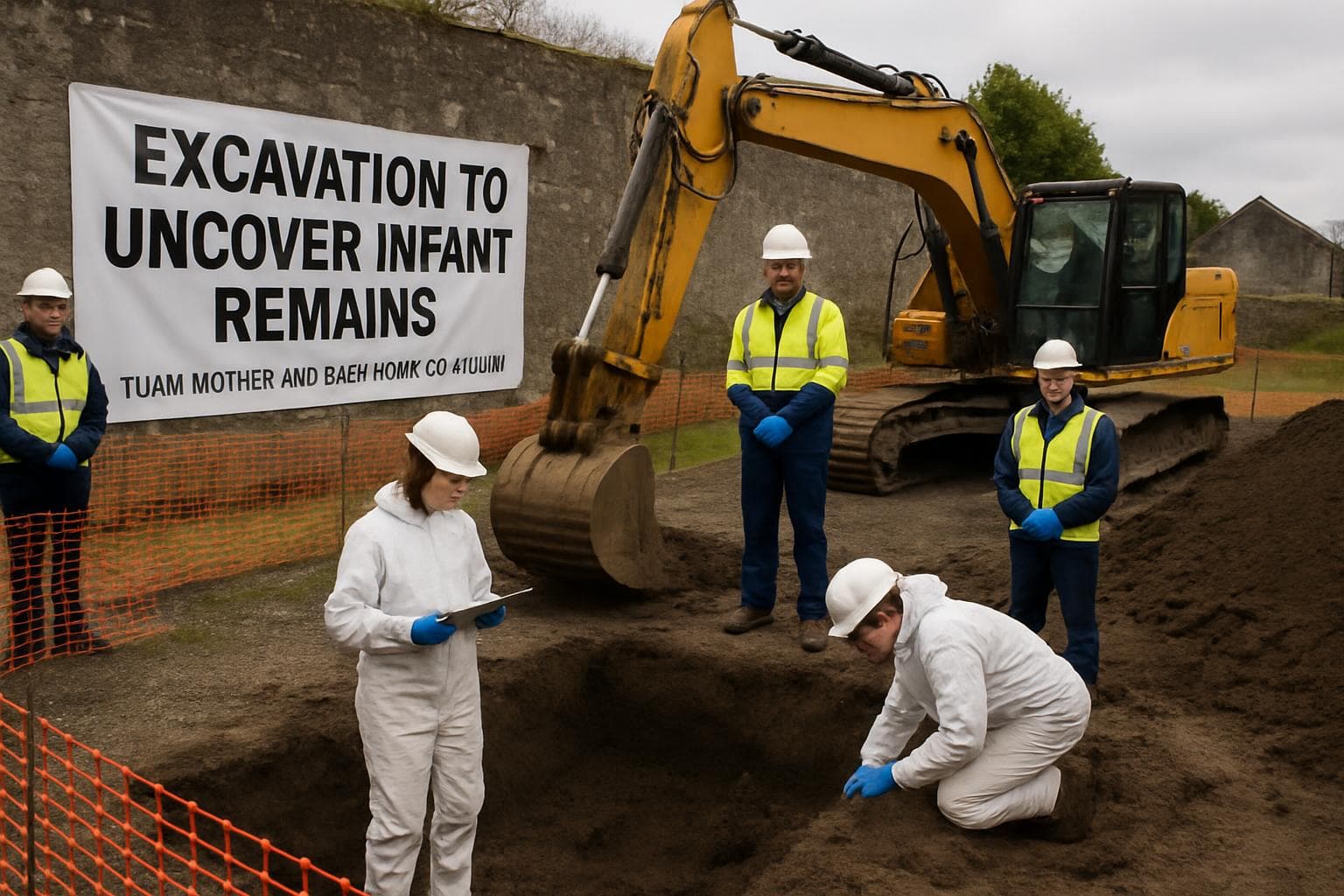
The excavation of a mass burial site at the former Tuam mother and baby home in County Galway has commenced, marking a significant step in addressing a dark chapter of Ireland's history. The site, operated by the Bon Secours Sisters until its closure in 1961, is believed to contain the remains of nearly 800 infants, discovered in a disused sewage tank with no burial records.
The Office of the Director of Authorised Intervention (ODAIT) is leading the excavation under the Irish Institutional Burials Act 2022. This independent body aims to recover, forensically analyze, and respectfully rebury the remains. Daniel MacSweeney from ODAIT emphasized the complexity of the task, noting the site's size and the co-mingled nature of the remains. "The entire site, including the memorial garden, will only be accessible to staff carrying out the works," MacSweeney stated, adding that 24-hour security will ensure the site's forensic integrity.
The excavation, expected to take approximately 24 months, follows the groundbreaking research of local historian Catherine Corless. Her discovery of 796 death certificates without corresponding burial records brought international attention to the site. Corless's findings led to a government investigation into Ireland's mother and baby homes, institutions where unmarried mothers were sent to give birth, often facing stigma and high infant mortality rates.
In 2021, the Irish government issued a formal apology for the state's role in these institutions, acknowledging the societal and institutional failures that allowed such practices to persist. The excavation at Tuam is part of a broader effort to confront and reconcile with this troubling period in Irish history.
WHAT THIS MIGHT MEAN
The excavation at Tuam could potentially lead to further revelations about the conditions and practices within Ireland's mother and baby homes. As the work progresses, the identification of remains may provide closure for families seeking answers about their lost relatives. Legally, the findings could prompt additional investigations or reparations for survivors and families affected by these institutions.
Politically, the excavation may reignite discussions about Ireland's historical treatment of women and children, influencing future policies on social justice and historical accountability. Experts suggest that the process of uncovering and memorializing the past is crucial for healing and ensuring such injustices are not repeated.
Related Articles

Irish Man's Prolonged ICE Detention Sparks Outcry Over Conditions

Teen's Heroic Swim Saves Family Swept Out to Sea in Western Australia

Global Reflections on Holocaust Memorial Day Amid Rising Antisemitism

MPs Vote to Remove Conditional Immunity for Troubles-Era Crimes

UK Faces Trade Tensions as Trump Threatens Tariffs Over Greenland Dispute

Whooper Swans Flock to Lancashire as Global Census Tracks Swan Populations
Excavation Begins at Tuam Mother and Baby Home Site to Uncover Infant Remains
In This Article
 Sofia Romano| Published
 HIGHLIGHTS
- Excavation work has begun at the Tuam site in County Galway, linked to a former mother and baby home run by the Bon Secours Sisters.
- The site is believed to contain the remains of nearly 800 infants, discovered in a disused sewage tank, with no burial records.
- The Office of the Director of Authorised Intervention (ODAIT) is overseeing the excavation under the Irish Institutional Burials Act 2022.
- The work, expected to last 24 months, aims to recover, analyze, and respectfully rebury the remains.
- Catherine Corless, a local historian, uncovered the burial site's existence, prompting a government investigation and a formal apology in 2021.
The excavation of a mass burial site at the former Tuam mother and baby home in County Galway has commenced, marking a significant step in addressing a dark chapter of Ireland's history. The site, operated by the Bon Secours Sisters until its closure in 1961, is believed to contain the remains of nearly 800 infants, discovered in a disused sewage tank with no burial records.
The Office of the Director of Authorised Intervention (ODAIT) is leading the excavation under the Irish Institutional Burials Act 2022. This independent body aims to recover, forensically analyze, and respectfully rebury the remains. Daniel MacSweeney from ODAIT emphasized the complexity of the task, noting the site's size and the co-mingled nature of the remains. "The entire site, including the memorial garden, will only be accessible to staff carrying out the works," MacSweeney stated, adding that 24-hour security will ensure the site's forensic integrity.
The excavation, expected to take approximately 24 months, follows the groundbreaking research of local historian Catherine Corless. Her discovery of 796 death certificates without corresponding burial records brought international attention to the site. Corless's findings led to a government investigation into Ireland's mother and baby homes, institutions where unmarried mothers were sent to give birth, often facing stigma and high infant mortality rates.
In 2021, the Irish government issued a formal apology for the state's role in these institutions, acknowledging the societal and institutional failures that allowed such practices to persist. The excavation at Tuam is part of a broader effort to confront and reconcile with this troubling period in Irish history.
WHAT THIS MIGHT MEAN
The excavation at Tuam could potentially lead to further revelations about the conditions and practices within Ireland's mother and baby homes. As the work progresses, the identification of remains may provide closure for families seeking answers about their lost relatives. Legally, the findings could prompt additional investigations or reparations for survivors and families affected by these institutions.
Politically, the excavation may reignite discussions about Ireland's historical treatment of women and children, influencing future policies on social justice and historical accountability. Experts suggest that the process of uncovering and memorializing the past is crucial for healing and ensuring such injustices are not repeated.
Related Articles
Irish Man's Prolonged ICE Detention Sparks Outcry Over Conditions
Teen's Heroic Swim Saves Family Swept Out to Sea in Western Australia
Global Reflections on Holocaust Memorial Day Amid Rising Antisemitism
MPs Vote to Remove Conditional Immunity for Troubles-Era Crimes
UK Faces Trade Tensions as Trump Threatens Tariffs Over Greenland Dispute
Whooper Swans Flock to Lancashire as Global Census Tracks Swan Populations