
Whooper Swans Flock to Lancashire as Global Census Tracks Swan Populations
In This Article
HIGHLIGHTS
- Over 800 whooper swans from Iceland have arrived at Martin Mere in Lancashire for a milder winter.
- The international swan census, conducted every six years, will track the populations of whooper and Bewick’s swans across the UK and Ireland.
- While whooper swan numbers have doubled in the UK over 25 years, Bewick’s swans have seen a significant decline.
- Climate change may be influencing these migratory patterns, with milder winters benefiting whooper swans but deterring Bewick’s swans from migrating.
- The swans' arrival provides a unique opportunity for visitors to witness these iconic migratory birds up close.
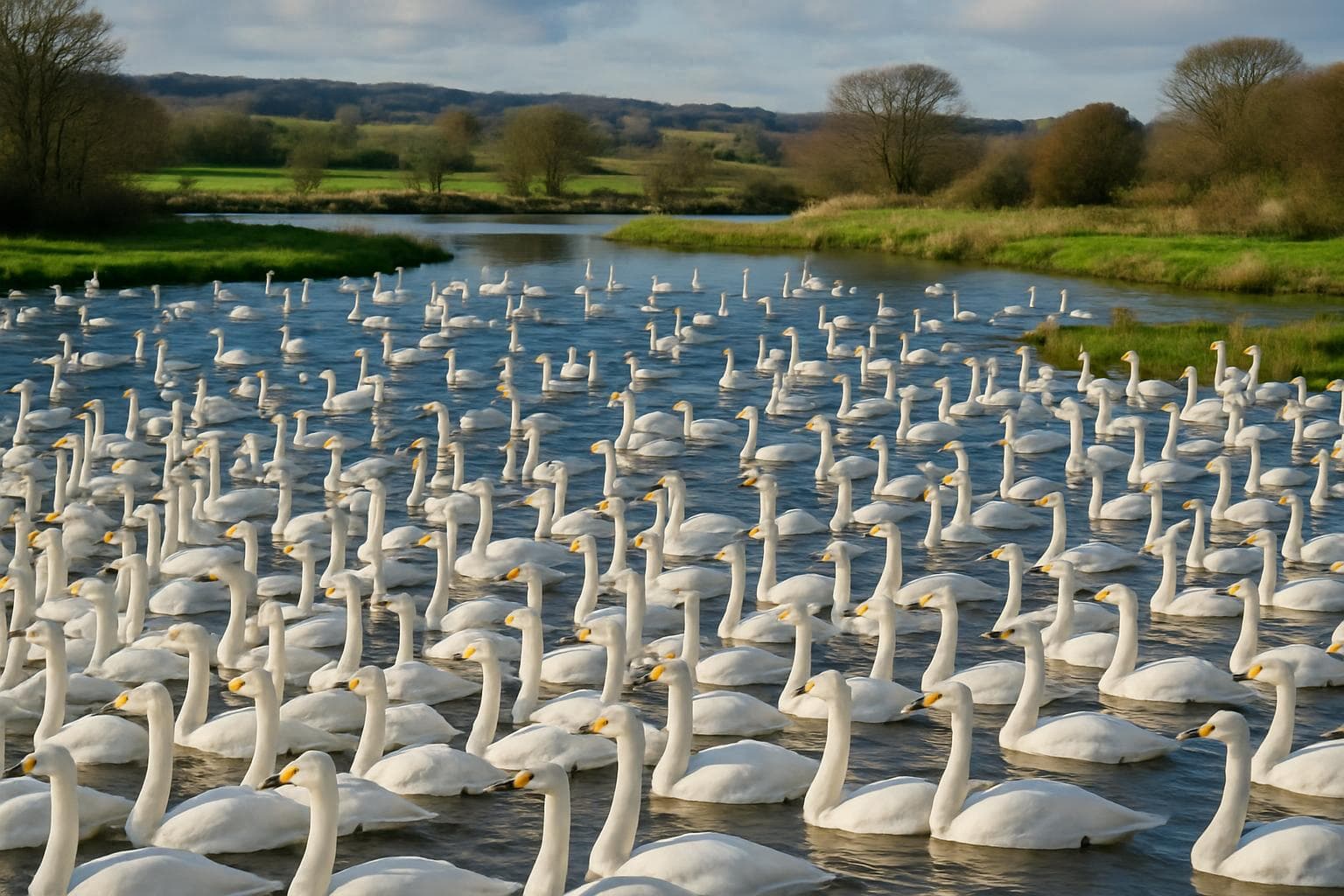
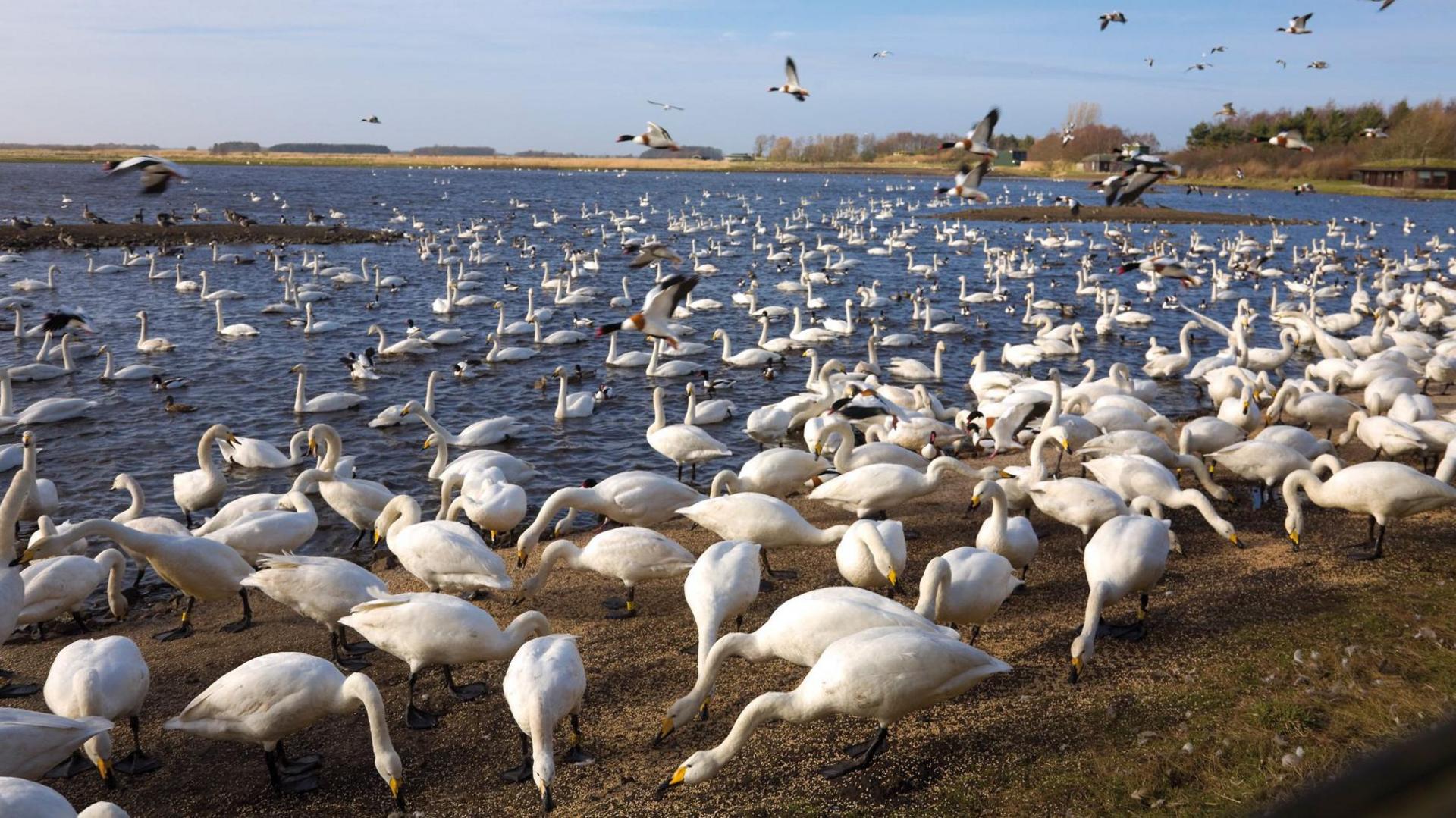
Hundreds of whooper swans have descended upon the Martin Mere wetland in Lancashire, marking a significant migratory event as these birds seek refuge from Iceland's harsh winter. Managed by the Wildfowl and Wetlands Trust (WWT), Martin Mere recorded its first major influx of these striking birds on October 5, with numbers now exceeding 800. Cornelius Jones from Martin Mere noted, "They'll spend the winter here just because it's a bit milder," highlighting the appeal of the region's relatively temperate climate.
Swan Census and Population Trends
This arrival coincides with the six-yearly international swan census, a comprehensive survey involving volunteer birders across the UK and Ireland. The census aims to monitor the populations of the two wintering swan species: whooper swans from Iceland and Bewick’s swans from Siberia. The survey extends beyond the UK, covering regions like the eastern Mediterranean and central Asia for Bewick’s swans, and Iceland and north-west Europe for whooper swans.
In recent decades, the fortunes of these species have diverged. The UK’s whooper swan population has nearly doubled to 20,000 birds, while Bewick’s swans have dwindled to just 700, primarily in southern England. Experts suggest that climate change may be a driving factor, with milder winters enhancing the survival rates of whooper swans, thereby boosting their breeding success in Iceland.
Visitor Experience and Conservation Efforts
The presence of these majestic birds at Martin Mere offers visitors a rare opportunity to observe one of nature's most iconic migratory species. A WWT spokesperson described the whooper swans as "easily recognised by their striking bright white plumage and yellow and black beaks," adding that their calls create a "breathtaking backdrop" for the wetland.
WHAT THIS MIGHT MEAN
Looking ahead, the ongoing impacts of climate change could further alter migratory patterns and population dynamics of these swan species. Conservationists may need to adapt strategies to support Bewick’s swans, whose numbers are declining. The results of the swan census will provide crucial data to inform these efforts. As climate conditions continue to shift, understanding these patterns will be vital for the conservation of migratory birds and the ecosystems they inhabit.
Images from the Web
Related Articles

Canada and Australia Forge Strategic Partnership Amid Global Uncertainty

UK Government to Reform Asylum Seeker Support and Employment Policies

Middle East Conflict Drives UK Energy Prices to New Highs

UK Faces Dilemmas Amid Iran Conflict and China Spying Allegations

UK Reinforces Military Presence in Cyprus Amid Middle East Tensions

Police Federation Chief Arrested Amid Fraud Investigation
Whooper Swans Flock to Lancashire as Global Census Tracks Swan Populations
In This Article
HIGHLIGHTS
- Over 800 whooper swans from Iceland have arrived at Martin Mere in Lancashire for a milder winter.
- The international swan census, conducted every six years, will track the populations of whooper and Bewick’s swans across the UK and Ireland.
- While whooper swan numbers have doubled in the UK over 25 years, Bewick’s swans have seen a significant decline.
- Climate change may be influencing these migratory patterns, with milder winters benefiting whooper swans but deterring Bewick’s swans from migrating.
- The swans' arrival provides a unique opportunity for visitors to witness these iconic migratory birds up close.
Hundreds of whooper swans have descended upon the Martin Mere wetland in Lancashire, marking a significant migratory event as these birds seek refuge from Iceland's harsh winter. Managed by the Wildfowl and Wetlands Trust (WWT), Martin Mere recorded its first major influx of these striking birds on October 5, with numbers now exceeding 800. Cornelius Jones from Martin Mere noted, "They'll spend the winter here just because it's a bit milder," highlighting the appeal of the region's relatively temperate climate.
Swan Census and Population Trends
This arrival coincides with the six-yearly international swan census, a comprehensive survey involving volunteer birders across the UK and Ireland. The census aims to monitor the populations of the two wintering swan species: whooper swans from Iceland and Bewick’s swans from Siberia. The survey extends beyond the UK, covering regions like the eastern Mediterranean and central Asia for Bewick’s swans, and Iceland and north-west Europe for whooper swans.
In recent decades, the fortunes of these species have diverged. The UK’s whooper swan population has nearly doubled to 20,000 birds, while Bewick’s swans have dwindled to just 700, primarily in southern England. Experts suggest that climate change may be a driving factor, with milder winters enhancing the survival rates of whooper swans, thereby boosting their breeding success in Iceland.
Visitor Experience and Conservation Efforts
The presence of these majestic birds at Martin Mere offers visitors a rare opportunity to observe one of nature's most iconic migratory species. A WWT spokesperson described the whooper swans as "easily recognised by their striking bright white plumage and yellow and black beaks," adding that their calls create a "breathtaking backdrop" for the wetland.
WHAT THIS MIGHT MEAN
Looking ahead, the ongoing impacts of climate change could further alter migratory patterns and population dynamics of these swan species. Conservationists may need to adapt strategies to support Bewick’s swans, whose numbers are declining. The results of the swan census will provide crucial data to inform these efforts. As climate conditions continue to shift, understanding these patterns will be vital for the conservation of migratory birds and the ecosystems they inhabit.
Images from the Web
Related Articles
Canada and Australia Forge Strategic Partnership Amid Global Uncertainty
UK Government to Reform Asylum Seeker Support and Employment Policies
Middle East Conflict Drives UK Energy Prices to New Highs
UK Faces Dilemmas Amid Iran Conflict and China Spying Allegations
UK Reinforces Military Presence in Cyprus Amid Middle East Tensions
Police Federation Chief Arrested Amid Fraud Investigation