
Philippines Declares State of Calamity as Typhoon Kalmaegi Devastates Cebu
In This Article
HIGHLIGHTS
- President Ferdinand Marcos Jr declared a state of calamity in the Philippines after Typhoon Kalmaegi caused severe flooding, leaving at least 114 dead and 127 missing.
- The hardest-hit area was Cebu, where 71 deaths were reported, and over 400,000 people were displaced due to the disaster.
- The state of calamity allows for faster disbursement of emergency funds and resources to affected regions.
- Another storm, Uwan, is expected to hit the Philippines soon, potentially exacerbating the current crisis.
- The disaster response has been complicated by a recent corruption scandal involving substandard flood control projects.
In the wake of Typhoon Kalmaegi, which has left a trail of destruction across the central Philippines, President Ferdinand Marcos Jr has declared a state of calamity. This decision comes as the death toll reaches 114, with 127 individuals still missing. The typhoon, one of the most powerful to hit the region this year, has severely impacted Cebu, the country's most populous island, where 71 fatalities have been reported.
Impact on Cebu and Surrounding Areas
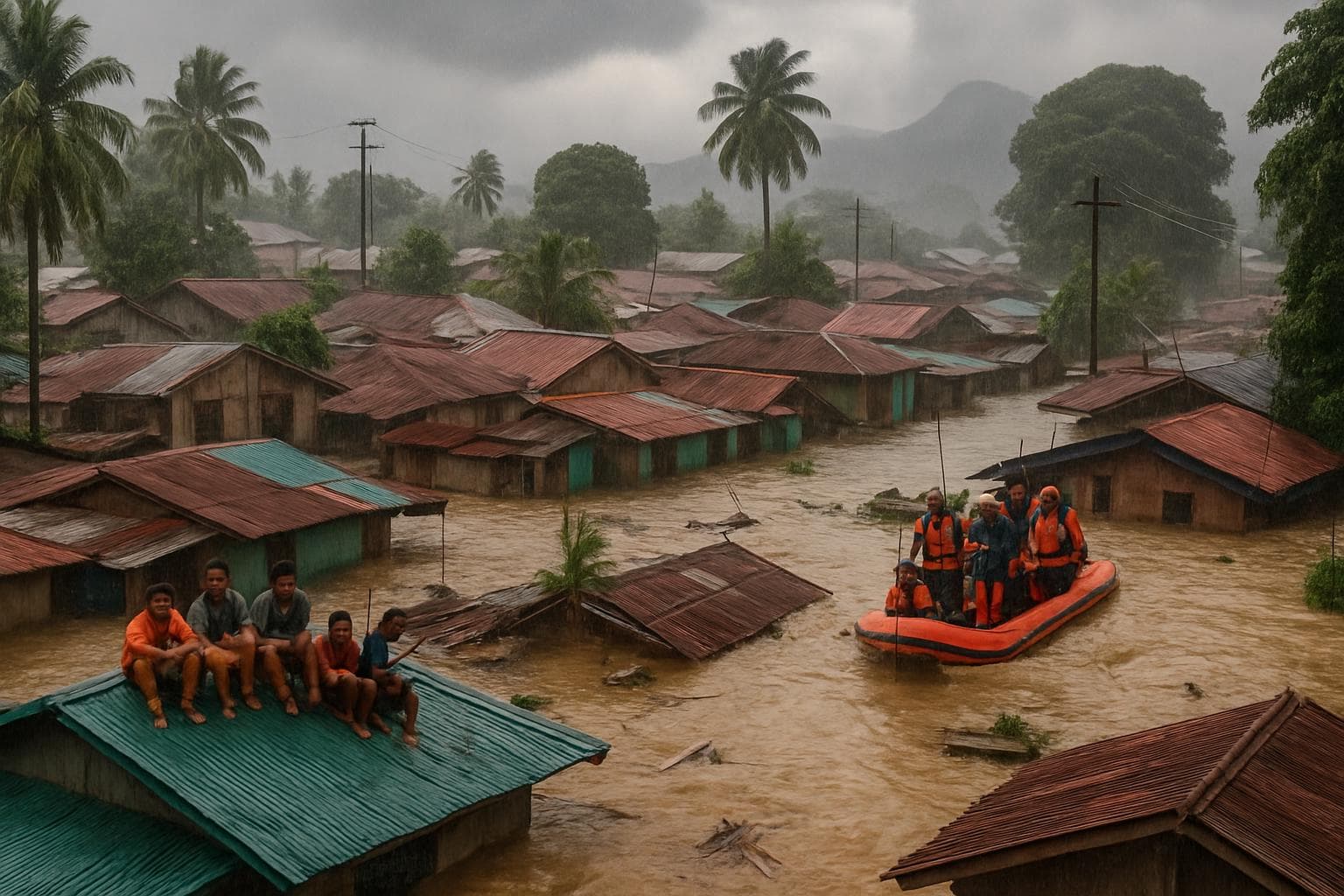
Cebu has borne the brunt of the typhoon's fury, with widespread flooding forcing residents to seek refuge on rooftops. The storm's aftermath has displaced over 400,000 people, with many seeking shelter in emergency facilities. The national disaster agency reports that the storm's impact has been unprecedented, with torrents of muddy water inundating towns and cities, leaving a thick layer of mud in its wake.
Local business owner Jel-an Moira Servas described the devastation, recounting how her home was quickly submerged. "Our houses are still filled with mud, and everything inside is in shambles," she told the BBC, highlighting the daunting task of recovery facing many residents.
Government Response and Challenges
The declaration of a state of calamity enables the government to expedite the release of emergency funds and resources, crucial for addressing the immediate needs of affected communities. However, the response efforts are complicated by a recent corruption scandal involving substandard flood control projects, which has sparked public outrage and protests.
Cebu Governor Pamela Baricuatro acknowledged the challenges, noting that unexpected flash floods overwhelmed existing infrastructure. "We did everything we can for the typhoon but, you know, there are really some unexpected things like flash floods," she said.
Preparing for Further Storms
As the Philippines grapples with the devastation wrought by Kalmaegi, another storm, Uwan, is anticipated to hit the country soon. President Marcos Jr emphasized the urgency of the situation, stating that the potential impact on multiple regions necessitates a national response.
The Philippines, which experiences around 20 typhoons annually, is no stranger to natural disasters. However, the combination of recent earthquakes and the current typhoon season has placed immense pressure on the country's disaster response capabilities.
WHAT THIS MIGHT MEAN
The declaration of a state of calamity is a critical step in mobilizing resources and support for the affected regions. However, the looming threat of another storm, Uwan, poses a significant challenge to ongoing relief efforts. The government's ability to effectively manage the crisis will be crucial in mitigating further loss of life and property.
The recent corruption scandal involving flood control projects underscores the need for systemic reforms to enhance disaster preparedness and infrastructure resilience. As the Philippines continues to face frequent natural disasters, addressing these underlying issues will be essential in safeguarding communities and ensuring a more robust response to future calamities.
Related Articles

Iranian Students Lead Major Protests Amid Rising US-Iran Tensions

Robert Carlyle Joins Line of Duty for Thrilling Seventh Series

Sara Duterte Declares 2028 Presidential Bid Amid Political Turmoil

Inside the Dark Web: How Investigator Greg Squire Rescues Children from Abuse

Gisèle Pelicot: A Journey from Horror to Advocacy in France's Largest Rape Trial

BBC Faces Major Budget Cuts Amid Declining Licence Fee Income
Philippines Declares State of Calamity as Typhoon Kalmaegi Devastates Cebu
In This Article
 Ethan Brooks| Published
 HIGHLIGHTS
- President Ferdinand Marcos Jr declared a state of calamity in the Philippines after Typhoon Kalmaegi caused severe flooding, leaving at least 114 dead and 127 missing.
- The hardest-hit area was Cebu, where 71 deaths were reported, and over 400,000 people were displaced due to the disaster.
- The state of calamity allows for faster disbursement of emergency funds and resources to affected regions.
- Another storm, Uwan, is expected to hit the Philippines soon, potentially exacerbating the current crisis.
- The disaster response has been complicated by a recent corruption scandal involving substandard flood control projects.
In the wake of Typhoon Kalmaegi, which has left a trail of destruction across the central Philippines, President Ferdinand Marcos Jr has declared a state of calamity. This decision comes as the death toll reaches 114, with 127 individuals still missing. The typhoon, one of the most powerful to hit the region this year, has severely impacted Cebu, the country's most populous island, where 71 fatalities have been reported.
Impact on Cebu and Surrounding Areas
Cebu has borne the brunt of the typhoon's fury, with widespread flooding forcing residents to seek refuge on rooftops. The storm's aftermath has displaced over 400,000 people, with many seeking shelter in emergency facilities. The national disaster agency reports that the storm's impact has been unprecedented, with torrents of muddy water inundating towns and cities, leaving a thick layer of mud in its wake.
Local business owner Jel-an Moira Servas described the devastation, recounting how her home was quickly submerged. "Our houses are still filled with mud, and everything inside is in shambles," she told the BBC, highlighting the daunting task of recovery facing many residents.
Government Response and Challenges
The declaration of a state of calamity enables the government to expedite the release of emergency funds and resources, crucial for addressing the immediate needs of affected communities. However, the response efforts are complicated by a recent corruption scandal involving substandard flood control projects, which has sparked public outrage and protests.
Cebu Governor Pamela Baricuatro acknowledged the challenges, noting that unexpected flash floods overwhelmed existing infrastructure. "We did everything we can for the typhoon but, you know, there are really some unexpected things like flash floods," she said.
Preparing for Further Storms
As the Philippines grapples with the devastation wrought by Kalmaegi, another storm, Uwan, is anticipated to hit the country soon. President Marcos Jr emphasized the urgency of the situation, stating that the potential impact on multiple regions necessitates a national response.
The Philippines, which experiences around 20 typhoons annually, is no stranger to natural disasters. However, the combination of recent earthquakes and the current typhoon season has placed immense pressure on the country's disaster response capabilities.
WHAT THIS MIGHT MEAN
The declaration of a state of calamity is a critical step in mobilizing resources and support for the affected regions. However, the looming threat of another storm, Uwan, poses a significant challenge to ongoing relief efforts. The government's ability to effectively manage the crisis will be crucial in mitigating further loss of life and property.
The recent corruption scandal involving flood control projects underscores the need for systemic reforms to enhance disaster preparedness and infrastructure resilience. As the Philippines continues to face frequent natural disasters, addressing these underlying issues will be essential in safeguarding communities and ensuring a more robust response to future calamities.
Related Articles
Iranian Students Lead Major Protests Amid Rising US-Iran Tensions
Robert Carlyle Joins Line of Duty for Thrilling Seventh Series
Sara Duterte Declares 2028 Presidential Bid Amid Political Turmoil
Inside the Dark Web: How Investigator Greg Squire Rescues Children from Abuse
Gisèle Pelicot: A Journey from Horror to Advocacy in France's Largest Rape Trial
BBC Faces Major Budget Cuts Amid Declining Licence Fee Income