
BBC Faces Major Budget Cuts Amid Declining Licence Fee Income
In This Article
HIGHLIGHTS
- The BBC plans to cut up to 10% of its costs over the next three years, amounting to £400m-£600m, due to financial pressures.
- Declining licence fee income is a major factor, with 300,000 fewer households paying the fee last year.
- Outgoing Director General Tim Davie emphasized the need for the BBC to adapt in a rapidly changing media market.
- Job losses and programming changes are expected as part of the cost-cutting measures.
- The BBC is negotiating with the government on its future funding model ahead of the royal charter renewal in 2027.
The BBC is set to implement significant budget cuts, amounting to between £400 million and £600 million, over the next three years. This move comes as the broadcaster grapples with substantial financial pressures, largely driven by a decline in licence fee income. The cuts, representing about 10% of the BBC's costs, are expected to lead to job losses and changes in programming.
Financial Pressures and Licence Fee Decline
The BBC's financial challenges are exacerbated by a notable decrease in the number of households paying the licence fee. Last year alone, 300,000 more households ceased payments, a trend that has outpaced the corporation's forecasts. This decline has prompted the BBC to reassess its financial strategies and explore cost-cutting measures across all departments.
Adapting to a Changing Media Landscape
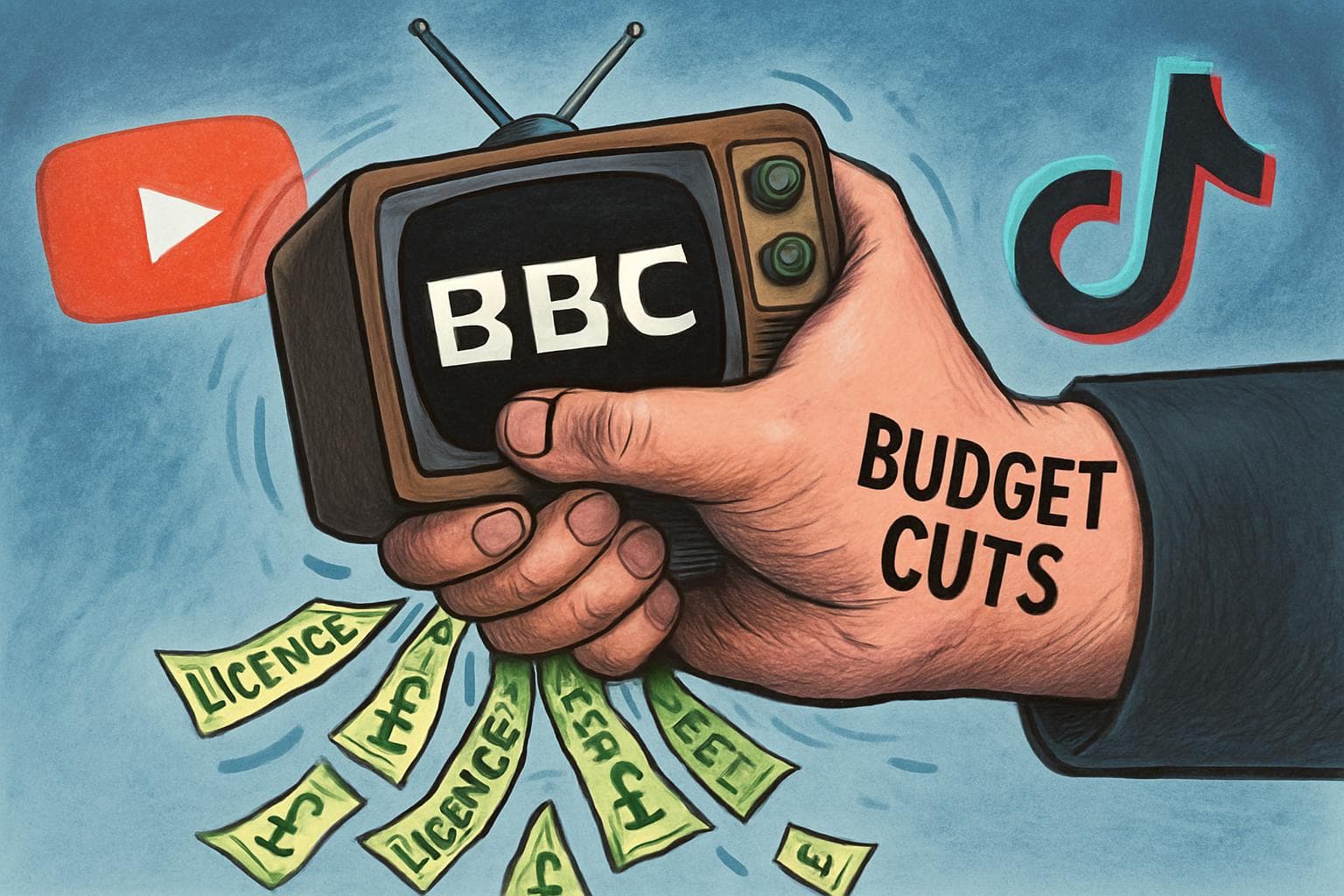
Outgoing Director General Tim Davie has highlighted the need for the BBC to adapt to the rapidly evolving media landscape, marked by the rise of digital and streaming platforms like YouTube and TikTok. Despite these challenges, Davie maintains that the BBC's role as a public service broadcaster is more crucial than ever. However, he acknowledges the necessity for the corporation to be "quite aggressive" in reshaping its services to remain relevant and financially viable.
Impact on Staff and Programming
The anticipated budget cuts are expected to result in job losses and alterations to the BBC's programming. Leigh Tavaziva, the BBC's chief operating officer, has informed staff that these changes are unavoidable given the financial constraints. The broadcaster has already achieved over half a billion pounds in savings over the past three years, reinvesting much of it into its output. However, further reductions are deemed necessary to ensure the BBC continues to provide value for money.
Future Funding and Government Negotiations
As the BBC navigates these financial challenges, it is also engaged in discussions with the government regarding its future funding model. The renewal of the BBC's royal charter in 2027 presents an opportunity to reassess the licence fee structure. The corporation has expressed its willingness to reform the licence fee, provided that any changes safeguard its role as a universal public broadcaster.
WHAT THIS MIGHT MEAN
The BBC's decision to implement significant budget cuts could have far-reaching implications for its operations and public service mandate. As the broadcaster navigates these financial challenges, it will need to balance cost-cutting measures with maintaining the quality and breadth of its programming. The decline in licence fee income underscores the need for a sustainable funding model, which will be a critical focus of the ongoing negotiations with the government.
The outcome of these discussions could reshape the future of public service broadcasting in the UK. If the BBC successfully adapts to the changing media landscape, it may serve as a model for other public broadcasters facing similar challenges. However, failure to address these issues could undermine the BBC's ability to fulfill its public service mission, potentially leading to a diminished role in the global media ecosystem.
Related Articles
UK Government to Reform Asylum Seeker Support and Employment Policies

UK Faces Dilemmas Amid Iran Conflict and China Spying Allegations

UK Reinforces Military Presence in Cyprus Amid Middle East Tensions

UK-Iran Tensions: Starmer Defends Cautious Approach Amid Trump Criticism
Persistent Safety Concerns in Nottingham Maternity Services Amidst Calls for Systemic Reform
Diplomatic Tensions Rise as Trump Criticizes Starmer's Iran Policy
BBC Faces Major Budget Cuts Amid Declining Licence Fee Income
In This Article
 Ethan Brooks| Published
 HIGHLIGHTS
- The BBC plans to cut up to 10% of its costs over the next three years, amounting to £400m-£600m, due to financial pressures.
- Declining licence fee income is a major factor, with 300,000 fewer households paying the fee last year.
- Outgoing Director General Tim Davie emphasized the need for the BBC to adapt in a rapidly changing media market.
- Job losses and programming changes are expected as part of the cost-cutting measures.
- The BBC is negotiating with the government on its future funding model ahead of the royal charter renewal in 2027.
The BBC is set to implement significant budget cuts, amounting to between £400 million and £600 million, over the next three years. This move comes as the broadcaster grapples with substantial financial pressures, largely driven by a decline in licence fee income. The cuts, representing about 10% of the BBC's costs, are expected to lead to job losses and changes in programming.
Financial Pressures and Licence Fee Decline
The BBC's financial challenges are exacerbated by a notable decrease in the number of households paying the licence fee. Last year alone, 300,000 more households ceased payments, a trend that has outpaced the corporation's forecasts. This decline has prompted the BBC to reassess its financial strategies and explore cost-cutting measures across all departments.
Adapting to a Changing Media Landscape
Outgoing Director General Tim Davie has highlighted the need for the BBC to adapt to the rapidly evolving media landscape, marked by the rise of digital and streaming platforms like YouTube and TikTok. Despite these challenges, Davie maintains that the BBC's role as a public service broadcaster is more crucial than ever. However, he acknowledges the necessity for the corporation to be "quite aggressive" in reshaping its services to remain relevant and financially viable.
Impact on Staff and Programming
The anticipated budget cuts are expected to result in job losses and alterations to the BBC's programming. Leigh Tavaziva, the BBC's chief operating officer, has informed staff that these changes are unavoidable given the financial constraints. The broadcaster has already achieved over half a billion pounds in savings over the past three years, reinvesting much of it into its output. However, further reductions are deemed necessary to ensure the BBC continues to provide value for money.
Future Funding and Government Negotiations
As the BBC navigates these financial challenges, it is also engaged in discussions with the government regarding its future funding model. The renewal of the BBC's royal charter in 2027 presents an opportunity to reassess the licence fee structure. The corporation has expressed its willingness to reform the licence fee, provided that any changes safeguard its role as a universal public broadcaster.
WHAT THIS MIGHT MEAN
The BBC's decision to implement significant budget cuts could have far-reaching implications for its operations and public service mandate. As the broadcaster navigates these financial challenges, it will need to balance cost-cutting measures with maintaining the quality and breadth of its programming. The decline in licence fee income underscores the need for a sustainable funding model, which will be a critical focus of the ongoing negotiations with the government.
The outcome of these discussions could reshape the future of public service broadcasting in the UK. If the BBC successfully adapts to the changing media landscape, it may serve as a model for other public broadcasters facing similar challenges. However, failure to address these issues could undermine the BBC's ability to fulfill its public service mission, potentially leading to a diminished role in the global media ecosystem.
Related Articles
UK Government to Reform Asylum Seeker Support and Employment Policies
UK Faces Dilemmas Amid Iran Conflict and China Spying Allegations
UK Reinforces Military Presence in Cyprus Amid Middle East Tensions
UK-Iran Tensions: Starmer Defends Cautious Approach Amid Trump Criticism
Persistent Safety Concerns in Nottingham Maternity Services Amidst Calls for Systemic Reform
Diplomatic Tensions Rise as Trump Criticizes Starmer's Iran Policy