
Typhoon Kalmaegi Wreaks Havoc in the Philippines, Leaving Thousands Displaced
In This Article
HIGHLIGHTS
- Typhoon Kalmaegi, locally known as Tino, has caused at least three deaths and displaced nearly 400,000 people in the Philippines.
- The storm has flooded large areas, particularly in Cebu, with winds exceeding 80mph, prompting widespread evacuations.
- A Philippine Air Force helicopter crashed during relief efforts in Mindanao, with a search and rescue operation underway.
- The Philippines faces its 20th tropical cyclone this year, with Tino expected to move towards the South China Sea by Wednesday.
- Recent extreme weather events have sparked criticism over inadequate flood control systems in the Philippines.
The Philippines is grappling with the aftermath of Typhoon Kalmaegi, locally known as Tino, which has claimed at least three lives and forced nearly 400,000 residents to flee their homes. The typhoon, which struck the central region of the country, has caused widespread flooding, particularly in Cebu, where entire towns have been submerged.
Devastation in Cebu and Beyond
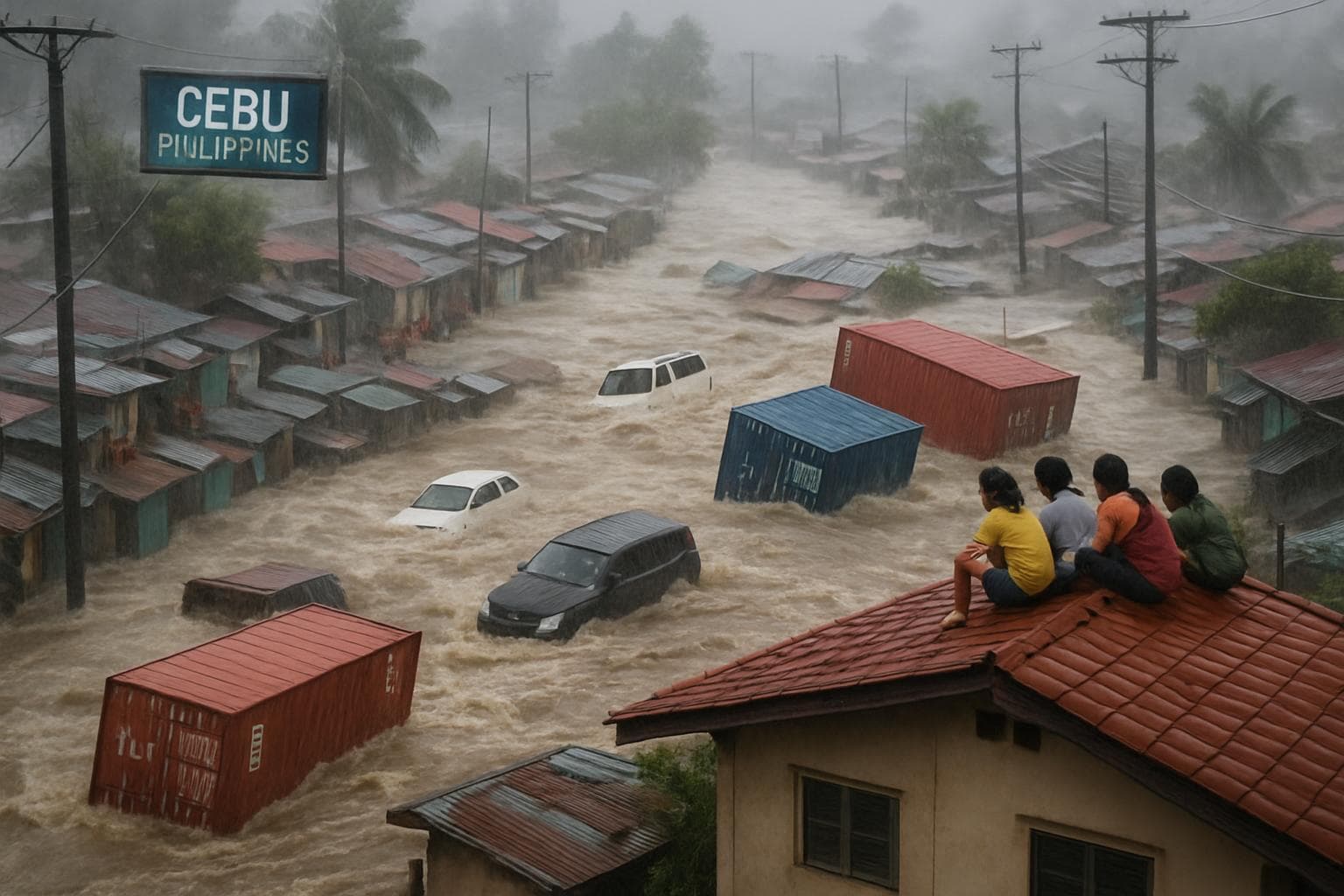
As Typhoon Kalmaegi made landfall early Tuesday, it brought winds exceeding 80mph (130km/h), wreaking havoc across the Visayas islands. Videos from Cebu show residents seeking refuge on rooftops, while vehicles and shipping containers were swept away by the deluge. "The floodwaters are just devastating," said Cebu's provincial governor, Pamela Baricuatro, highlighting the unprecedented nature of the disaster.
Helicopter Crash Amid Relief Efforts
In a tragic turn of events, a Philippine Air Force helicopter crashed in northern Mindanao while assisting in relief operations. Communication with the aircraft was lost, prompting an immediate search and rescue mission. The fate of those on board remains uncertain as authorities continue their efforts to locate the helicopter.
A Year of Relentless Storms
Typhoon Kalmaegi marks the 20th tropical cyclone to hit the Philippines this year, following a series of devastating weather events. The storm's interaction with the northeast monsoon has exacerbated conditions, leading to flash floods and landslides in vulnerable areas. Sea travel has been suspended, and schools and businesses have closed as a precautionary measure.
Criticism Over Flood Control Systems
The recent spate of extreme weather has reignited criticism over the Philippines' flood control infrastructure. Earlier this year, protests erupted over unfinished and sub-standard systems, which many blame on corruption. The government faces mounting pressure to address these issues as the nation braces for more storms in the future.
WHAT THIS MIGHT MEAN
As Typhoon Kalmaegi moves towards the South China Sea, the Philippines remains on high alert for further weather disturbances. The government's response to this disaster will be closely scrutinized, particularly in light of ongoing criticisms regarding flood management. Experts warn that without significant improvements to infrastructure, the country will continue to face severe challenges from future storms. The outcome of the search and rescue operation for the downed helicopter will also be pivotal in shaping public perception of the military's role in disaster response.
Related Articles
Typhoon Fung-wong Leaves Trail of Destruction in the Philippines, Heads Towards Taiwan
Super Typhoon Fung Wong Strikes the Philippines, Prompting Mass Evacuations
Philippines Declares State of Calamity as Typhoon Kalmaegi Devastates Cebu

Philippines Jails Former Mayor for Life Over Scam Centre Tied to Human Trafficking

Typhoon Kajiki Forces Mass Evacuations in Vietnam Amidst Severe Weather Warnings

Sara Duterte Declares 2028 Presidential Bid Amid Political Turmoil
Typhoon Kalmaegi Wreaks Havoc in the Philippines, Leaving Thousands Displaced
In This Article
 Leila Hassan| Published
 HIGHLIGHTS
- Typhoon Kalmaegi, locally known as Tino, has caused at least three deaths and displaced nearly 400,000 people in the Philippines.
- The storm has flooded large areas, particularly in Cebu, with winds exceeding 80mph, prompting widespread evacuations.
- A Philippine Air Force helicopter crashed during relief efforts in Mindanao, with a search and rescue operation underway.
- The Philippines faces its 20th tropical cyclone this year, with Tino expected to move towards the South China Sea by Wednesday.
- Recent extreme weather events have sparked criticism over inadequate flood control systems in the Philippines.
The Philippines is grappling with the aftermath of Typhoon Kalmaegi, locally known as Tino, which has claimed at least three lives and forced nearly 400,000 residents to flee their homes. The typhoon, which struck the central region of the country, has caused widespread flooding, particularly in Cebu, where entire towns have been submerged.
Devastation in Cebu and Beyond
As Typhoon Kalmaegi made landfall early Tuesday, it brought winds exceeding 80mph (130km/h), wreaking havoc across the Visayas islands. Videos from Cebu show residents seeking refuge on rooftops, while vehicles and shipping containers were swept away by the deluge. "The floodwaters are just devastating," said Cebu's provincial governor, Pamela Baricuatro, highlighting the unprecedented nature of the disaster.
Helicopter Crash Amid Relief Efforts
In a tragic turn of events, a Philippine Air Force helicopter crashed in northern Mindanao while assisting in relief operations. Communication with the aircraft was lost, prompting an immediate search and rescue mission. The fate of those on board remains uncertain as authorities continue their efforts to locate the helicopter.
A Year of Relentless Storms
Typhoon Kalmaegi marks the 20th tropical cyclone to hit the Philippines this year, following a series of devastating weather events. The storm's interaction with the northeast monsoon has exacerbated conditions, leading to flash floods and landslides in vulnerable areas. Sea travel has been suspended, and schools and businesses have closed as a precautionary measure.
Criticism Over Flood Control Systems
The recent spate of extreme weather has reignited criticism over the Philippines' flood control infrastructure. Earlier this year, protests erupted over unfinished and sub-standard systems, which many blame on corruption. The government faces mounting pressure to address these issues as the nation braces for more storms in the future.
WHAT THIS MIGHT MEAN
As Typhoon Kalmaegi moves towards the South China Sea, the Philippines remains on high alert for further weather disturbances. The government's response to this disaster will be closely scrutinized, particularly in light of ongoing criticisms regarding flood management. Experts warn that without significant improvements to infrastructure, the country will continue to face severe challenges from future storms. The outcome of the search and rescue operation for the downed helicopter will also be pivotal in shaping public perception of the military's role in disaster response.
Related Articles
Typhoon Fung-wong Leaves Trail of Destruction in the Philippines, Heads Towards Taiwan
Super Typhoon Fung Wong Strikes the Philippines, Prompting Mass Evacuations
Philippines Declares State of Calamity as Typhoon Kalmaegi Devastates Cebu
Philippines Jails Former Mayor for Life Over Scam Centre Tied to Human Trafficking
Typhoon Kajiki Forces Mass Evacuations in Vietnam Amidst Severe Weather Warnings
Sara Duterte Declares 2028 Presidential Bid Amid Political Turmoil