
UK Government Adopts 'Dev's Law' in New Road Safety Strategy
In This Article
HIGHLIGHTS
- The UK government has announced a new road safety strategy, including mandatory autonomous emergency braking (AEB) in new vehicles.
- Meera Naran, whose son Dev died in a 2018 motorway crash, has campaigned for AEB under "Dev's Law" to prevent similar tragedies.
- The strategy aims to reduce road deaths by 2035 and includes other measures like lane-keeping assistance and mandatory eye tests for older drivers.
- Naran's campaign highlights the importance of evidence-based safety measures, separating emotion from evidence in policy-making.
- The strategy is seen as a significant step forward in road safety, with Naran expressing gratitude for the government's commitment.
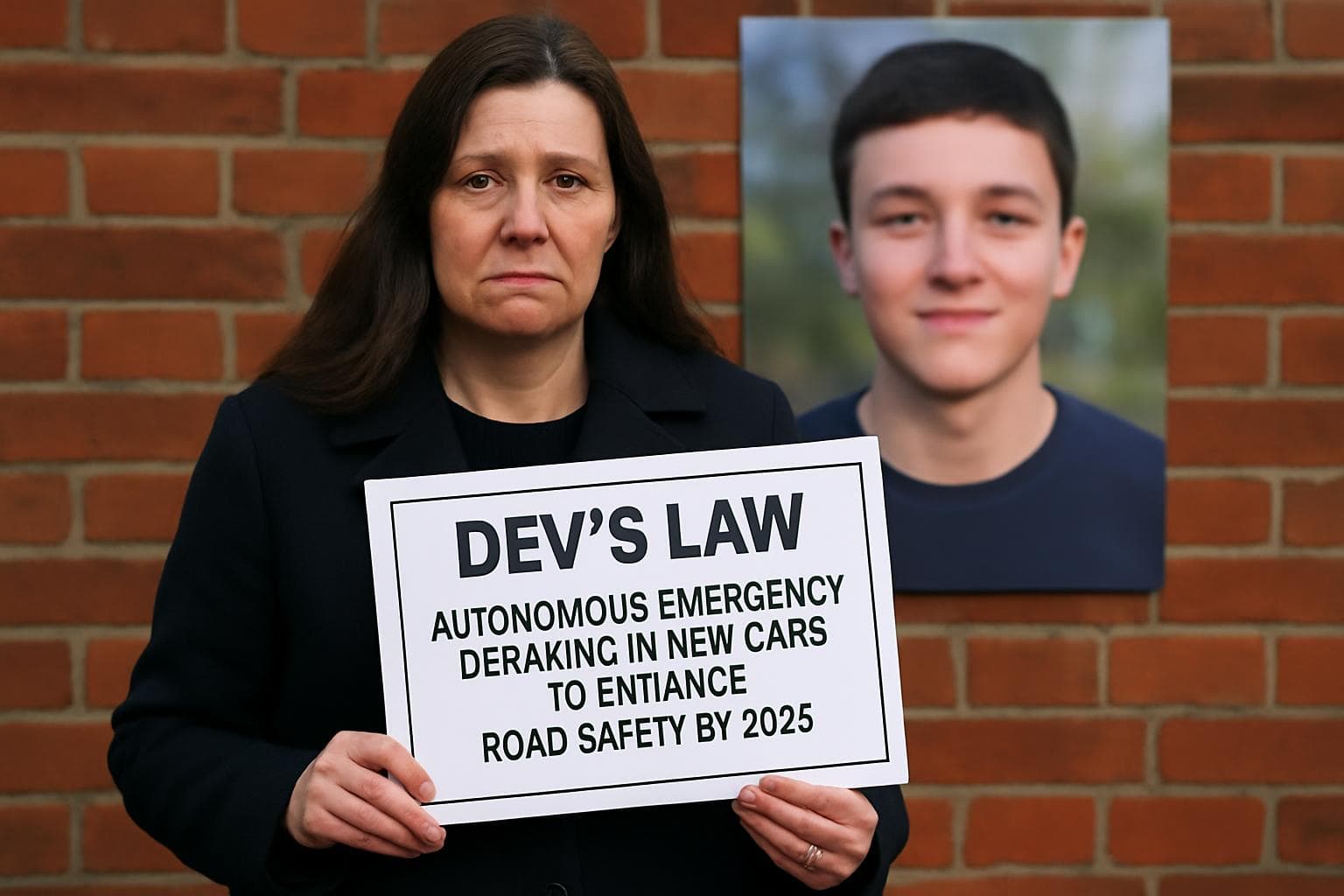
The UK government has unveiled a comprehensive road safety strategy aimed at significantly reducing road fatalities by 2035. Central to this initiative is the mandatory implementation of autonomous emergency braking (AEB) in all new vehicles, a move championed by Meera Naran following the tragic death of her eight-year-old son, Dev, in a 2018 motorway collision.
A Tragic Catalyst for Change
Dev Naran's life was cut short when a lorry collided with his grandfather's car on a section of the M6 motorway that had been converted into a smart motorway. The crash not only claimed Dev's life but also left his grandfather with severe injuries, from which he later succumbed. This tragedy propelled Meera Naran into action, leading her to campaign tirelessly for the adoption of AEB technology, which she believes could have prevented the accident.
The Road to 'Dev's Law'
Naran's advocacy has been instrumental in the government's decision to include AEB as part of a broader road safety strategy. The initiative, dubbed "Dev's Law," is part of a suite of measures designed to enhance vehicle safety. These measures also include lane-keeping assistance and mandatory eye tests for older drivers. Naran, a senior lecturer in clinical pharmacy, has leveraged her professional expertise to ensure the campaign is grounded in evidence, emphasizing the life-saving potential of these technologies.
Government Commitment and Future Implications
Local transport minister Lilian Greenwood praised Naran's dedication, acknowledging the campaign's impact on shaping the new regulations. The strategy, built on both evidence and the voices of those affected by road collisions, marks a significant leap forward in UK transport regulations. Naran expressed her gratitude for the government's commitment, stating, "This is bigger than Dev, it's about preventing future tragedies."
WHAT THIS MIGHT MEAN
The implementation of "Dev's Law" could set a precedent for future vehicle safety regulations in the UK, potentially influencing international standards. As the government works towards its 2035 target, the success of these measures will likely depend on effective enforcement and public awareness campaigns. Experts suggest that continued collaboration between policymakers, safety advocates, and the automotive industry will be crucial in achieving the desired reduction in road fatalities. Additionally, the strategy may prompt further discussions on the role of smart motorways and their safety implications, potentially leading to additional reforms in road infrastructure.
Images from the Web



Related Articles

UK Defence Faces Scrutiny Amid Ajax Armoured Vehicle Delays and Soldier Safety Concerns

Middle East Conflict Drives UK Energy Prices to New Highs

Government Announces £4 Billion Overhaul of SEND Support in England

UK Government Announces Major Overhaul of SEND System with £3.4 Billion Investment

Prince Andrew's Ties to Epstein Under Scrutiny Amid Calls for Inquiry

Government Criticized for Mishandling Maccabi Tel Aviv Fan Ban
UK Government Adopts 'Dev's Law' in New Road Safety Strategy
In This Article
 Himanshu Kaushik| Published
 HIGHLIGHTS
- The UK government has announced a new road safety strategy, including mandatory autonomous emergency braking (AEB) in new vehicles.
- Meera Naran, whose son Dev died in a 2018 motorway crash, has campaigned for AEB under "Dev's Law" to prevent similar tragedies.
- The strategy aims to reduce road deaths by 2035 and includes other measures like lane-keeping assistance and mandatory eye tests for older drivers.
- Naran's campaign highlights the importance of evidence-based safety measures, separating emotion from evidence in policy-making.
- The strategy is seen as a significant step forward in road safety, with Naran expressing gratitude for the government's commitment.
The UK government has unveiled a comprehensive road safety strategy aimed at significantly reducing road fatalities by 2035. Central to this initiative is the mandatory implementation of autonomous emergency braking (AEB) in all new vehicles, a move championed by Meera Naran following the tragic death of her eight-year-old son, Dev, in a 2018 motorway collision.
A Tragic Catalyst for Change
Dev Naran's life was cut short when a lorry collided with his grandfather's car on a section of the M6 motorway that had been converted into a smart motorway. The crash not only claimed Dev's life but also left his grandfather with severe injuries, from which he later succumbed. This tragedy propelled Meera Naran into action, leading her to campaign tirelessly for the adoption of AEB technology, which she believes could have prevented the accident.
The Road to 'Dev's Law'
Naran's advocacy has been instrumental in the government's decision to include AEB as part of a broader road safety strategy. The initiative, dubbed "Dev's Law," is part of a suite of measures designed to enhance vehicle safety. These measures also include lane-keeping assistance and mandatory eye tests for older drivers. Naran, a senior lecturer in clinical pharmacy, has leveraged her professional expertise to ensure the campaign is grounded in evidence, emphasizing the life-saving potential of these technologies.
Government Commitment and Future Implications
Local transport minister Lilian Greenwood praised Naran's dedication, acknowledging the campaign's impact on shaping the new regulations. The strategy, built on both evidence and the voices of those affected by road collisions, marks a significant leap forward in UK transport regulations. Naran expressed her gratitude for the government's commitment, stating, "This is bigger than Dev, it's about preventing future tragedies."
WHAT THIS MIGHT MEAN
The implementation of "Dev's Law" could set a precedent for future vehicle safety regulations in the UK, potentially influencing international standards. As the government works towards its 2035 target, the success of these measures will likely depend on effective enforcement and public awareness campaigns. Experts suggest that continued collaboration between policymakers, safety advocates, and the automotive industry will be crucial in achieving the desired reduction in road fatalities. Additionally, the strategy may prompt further discussions on the role of smart motorways and their safety implications, potentially leading to additional reforms in road infrastructure.
Images from the Web
Related Articles
UK Defence Faces Scrutiny Amid Ajax Armoured Vehicle Delays and Soldier Safety Concerns
Middle East Conflict Drives UK Energy Prices to New Highs
Government Announces £4 Billion Overhaul of SEND Support in England
UK Government Announces Major Overhaul of SEND System with £3.4 Billion Investment
Prince Andrew's Ties to Epstein Under Scrutiny Amid Calls for Inquiry
Government Criticized for Mishandling Maccabi Tel Aviv Fan Ban