
UK Conservatives and Teachers' Union Push for Social Media Ban for Under-16s
In This Article
HIGHLIGHTS
- The UK Conservative Party proposes banning under-16s from social media, inspired by Australia's recent policy.
- The NASUWT teachers' union supports a similar ban, citing negative impacts on children's mental health and behavior.
- Social media companies would face penalties for non-compliance under proposed legislation.
- The UK government currently focuses on ensuring age-appropriate content through the Online Safety Act.
- A national working group will develop screen time guidelines for young children, with input from parents and experts.
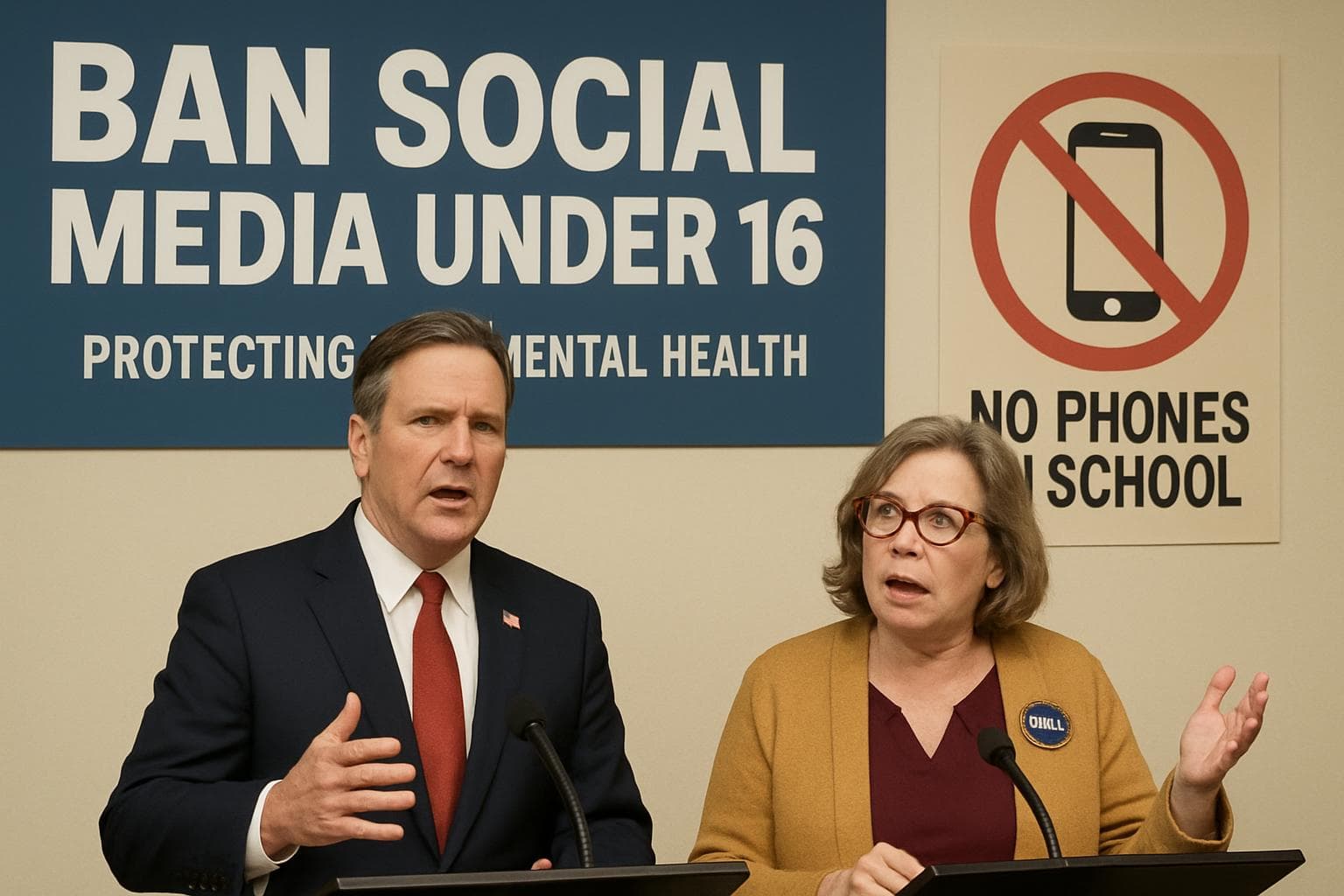
In a move echoing Australia's recent policy, the UK Conservative Party has announced plans to ban social media access for children under 16 if they come to power. The proposal aims to safeguard children's mental health and education by preventing exposure to harmful online content. Tory leader Kemi Badenoch emphasized that the policy would also include banning smartphones in schools, aligning with the party's broader educational reforms.
Growing Support for a Ban
The NASUWT, one of the UK's largest teaching unions, has voiced strong support for the proposed ban. The union argues that unregulated social media access contributes to deteriorating behavior and mental health issues among students. Matt Wrack, the union's general secretary, stated, "Teachers are dealing every day with the fallout of a social media landscape not originally designed and not suitable for children." The union's research indicates that 81% of surveyed teachers have observed an increase in violent and abusive behavior, with 59% attributing it to social media.
Government's Current Stance
While the UK government has not endorsed a full ban, it has implemented measures through the Online Safety Act to ensure children encounter only age-appropriate content. Platforms are required to block harmful material related to self-harm, eating disorders, and pornography, with Ofcom enforcing compliance. Education Secretary Bridget Phillipson highlighted ongoing efforts to develop screen time guidelines for young children, involving parents and experts in the process.
The Role of Social Media Companies
Under the proposed Conservative policy, social media companies like TikTok and Snapchat would be mandated to implement age verification tools. Failure to comply could result in significant penalties. The NASUWT has called for stricter legislation to hold tech firms accountable, arguing that voluntary measures have proven insufficient.
WHAT THIS MIGHT MEAN
If the Conservatives' proposal gains traction, it could lead to significant changes in how social media platforms operate in the UK, potentially influencing global policies. The debate highlights the tension between safeguarding children and preserving digital freedoms. Experts suggest that while a ban could mitigate some risks, it may also drive children to seek alternative, less regulated online spaces. The effectiveness of Australia's policy remains under scrutiny, and its outcomes could inform future UK decisions. As discussions continue, the balance between protection and access will remain a focal point in shaping digital policy.
Related Articles
UK Government Announces Major Overhaul of SEND System with £3.4 Billion Investment
Prince Andrew's Ties to Epstein Under Scrutiny Amid Calls for Inquiry
UK-Iran Tensions: Starmer Defends Cautious Approach Amid Trump Criticism
Government Criticized for Mishandling Maccabi Tel Aviv Fan Ban
Prince Andrew's Arrest Intensifies Scrutiny on Royal Succession and Prince William's Future Role
Anna Murdoch-Mann: Influential Figure in Media and Philanthropy Dies at 81
UK Conservatives and Teachers' Union Push for Social Media Ban for Under-16s
In This Article
 Ethan Brooks| Published
 HIGHLIGHTS
- The UK Conservative Party proposes banning under-16s from social media, inspired by Australia's recent policy.
- The NASUWT teachers' union supports a similar ban, citing negative impacts on children's mental health and behavior.
- Social media companies would face penalties for non-compliance under proposed legislation.
- The UK government currently focuses on ensuring age-appropriate content through the Online Safety Act.
- A national working group will develop screen time guidelines for young children, with input from parents and experts.
In a move echoing Australia's recent policy, the UK Conservative Party has announced plans to ban social media access for children under 16 if they come to power. The proposal aims to safeguard children's mental health and education by preventing exposure to harmful online content. Tory leader Kemi Badenoch emphasized that the policy would also include banning smartphones in schools, aligning with the party's broader educational reforms.
Growing Support for a Ban
The NASUWT, one of the UK's largest teaching unions, has voiced strong support for the proposed ban. The union argues that unregulated social media access contributes to deteriorating behavior and mental health issues among students. Matt Wrack, the union's general secretary, stated, "Teachers are dealing every day with the fallout of a social media landscape not originally designed and not suitable for children." The union's research indicates that 81% of surveyed teachers have observed an increase in violent and abusive behavior, with 59% attributing it to social media.
Government's Current Stance
While the UK government has not endorsed a full ban, it has implemented measures through the Online Safety Act to ensure children encounter only age-appropriate content. Platforms are required to block harmful material related to self-harm, eating disorders, and pornography, with Ofcom enforcing compliance. Education Secretary Bridget Phillipson highlighted ongoing efforts to develop screen time guidelines for young children, involving parents and experts in the process.
The Role of Social Media Companies
Under the proposed Conservative policy, social media companies like TikTok and Snapchat would be mandated to implement age verification tools. Failure to comply could result in significant penalties. The NASUWT has called for stricter legislation to hold tech firms accountable, arguing that voluntary measures have proven insufficient.
WHAT THIS MIGHT MEAN
If the Conservatives' proposal gains traction, it could lead to significant changes in how social media platforms operate in the UK, potentially influencing global policies. The debate highlights the tension between safeguarding children and preserving digital freedoms. Experts suggest that while a ban could mitigate some risks, it may also drive children to seek alternative, less regulated online spaces. The effectiveness of Australia's policy remains under scrutiny, and its outcomes could inform future UK decisions. As discussions continue, the balance between protection and access will remain a focal point in shaping digital policy.
Related Articles
UK Government Announces Major Overhaul of SEND System with £3.4 Billion Investment
Prince Andrew's Ties to Epstein Under Scrutiny Amid Calls for Inquiry
UK-Iran Tensions: Starmer Defends Cautious Approach Amid Trump Criticism
Government Criticized for Mishandling Maccabi Tel Aviv Fan Ban
Prince Andrew's Arrest Intensifies Scrutiny on Royal Succession and Prince William's Future Role
Anna Murdoch-Mann: Influential Figure in Media and Philanthropy Dies at 81