
UK Government Intensifies Crackdown on Overseas Child Benefit Fraud
In This Article
HIGHLIGHTS
- The UK government plans to save £350 million over five years by cracking down on child benefit fraud involving claimants living abroad.
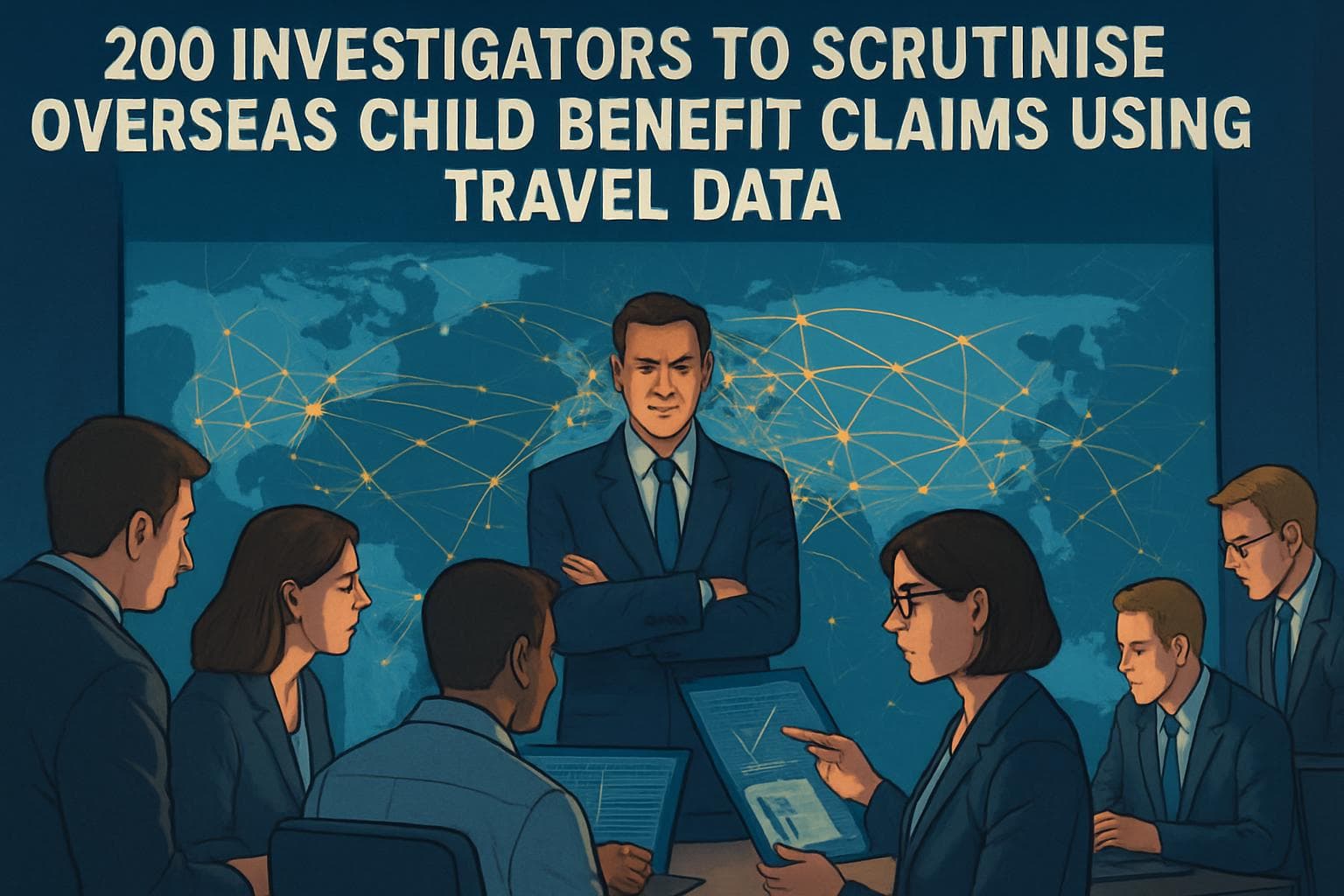
- A new team of over 200 investigators will use international travel data to identify ineligible claimants, expanding from a successful pilot program.
- Claimants must inform HMRC if they leave the UK for more than eight weeks, except in exceptional circumstances, to avoid losing benefits.
- The initiative is part of a broader effort to reduce benefit overpayments, which cost the UK £9.5 billion in the last fiscal year.
- The Public Sector Fraud Authority, Home Office, and HMRC are collaborating under the Digital Economy Act 2017 to share data for this crackdown.
In a significant move to curb benefit fraud, the UK government has announced a comprehensive crackdown on individuals fraudulently claiming child benefits while residing abroad. This initiative aims to save taxpayers £350 million over the next five years by targeting those who continue to receive payments despite being ineligible due to extended stays outside the UK.
Enhanced Investigations and Data Sharing
Starting next month, a dedicated team of over 200 investigators will be deployed to scrutinize child benefit claims using international travel data. This expansion follows a successful pilot program where 15 investigators prevented £17 million in wrongful payments within a year. The pilot, conducted by the Public Sector Fraud Authority, the Home Office, and HMRC, involved matching a random sample of 200,000 child benefit records with travel data to identify claimants who had left the country.
Eligibility Rules and Awareness Campaign
Under current regulations, claimants must notify HMRC if they plan to be outside the UK for more than eight weeks, except under exceptional circumstances such as medical treatment or family bereavement. Failure to do so results in the loss of eligibility for child benefits, which support over 6.9 million families in the UK. The government aims to raise awareness of these rules to prevent unintentional fraud.
Broader Efforts to Combat Benefit Fraud
This crackdown is part of a larger governmental effort to reduce benefit overpayments, which amounted to £9.5 billion in the last fiscal year. The Public Authorities (Fraud, Error, and Recovery) Bill, currently progressing through Parliament, is touted as the "biggest ever crackdown on fraud against the public purse." It includes provisions for recovering funds directly from fraudsters' bank accounts, though this has sparked concerns about potential impacts on vulnerable claimants.
Ministerial Support and Future Plans
Cabinet Office Minister Georgia Gould emphasized the importance of this initiative, stating, "From September, we'll have ten times as many investigators saving hundreds of millions of pounds of taxpayers' money. If you're claiming benefits you're not entitled to, your time is up." The government is also exploring similar measures for other benefits claimed overseas to further safeguard public funds.
WHAT THIS MIGHT MEAN
The intensified crackdown on child benefit fraud could lead to significant savings for the UK government, potentially redirecting funds to other critical areas. However, the initiative may face challenges, including ensuring that genuine claimants are not unfairly penalized. The use of international travel data raises privacy concerns, which may need to be addressed to maintain public trust.
Legal experts suggest that the Public Authorities (Fraud, Error, and Recovery) Bill could set a precedent for future anti-fraud measures, though its impact on low-income families remains a contentious issue. As the government continues to refine its approach, balancing fraud prevention with the protection of vulnerable populations will be crucial.
Related Articles

Government Criticized for Mishandling Maccabi Tel Aviv Fan Ban

UK Government to Reform Asylum Seeker Support and Employment Policies

Prince Andrew's Ties to Epstein Under Scrutiny Amid Calls for Inquiry

Prince Andrew's Arrest Intensifies Scrutiny on Royal Succession and Prince William's Future Role

UK Government Considers Removing Andrew Mountbatten-Windsor from Royal Succession Amid Arrest

UK Defence Faces Scrutiny Amid Ajax Armoured Vehicle Delays and Soldier Safety Concerns
UK Government Intensifies Crackdown on Overseas Child Benefit Fraud
In This Article
 Ethan Brooks| Published
 HIGHLIGHTS
- The UK government plans to save £350 million over five years by cracking down on child benefit fraud involving claimants living abroad.
- A new team of over 200 investigators will use international travel data to identify ineligible claimants, expanding from a successful pilot program.
- Claimants must inform HMRC if they leave the UK for more than eight weeks, except in exceptional circumstances, to avoid losing benefits.
- The initiative is part of a broader effort to reduce benefit overpayments, which cost the UK £9.5 billion in the last fiscal year.
- The Public Sector Fraud Authority, Home Office, and HMRC are collaborating under the Digital Economy Act 2017 to share data for this crackdown.
In a significant move to curb benefit fraud, the UK government has announced a comprehensive crackdown on individuals fraudulently claiming child benefits while residing abroad. This initiative aims to save taxpayers £350 million over the next five years by targeting those who continue to receive payments despite being ineligible due to extended stays outside the UK.
Enhanced Investigations and Data Sharing
Starting next month, a dedicated team of over 200 investigators will be deployed to scrutinize child benefit claims using international travel data. This expansion follows a successful pilot program where 15 investigators prevented £17 million in wrongful payments within a year. The pilot, conducted by the Public Sector Fraud Authority, the Home Office, and HMRC, involved matching a random sample of 200,000 child benefit records with travel data to identify claimants who had left the country.
Eligibility Rules and Awareness Campaign
Under current regulations, claimants must notify HMRC if they plan to be outside the UK for more than eight weeks, except under exceptional circumstances such as medical treatment or family bereavement. Failure to do so results in the loss of eligibility for child benefits, which support over 6.9 million families in the UK. The government aims to raise awareness of these rules to prevent unintentional fraud.
Broader Efforts to Combat Benefit Fraud
This crackdown is part of a larger governmental effort to reduce benefit overpayments, which amounted to £9.5 billion in the last fiscal year. The Public Authorities (Fraud, Error, and Recovery) Bill, currently progressing through Parliament, is touted as the "biggest ever crackdown on fraud against the public purse." It includes provisions for recovering funds directly from fraudsters' bank accounts, though this has sparked concerns about potential impacts on vulnerable claimants.
Ministerial Support and Future Plans
Cabinet Office Minister Georgia Gould emphasized the importance of this initiative, stating, "From September, we'll have ten times as many investigators saving hundreds of millions of pounds of taxpayers' money. If you're claiming benefits you're not entitled to, your time is up." The government is also exploring similar measures for other benefits claimed overseas to further safeguard public funds.
WHAT THIS MIGHT MEAN
The intensified crackdown on child benefit fraud could lead to significant savings for the UK government, potentially redirecting funds to other critical areas. However, the initiative may face challenges, including ensuring that genuine claimants are not unfairly penalized. The use of international travel data raises privacy concerns, which may need to be addressed to maintain public trust.
Legal experts suggest that the Public Authorities (Fraud, Error, and Recovery) Bill could set a precedent for future anti-fraud measures, though its impact on low-income families remains a contentious issue. As the government continues to refine its approach, balancing fraud prevention with the protection of vulnerable populations will be crucial.
Related Articles
Government Criticized for Mishandling Maccabi Tel Aviv Fan Ban
UK Government to Reform Asylum Seeker Support and Employment Policies
Prince Andrew's Ties to Epstein Under Scrutiny Amid Calls for Inquiry
Prince Andrew's Arrest Intensifies Scrutiny on Royal Succession and Prince William's Future Role
UK Government Considers Removing Andrew Mountbatten-Windsor from Royal Succession Amid Arrest
UK Defence Faces Scrutiny Amid Ajax Armoured Vehicle Delays and Soldier Safety Concerns