
UK Government Debates New Troubles Legacy Legislation to Address Unresolved Killings
In This Article
HIGHLIGHTS
- The UK government is set to debate new Troubles legacy legislation aimed at addressing unresolved killings from the Northern Ireland conflict.
- The bill proposes a commission to investigate Troubles-related killings and an information recovery body, with a focus on justice for families of IRA victims.
- The legislation seeks to replace the previous Troubles legacy act and remove immunity for terrorists, allowing for full police investigations.
- Some MPs are pushing for stronger legal protections, while the Irish government emphasizes adherence to the agreed framework.
- The bill is expected to pass due to the government's majority, though amendments may be introduced later.
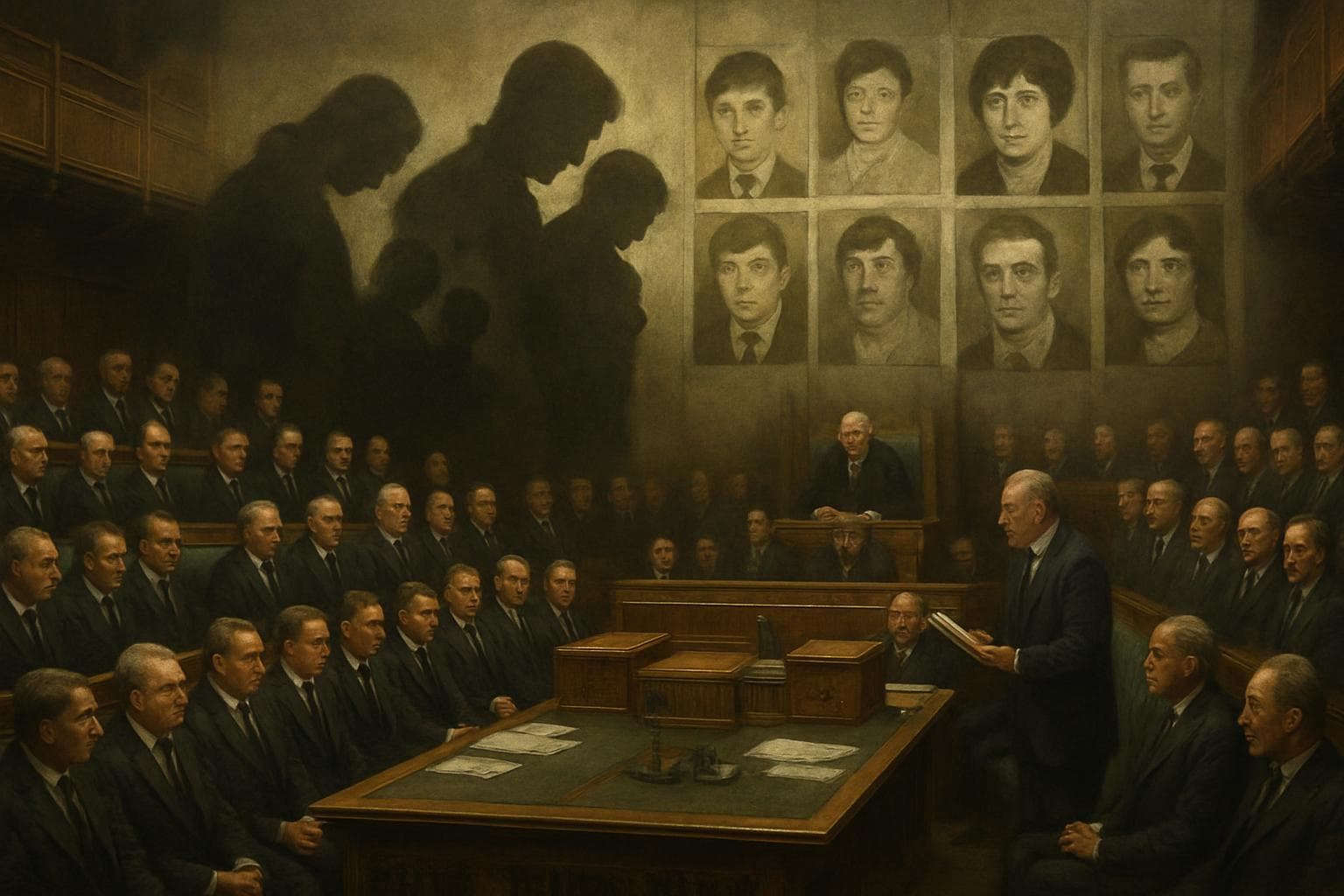
The UK government is poised to debate a new piece of legislation aimed at addressing the unresolved killings from the Northern Ireland conflict, commonly referred to as the Troubles. Scheduled for discussion in the House of Commons, the bill proposes the establishment of a commission to investigate Troubles-related killings and an information recovery body, with the goal of providing justice for families of IRA victims.
A Path to Justice for Families
The proposed legislation, which has been introduced by Northern Ireland's Secretary of State Hilary Benn, seeks to replace the controversial Troubles legacy act passed by the previous Conservative government. The bill aims to provide answers and justice for families who lost loved ones during the conflict, including the families of over 70 individuals killed in unsolved attacks on English soil. The Home Office has highlighted that 77 killings remain unsolved, including those of 39 British armed forces personnel.
Security Minister Dan Jarvis emphasized that the new bill would rectify the shortcomings of the last government's Legacy Act, which shut down police investigations and proposed immunity for terrorists. "This government’s legislation will put that right," Jarvis stated, ensuring that no terrorist can claim immunity from prosecution while establishing an independent legacy commission to conduct thorough investigations.
Legislative Debate and Amendments
As MPs prepare to debate the bill, some members of parliament have expressed concerns that the measures do not go far enough. Democratic Unionist Party leader Gavin Robinson criticized the previous handling of amendments, urging the current Labour government to act honorably. Meanwhile, Ireland's deputy prime minister, Simon Harris, has insisted that the legislation must remain true to the framework agreed upon by both governments.
Despite these concerns, the bill is expected to pass due to the government's majority. However, it may be subject to amendments at a later stage. Benn has described the legislation as a chance for "fundamental reform" and urged that it be given an opportunity to succeed.
Personal Stories Highlight the Need for Answers
The bill has reignited hope for families seeking closure. Graeme Downie, MP for Dunfermline and Dollar, whose friend Tim Parry was killed in the Warrington bomb attacks in 1993, expressed the need for answers. "I don’t seek revenge, but I do want answers and so do hundreds of others," he said. Similarly, Mo Norton, whose brother Terence Griffin was killed in the M62 coach bombing, emphasized the importance of the legislation in providing families with the opportunity for justice.
WHAT THIS MIGHT MEAN
If the new Troubles legacy legislation is enacted, it could significantly alter the landscape of justice for families affected by the Northern Ireland conflict. By removing immunity for terrorists and empowering a reformed legacy commission, the bill could lead to renewed investigations and potential prosecutions. However, the political implications are complex, as the UK government must navigate the sensitivities of both domestic and Irish stakeholders. Experts suggest that the success of the legislation will depend on its ability to balance justice with reconciliation, ensuring that it remains aligned with the agreed framework between the UK and Irish governments.
Related Articles
UK Government to Reform Asylum Seeker Support and Employment Policies

Diplomatic Tensions Rise as Trump Criticizes Starmer's Iran Policy
Tragedy Strikes County Armagh: Three Dead in Multi-Vehicle Collision
Government Criticized for Mishandling Maccabi Tel Aviv Fan Ban

UK Government Considers Removing Andrew Mountbatten-Windsor from Royal Succession Amid Arrest
NHS Staff Pay Rise Sparks Union Outrage Amid Inflation Concerns
UK Government Debates New Troubles Legacy Legislation to Address Unresolved Killings
In This Article
 Ethan Brooks| Published
 HIGHLIGHTS
- The UK government is set to debate new Troubles legacy legislation aimed at addressing unresolved killings from the Northern Ireland conflict.
- The bill proposes a commission to investigate Troubles-related killings and an information recovery body, with a focus on justice for families of IRA victims.
- The legislation seeks to replace the previous Troubles legacy act and remove immunity for terrorists, allowing for full police investigations.
- Some MPs are pushing for stronger legal protections, while the Irish government emphasizes adherence to the agreed framework.
- The bill is expected to pass due to the government's majority, though amendments may be introduced later.
The UK government is poised to debate a new piece of legislation aimed at addressing the unresolved killings from the Northern Ireland conflict, commonly referred to as the Troubles. Scheduled for discussion in the House of Commons, the bill proposes the establishment of a commission to investigate Troubles-related killings and an information recovery body, with the goal of providing justice for families of IRA victims.
A Path to Justice for Families
The proposed legislation, which has been introduced by Northern Ireland's Secretary of State Hilary Benn, seeks to replace the controversial Troubles legacy act passed by the previous Conservative government. The bill aims to provide answers and justice for families who lost loved ones during the conflict, including the families of over 70 individuals killed in unsolved attacks on English soil. The Home Office has highlighted that 77 killings remain unsolved, including those of 39 British armed forces personnel.
Security Minister Dan Jarvis emphasized that the new bill would rectify the shortcomings of the last government's Legacy Act, which shut down police investigations and proposed immunity for terrorists. "This government’s legislation will put that right," Jarvis stated, ensuring that no terrorist can claim immunity from prosecution while establishing an independent legacy commission to conduct thorough investigations.
Legislative Debate and Amendments
As MPs prepare to debate the bill, some members of parliament have expressed concerns that the measures do not go far enough. Democratic Unionist Party leader Gavin Robinson criticized the previous handling of amendments, urging the current Labour government to act honorably. Meanwhile, Ireland's deputy prime minister, Simon Harris, has insisted that the legislation must remain true to the framework agreed upon by both governments.
Despite these concerns, the bill is expected to pass due to the government's majority. However, it may be subject to amendments at a later stage. Benn has described the legislation as a chance for "fundamental reform" and urged that it be given an opportunity to succeed.
Personal Stories Highlight the Need for Answers
The bill has reignited hope for families seeking closure. Graeme Downie, MP for Dunfermline and Dollar, whose friend Tim Parry was killed in the Warrington bomb attacks in 1993, expressed the need for answers. "I don’t seek revenge, but I do want answers and so do hundreds of others," he said. Similarly, Mo Norton, whose brother Terence Griffin was killed in the M62 coach bombing, emphasized the importance of the legislation in providing families with the opportunity for justice.
WHAT THIS MIGHT MEAN
If the new Troubles legacy legislation is enacted, it could significantly alter the landscape of justice for families affected by the Northern Ireland conflict. By removing immunity for terrorists and empowering a reformed legacy commission, the bill could lead to renewed investigations and potential prosecutions. However, the political implications are complex, as the UK government must navigate the sensitivities of both domestic and Irish stakeholders. Experts suggest that the success of the legislation will depend on its ability to balance justice with reconciliation, ensuring that it remains aligned with the agreed framework between the UK and Irish governments.
Related Articles
UK Government to Reform Asylum Seeker Support and Employment Policies
Diplomatic Tensions Rise as Trump Criticizes Starmer's Iran Policy
Tragedy Strikes County Armagh: Three Dead in Multi-Vehicle Collision
Government Criticized for Mishandling Maccabi Tel Aviv Fan Ban
UK Government Considers Removing Andrew Mountbatten-Windsor from Royal Succession Amid Arrest
NHS Staff Pay Rise Sparks Union Outrage Amid Inflation Concerns