
UK Employment Rights Bill Faces Stalemate Amid Lords' Opposition
In This Article
HIGHLIGHTS
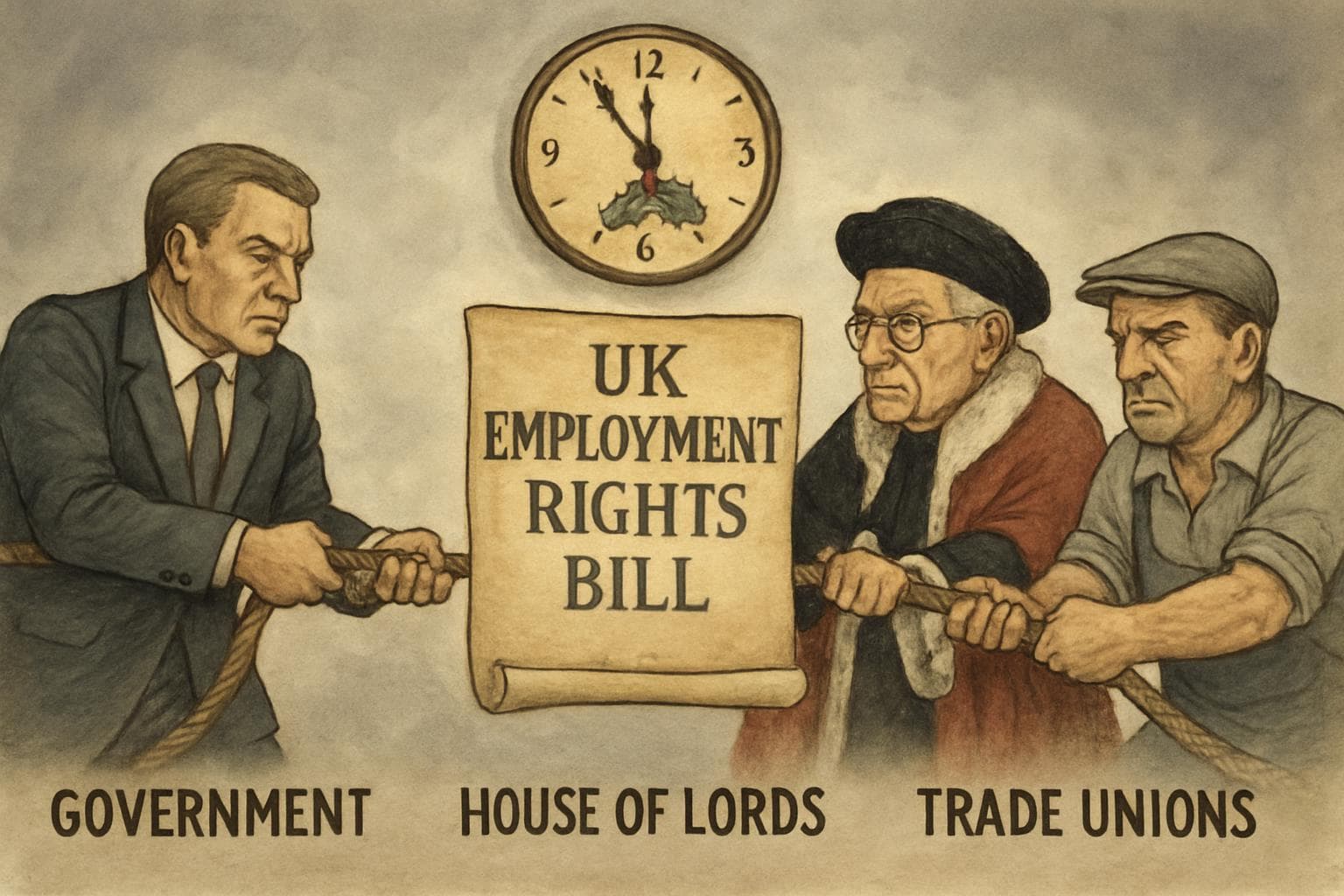
- The Employment Rights Bill faces a stalemate after the House of Lords voted against lifting the cap on unfair dismissal compensation.
- The bill, which aims to enhance workers' rights, is set to return to the Commons and Lords next week as part of the legislative "ping-pong" process.
- The government insists on passing the bill by Christmas, despite opposition from peers and concerns from businesses about increased costs.
- Unions and the government accuse the Lords of using "cynical wrecking tactics" that could lead to a constitutional crisis.
- The bill includes provisions for sick pay, parental leave from day one, and banning zero-hour contracts, but has faced criticism for late-stage amendments.
The UK government's Employment Rights Bill, a cornerstone of Labour's legislative agenda, has hit a roadblock following a defeat in the House of Lords. The bill, which promises significant enhancements to workers' rights, including the abolition of zero-hour contracts and the introduction of sick pay and parental leave from the first day of employment, has been met with resistance over its proposal to lift the cap on compensation for unfair dismissal.
Legislative Deadlock
The House of Lords voted 244 to 220 in favor of a Conservative proposal to review the compensation limits before removing them, a move that has stalled the bill's progress. This decision comes just weeks after the government brokered a compromise with unions and business groups to scrap the compensation cap, aligning ordinary unfair dismissal cases with those involving discrimination or whistleblowing, where compensation is already uncapped.
Government's Determination
Despite the setback, Downing Street remains resolute in its commitment to pass the bill by Christmas. A government source emphasized the importance of adhering to the agreement reached with unions and business leaders, stating, "A deal’s a deal." The bill is scheduled to return to the Commons on Monday, with further discussions in the Lords anticipated by Tuesday.
Union and Business Reactions
Trade unions have expressed frustration over the Lords' decision, accusing peers of engaging in "cynical wrecking tactics" that risk a constitutional crisis. Mike Clancy, general secretary of the union Prospect, criticized the amendment, arguing it undermines the carefully negotiated compromise. Meanwhile, some businesses have voiced concerns about the potential increase in costs associated with the bill's provisions.
Political Implications
The Employment Rights Bill, which applies to England, Scotland, and Wales, but not Northern Ireland, represents what the government describes as the "biggest upgrade to rights at work for a generation." However, the late-stage amendments and ongoing legislative "ping-pong" have sparked debate over the bill's impact on employers and its alignment with Labour's manifesto pledges.
WHAT THIS MIGHT MEAN
As the Employment Rights Bill returns to the Commons and Lords, the government faces a critical juncture. If the Lords continue to oppose the removal of the compensation cap, it could lead to further delays and heighten tensions between the legislative bodies. The government's insistence on passing the bill by Christmas underscores the political stakes involved, as failure to do so could undermine Labour's credibility on workers' rights. Experts suggest that a resolution will require careful negotiation to balance the interests of workers, businesses, and political stakeholders.
Related Articles

Saharan Dust to Illuminate UK Skies with Vivid Sunrises and Sunsets

Sisters Tragically Drown at Eryri National Park's Watkin Path

Labour MP's Husband Arrested in UK-China Espionage Probe

Diplomatic Tensions Rise as Trump Criticizes Starmer's Iran Policy

Government Announces £4 Billion Overhaul of SEND Support in England

Tragedy Strikes County Armagh: Three Dead in Multi-Vehicle Collision
UK Employment Rights Bill Faces Stalemate Amid Lords' Opposition
In This Article
 Ethan Brooks| Published
 HIGHLIGHTS
- The Employment Rights Bill faces a stalemate after the House of Lords voted against lifting the cap on unfair dismissal compensation.
- The bill, which aims to enhance workers' rights, is set to return to the Commons and Lords next week as part of the legislative "ping-pong" process.
- The government insists on passing the bill by Christmas, despite opposition from peers and concerns from businesses about increased costs.
- Unions and the government accuse the Lords of using "cynical wrecking tactics" that could lead to a constitutional crisis.
- The bill includes provisions for sick pay, parental leave from day one, and banning zero-hour contracts, but has faced criticism for late-stage amendments.
The UK government's Employment Rights Bill, a cornerstone of Labour's legislative agenda, has hit a roadblock following a defeat in the House of Lords. The bill, which promises significant enhancements to workers' rights, including the abolition of zero-hour contracts and the introduction of sick pay and parental leave from the first day of employment, has been met with resistance over its proposal to lift the cap on compensation for unfair dismissal.
Legislative Deadlock
The House of Lords voted 244 to 220 in favor of a Conservative proposal to review the compensation limits before removing them, a move that has stalled the bill's progress. This decision comes just weeks after the government brokered a compromise with unions and business groups to scrap the compensation cap, aligning ordinary unfair dismissal cases with those involving discrimination or whistleblowing, where compensation is already uncapped.
Government's Determination
Despite the setback, Downing Street remains resolute in its commitment to pass the bill by Christmas. A government source emphasized the importance of adhering to the agreement reached with unions and business leaders, stating, "A deal’s a deal." The bill is scheduled to return to the Commons on Monday, with further discussions in the Lords anticipated by Tuesday.
Union and Business Reactions
Trade unions have expressed frustration over the Lords' decision, accusing peers of engaging in "cynical wrecking tactics" that risk a constitutional crisis. Mike Clancy, general secretary of the union Prospect, criticized the amendment, arguing it undermines the carefully negotiated compromise. Meanwhile, some businesses have voiced concerns about the potential increase in costs associated with the bill's provisions.
Political Implications
The Employment Rights Bill, which applies to England, Scotland, and Wales, but not Northern Ireland, represents what the government describes as the "biggest upgrade to rights at work for a generation." However, the late-stage amendments and ongoing legislative "ping-pong" have sparked debate over the bill's impact on employers and its alignment with Labour's manifesto pledges.
WHAT THIS MIGHT MEAN
As the Employment Rights Bill returns to the Commons and Lords, the government faces a critical juncture. If the Lords continue to oppose the removal of the compensation cap, it could lead to further delays and heighten tensions between the legislative bodies. The government's insistence on passing the bill by Christmas underscores the political stakes involved, as failure to do so could undermine Labour's credibility on workers' rights. Experts suggest that a resolution will require careful negotiation to balance the interests of workers, businesses, and political stakeholders.
Related Articles
Saharan Dust to Illuminate UK Skies with Vivid Sunrises and Sunsets
Sisters Tragically Drown at Eryri National Park's Watkin Path
Labour MP's Husband Arrested in UK-China Espionage Probe
Diplomatic Tensions Rise as Trump Criticizes Starmer's Iran Policy
Government Announces £4 Billion Overhaul of SEND Support in England
Tragedy Strikes County Armagh: Three Dead in Multi-Vehicle Collision