
UK Electric Vehicle Charging Market Faces Transformation Amid New Initiatives and Industry Consolidation
In This Article
HIGHLIGHTS
- A £12m initiative in Kent aims to install 10,000 electric vehicle charging points, funded by the Department for Transport's LEVI Capital Fund.
- Urban Fox has been awarded a 20-year contract to implement the project, focusing on areas with limited off-street parking.
- The UK electric vehicle charging market is experiencing consolidation due to rising costs and intense competition.
- Many smaller charge point operators are seeking mergers or acquisitions to survive financially.
- Major players like Shell, Connected Kerb, and Pod Point dominate the UK market, while smaller firms explore niche opportunities.
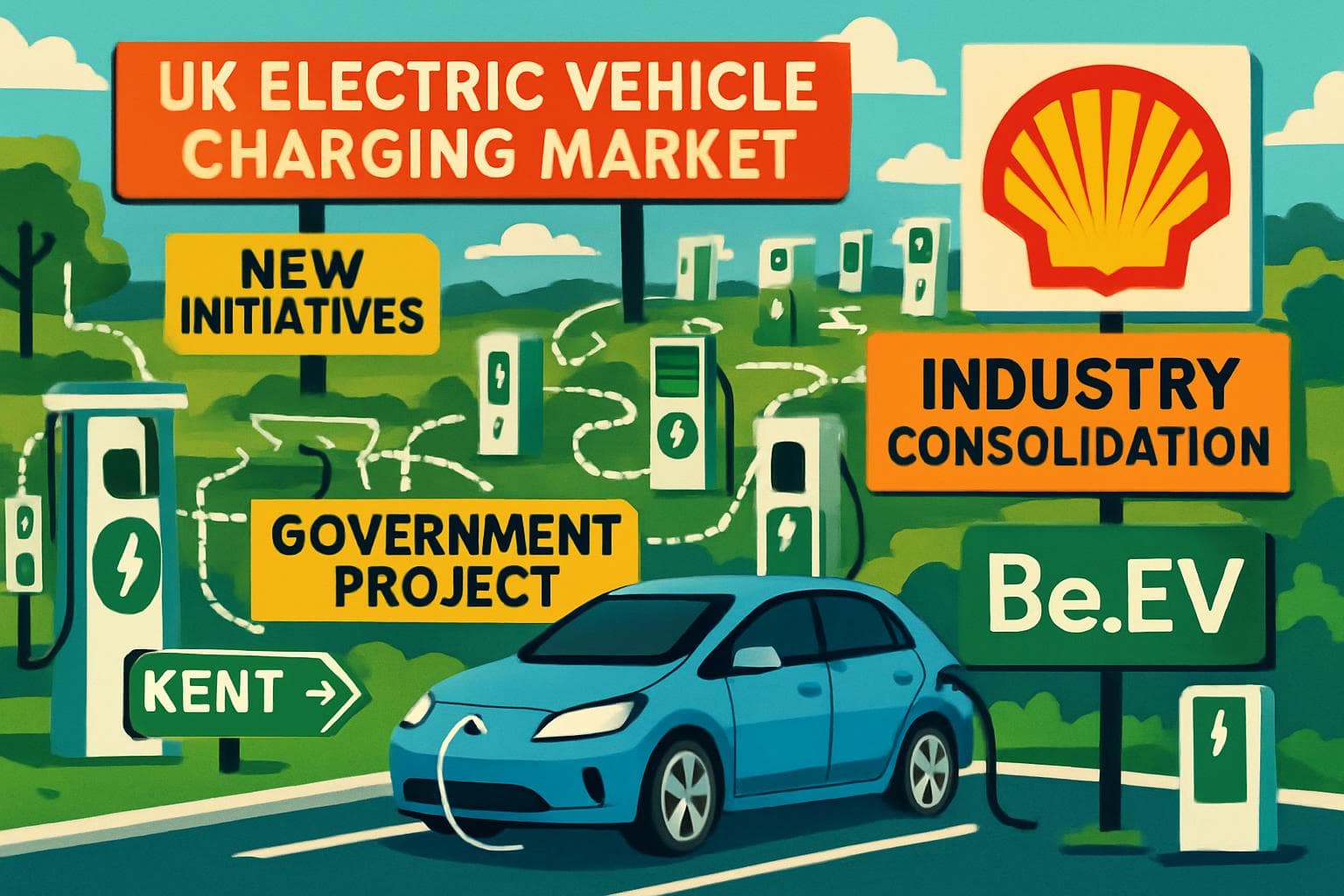
The UK's electric vehicle (EV) charging landscape is undergoing significant changes as new government initiatives and industry consolidation reshape the market. A £12 million government-funded project in Kent aims to install 10,000 EV charging points, marking a substantial step in expanding the nation's charging infrastructure. This initiative, spearheaded by Kent County Council (KCC) and funded through the Department for Transport's Local Electric Vehicle Infrastructure (LEVI) Capital Fund, represents the largest LEVI project in England.
Urban Fox, a charge point operator, has been awarded a 20-year contract to execute the project, which will focus on areas with limited off-street parking. The initiative is part of KCC's broader strategy to modernize transport across the county. "We're pleased to support this programme because it offers practical help for residents and prepares Kent for the future," said Peter Osborne, KCC's cabinet member for highways and transport.
Meanwhile, the UK electric vehicle charging sector is experiencing a wave of mergers and acquisitions as smaller companies struggle with rising costs and fierce competition. Industry leaders predict that the number of charge point operators could shrink from around 150 to just five or six dominant players. Asif Ghafoor, co-founder of Be.EV, noted that numerous companies have approached his firm seeking buyers due to financial pressures.
The rapid expansion of charge points in recent years has led to a crowded market, with many operators installing infrastructure in anticipation of future demand. However, not all have been able to cover costs, prompting a push towards consolidation. Simon Smith, CEO of Voltempo, highlighted the need for strategic site selection and fast utilization to ensure survival in this capital-intensive market.
Major players like Shell, Connected Kerb, and Pod Point currently lead the UK market, while smaller firms are exploring niche opportunities to remain competitive. Be.EV, for instance, is focusing on ultra-rapid charging at high-traffic locations, backed by £110 million from Octopus Energy.
WHAT THIS MIGHT MEAN
The ongoing consolidation in the UK electric vehicle charging market could lead to a more streamlined and efficient industry, with fewer but stronger players. This may result in improved service quality and more competitive pricing for consumers. However, the reduction in the number of operators could also limit innovation and diversity in the market.
As the demand for electric vehicles continues to rise, the success of initiatives like the one in Kent will be crucial in meeting the growing need for accessible charging infrastructure. The government's support through funding and strategic partnerships will play a vital role in ensuring the UK's transition to a greener transport system.
In the long term, the consolidation trend may attract more investment into the sector, enabling larger operators to expand their networks and enhance their offerings. This could ultimately accelerate the adoption of electric vehicles across the UK, contributing to the country's environmental goals.
Related Articles
Middle East Conflict Drives UK Energy Prices to New Highs

Saharan Dust to Illuminate UK Skies with Vivid Sunrises and Sunsets

Canada and Australia Forge Strategic Partnership Amid Global Uncertainty

UK Government to Reform Asylum Seeker Support and Employment Policies

UK Faces Dilemmas Amid Iran Conflict and China Spying Allegations

UK Reinforces Military Presence in Cyprus Amid Middle East Tensions
UK Electric Vehicle Charging Market Faces Transformation Amid New Initiatives and Industry Consolidation
In This Article
 Daniel Rivera| Published
 HIGHLIGHTS
- A £12m initiative in Kent aims to install 10,000 electric vehicle charging points, funded by the Department for Transport's LEVI Capital Fund.
- Urban Fox has been awarded a 20-year contract to implement the project, focusing on areas with limited off-street parking.
- The UK electric vehicle charging market is experiencing consolidation due to rising costs and intense competition.
- Many smaller charge point operators are seeking mergers or acquisitions to survive financially.
- Major players like Shell, Connected Kerb, and Pod Point dominate the UK market, while smaller firms explore niche opportunities.
The UK's electric vehicle (EV) charging landscape is undergoing significant changes as new government initiatives and industry consolidation reshape the market. A £12 million government-funded project in Kent aims to install 10,000 EV charging points, marking a substantial step in expanding the nation's charging infrastructure. This initiative, spearheaded by Kent County Council (KCC) and funded through the Department for Transport's Local Electric Vehicle Infrastructure (LEVI) Capital Fund, represents the largest LEVI project in England.
Urban Fox, a charge point operator, has been awarded a 20-year contract to execute the project, which will focus on areas with limited off-street parking. The initiative is part of KCC's broader strategy to modernize transport across the county. "We're pleased to support this programme because it offers practical help for residents and prepares Kent for the future," said Peter Osborne, KCC's cabinet member for highways and transport.
Meanwhile, the UK electric vehicle charging sector is experiencing a wave of mergers and acquisitions as smaller companies struggle with rising costs and fierce competition. Industry leaders predict that the number of charge point operators could shrink from around 150 to just five or six dominant players. Asif Ghafoor, co-founder of Be.EV, noted that numerous companies have approached his firm seeking buyers due to financial pressures.
The rapid expansion of charge points in recent years has led to a crowded market, with many operators installing infrastructure in anticipation of future demand. However, not all have been able to cover costs, prompting a push towards consolidation. Simon Smith, CEO of Voltempo, highlighted the need for strategic site selection and fast utilization to ensure survival in this capital-intensive market.
Major players like Shell, Connected Kerb, and Pod Point currently lead the UK market, while smaller firms are exploring niche opportunities to remain competitive. Be.EV, for instance, is focusing on ultra-rapid charging at high-traffic locations, backed by £110 million from Octopus Energy.
WHAT THIS MIGHT MEAN
The ongoing consolidation in the UK electric vehicle charging market could lead to a more streamlined and efficient industry, with fewer but stronger players. This may result in improved service quality and more competitive pricing for consumers. However, the reduction in the number of operators could also limit innovation and diversity in the market.
As the demand for electric vehicles continues to rise, the success of initiatives like the one in Kent will be crucial in meeting the growing need for accessible charging infrastructure. The government's support through funding and strategic partnerships will play a vital role in ensuring the UK's transition to a greener transport system.
In the long term, the consolidation trend may attract more investment into the sector, enabling larger operators to expand their networks and enhance their offerings. This could ultimately accelerate the adoption of electric vehicles across the UK, contributing to the country's environmental goals.
Related Articles
Middle East Conflict Drives UK Energy Prices to New Highs
Saharan Dust to Illuminate UK Skies with Vivid Sunrises and Sunsets
Canada and Australia Forge Strategic Partnership Amid Global Uncertainty
UK Government to Reform Asylum Seeker Support and Employment Policies
UK Faces Dilemmas Amid Iran Conflict and China Spying Allegations
UK Reinforces Military Presence in Cyprus Amid Middle East Tensions