
New UK EV Tax Sparks Concerns Among Cross-Border Drivers
In This Article
HIGHLIGHTS
- A new per-mile tax on electric vehicles (EVs) in the UK will begin in April 2028, charging 3p per mile for EVs and 1.5p for plug-in hybrids.
- Cross-border EV drivers in Northern Ireland express concerns about how miles driven outside the UK will be tracked and taxed.
- The tax aims to reform vehicle taxation, reduce traffic congestion, and lower carbon emissions, but it raises questions about fairness and implementation.
- Experts suggest using sat-nav technology to accurately track and tax miles driven across borders.
- Critics argue the tax penalizes EV owners who are following environmental guidelines, calling for a more equitable system that considers vehicle weight and efficiency.
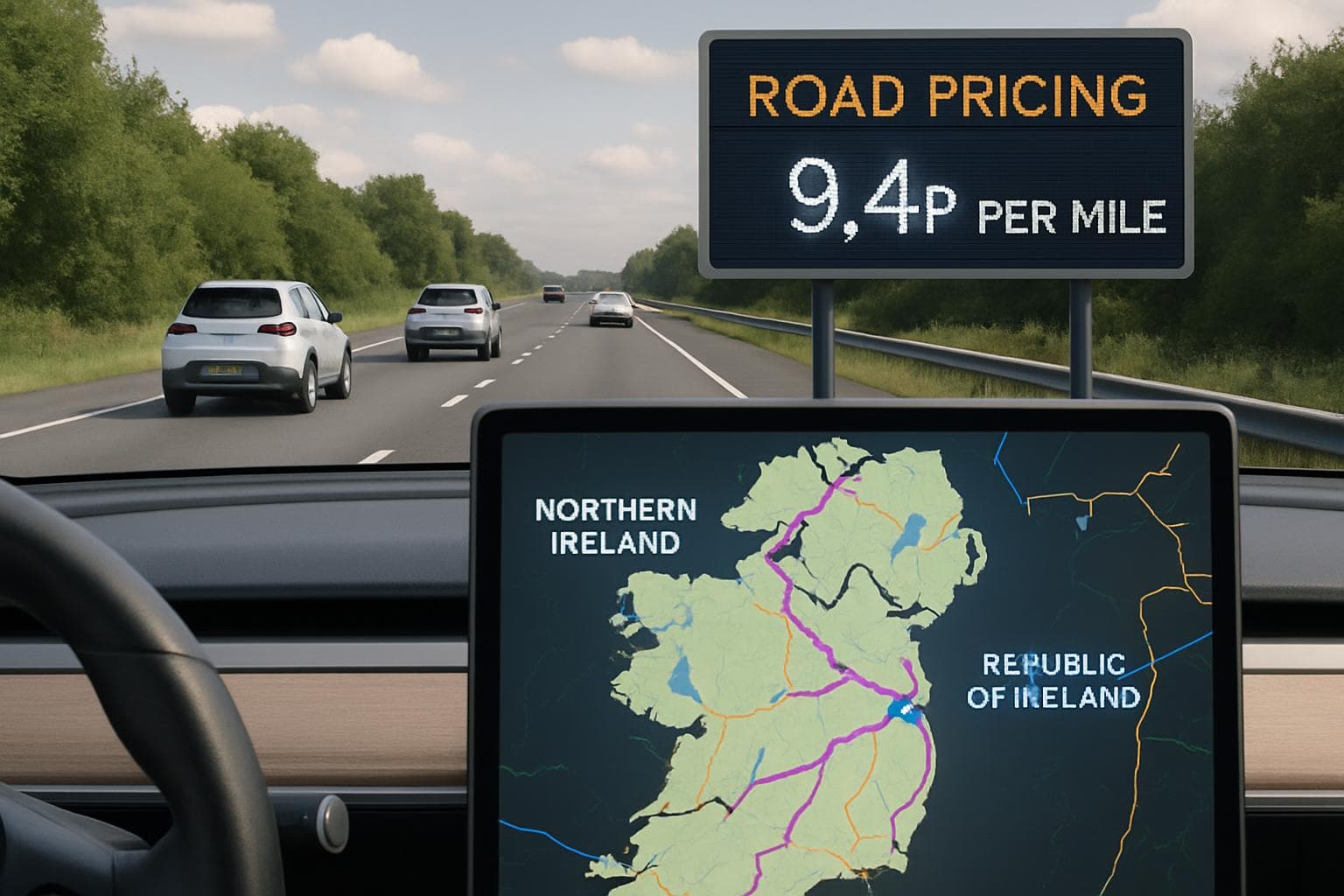
The UK government's recent announcement of a per-mile tax on electric vehicles (EVs) has sparked significant concern among drivers, particularly those in Northern Ireland who frequently cross the border into the Republic of Ireland. The tax, set to be implemented in April 2028, will charge EV drivers 3p per mile and plug-in hybrid drivers 1.5p per mile, with rates adjusted annually for inflation.
Cross-Border Challenges
For drivers like Ciarán O'Doherty, who lives near the border and regularly travels between Northern Ireland and the Republic of Ireland, the new tax raises numerous questions. "How will the miles we do outside of the north be taken into account?" O'Doherty asked, highlighting the complexity of tracking cross-border travel. He suggested that technology, such as the black box systems used by insurance companies, might offer a solution.
Motoring journalist Jim McCauley echoed these concerns, suggesting that sat-nav technology could accurately track and tax miles driven across borders. "The sat-nav will identify the boundaries as we cross the border," McCauley explained, emphasizing the need for a system that ensures taxes are allocated correctly.
Reforming Vehicle Taxation
The introduction of the per-mile tax is seen as a step towards broader vehicle taxation reform aimed at reducing traffic congestion and carbon emissions. However, critics argue that the tax unfairly targets EV owners who are trying to reduce their environmental impact. Edward Leigh, a contributor to the Commons transport committee’s inquiry into road pricing, noted that a tax on energy usage might better capture the external costs associated with vehicle use.
Calls for Fairness
Critics, including David Abrams from Fareham, Hampshire, argue that the tax penalizes domestic EV owners who have followed government advice to adopt greener vehicles. They call for a more equitable system that considers the environmental impact of all vehicles, suggesting that higher polluters should pay more per mile.
WHAT THIS MIGHT MEAN
As the UK moves towards implementing the new EV tax, several challenges and opportunities lie ahead. The government will need to address the concerns of cross-border drivers, potentially by integrating advanced tracking technologies like sat-nav systems to ensure fair taxation. Additionally, the broader implications of this tax reform could influence future policies aimed at reducing carbon emissions and traffic congestion.
Experts suggest that a comprehensive approach to vehicle taxation, which considers both mileage and energy consumption, could provide a more equitable solution. This could lead to further discussions on how to balance environmental goals with the financial realities faced by EV owners. As the debate continues, the government's ability to address these concerns will be crucial in shaping public acceptance of the new tax system.
Related Articles
UK Government's SEND Reforms Spark Debate Over Funding and Accessibility
Middle East Conflict Drives UK Energy Prices to New Highs

Saharan Dust to Illuminate UK Skies with Vivid Sunrises and Sunsets

Government Announces £4 Billion Overhaul of SEND Support in England

UK Government Announces Major Overhaul of SEND System with £3.4 Billion Investment

Tragedy Strikes County Armagh: Three Dead in Multi-Vehicle Collision
New UK EV Tax Sparks Concerns Among Cross-Border Drivers
In This Article
 Leila Hassan| Published
 HIGHLIGHTS
- A new per-mile tax on electric vehicles (EVs) in the UK will begin in April 2028, charging 3p per mile for EVs and 1.5p for plug-in hybrids.
- Cross-border EV drivers in Northern Ireland express concerns about how miles driven outside the UK will be tracked and taxed.
- The tax aims to reform vehicle taxation, reduce traffic congestion, and lower carbon emissions, but it raises questions about fairness and implementation.
- Experts suggest using sat-nav technology to accurately track and tax miles driven across borders.
- Critics argue the tax penalizes EV owners who are following environmental guidelines, calling for a more equitable system that considers vehicle weight and efficiency.
The UK government's recent announcement of a per-mile tax on electric vehicles (EVs) has sparked significant concern among drivers, particularly those in Northern Ireland who frequently cross the border into the Republic of Ireland. The tax, set to be implemented in April 2028, will charge EV drivers 3p per mile and plug-in hybrid drivers 1.5p per mile, with rates adjusted annually for inflation.
Cross-Border Challenges
For drivers like Ciarán O'Doherty, who lives near the border and regularly travels between Northern Ireland and the Republic of Ireland, the new tax raises numerous questions. "How will the miles we do outside of the north be taken into account?" O'Doherty asked, highlighting the complexity of tracking cross-border travel. He suggested that technology, such as the black box systems used by insurance companies, might offer a solution.
Motoring journalist Jim McCauley echoed these concerns, suggesting that sat-nav technology could accurately track and tax miles driven across borders. "The sat-nav will identify the boundaries as we cross the border," McCauley explained, emphasizing the need for a system that ensures taxes are allocated correctly.
Reforming Vehicle Taxation
The introduction of the per-mile tax is seen as a step towards broader vehicle taxation reform aimed at reducing traffic congestion and carbon emissions. However, critics argue that the tax unfairly targets EV owners who are trying to reduce their environmental impact. Edward Leigh, a contributor to the Commons transport committee’s inquiry into road pricing, noted that a tax on energy usage might better capture the external costs associated with vehicle use.
Calls for Fairness
Critics, including David Abrams from Fareham, Hampshire, argue that the tax penalizes domestic EV owners who have followed government advice to adopt greener vehicles. They call for a more equitable system that considers the environmental impact of all vehicles, suggesting that higher polluters should pay more per mile.
WHAT THIS MIGHT MEAN
As the UK moves towards implementing the new EV tax, several challenges and opportunities lie ahead. The government will need to address the concerns of cross-border drivers, potentially by integrating advanced tracking technologies like sat-nav systems to ensure fair taxation. Additionally, the broader implications of this tax reform could influence future policies aimed at reducing carbon emissions and traffic congestion.
Experts suggest that a comprehensive approach to vehicle taxation, which considers both mileage and energy consumption, could provide a more equitable solution. This could lead to further discussions on how to balance environmental goals with the financial realities faced by EV owners. As the debate continues, the government's ability to address these concerns will be crucial in shaping public acceptance of the new tax system.
Related Articles
UK Government's SEND Reforms Spark Debate Over Funding and Accessibility
Middle East Conflict Drives UK Energy Prices to New Highs
Saharan Dust to Illuminate UK Skies with Vivid Sunrises and Sunsets
Government Announces £4 Billion Overhaul of SEND Support in England
UK Government Announces Major Overhaul of SEND System with £3.4 Billion Investment
Tragedy Strikes County Armagh: Three Dead in Multi-Vehicle Collision