
UK Government Faces Backlash Over Plans to Proscribe Palestine Action
In This Article
HIGHLIGHTS
- The UK government plans to proscribe Palestine Action as a terrorist organization, sparking debate over freedom of expression.
- Palestine Action activists recently vandalized military planes at RAF Brize Norton to protest UK support for Israel.
- Metropolitan Police imposed restrictions on a planned protest, moving it from Parliament to Trafalgar Square.
- Critics argue the proscription sets a dangerous precedent, likening it to an attack on democratic rights.
- Home Secretary Yvette Cooper is expected to announce the proscription, initiating a parliamentary process.
The UK government is facing significant criticism over its plans to proscribe Palestine Action as a terrorist organization, a move that has ignited a heated debate about freedom of expression and the right to protest. The decision comes in the wake of a high-profile incident where activists from the group vandalized military aircraft at RAF Brize Norton, protesting the UK's support for Israel amidst the ongoing conflict in Gaza.
Protest and Police Response
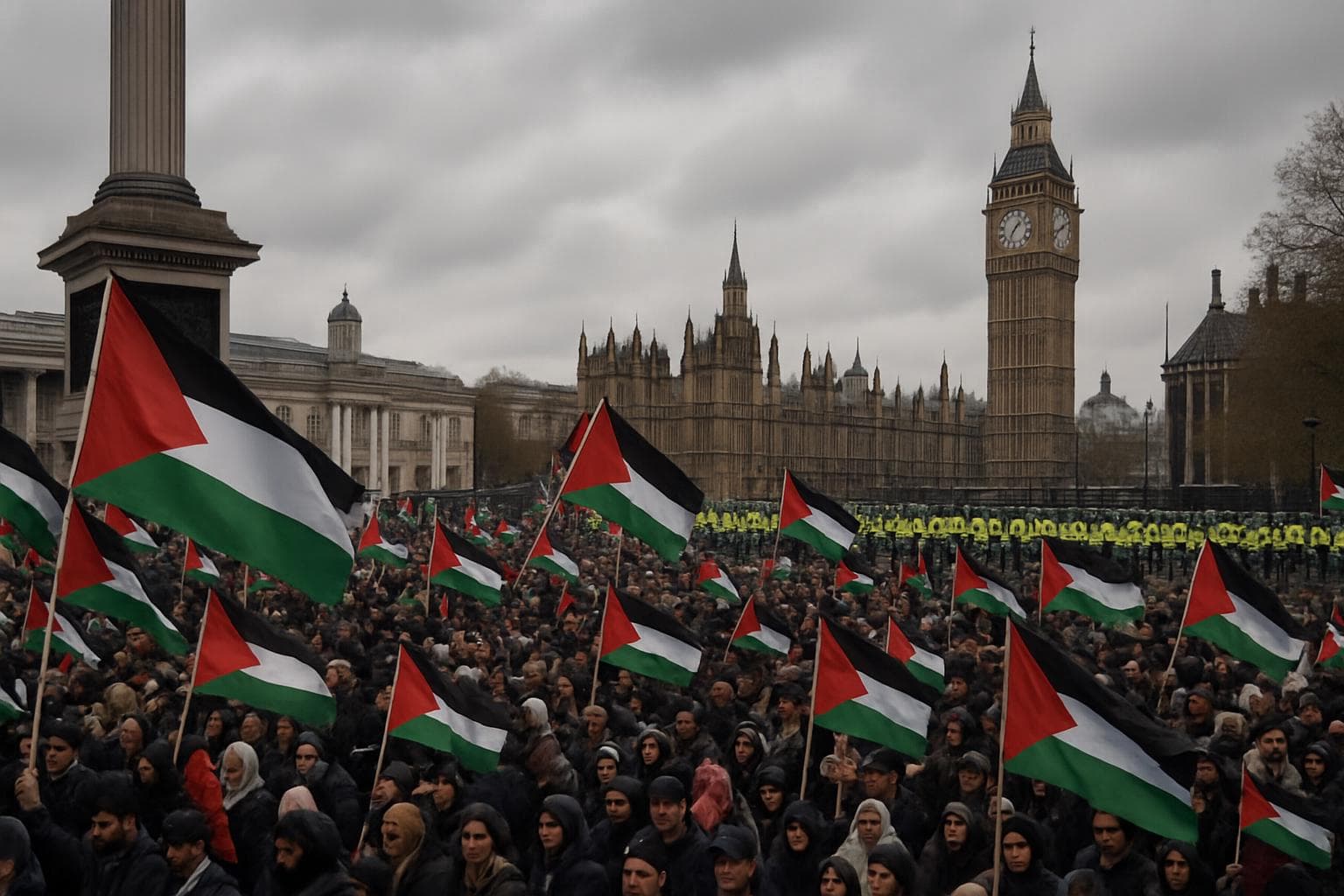
On Monday, hundreds of demonstrators gathered in Trafalgar Square after the Metropolitan Police enforced an exclusion zone around Parliament, citing public order concerns. The protest, initially planned to take place outside the Houses of Parliament, was relocated following police intervention. Despite the restrictions, the protest saw scuffles and at least two arrests, with participants waving Palestinian flags and chanting slogans against the proposed proscription.
Government's Stance and Legal Context
Home Secretary Yvette Cooper is set to announce the proscription of Palestine Action under anti-terrorism laws, a move that would criminalize membership and support for the group. Cooper described the recent vandalism at RAF Brize Norton as part of a "long history of unacceptable criminal damage" by the group, emphasizing the importance of protecting national security. The proscription process, once initiated, will undergo parliamentary scrutiny before taking effect.
Criticism and Concerns
The proposal has drawn sharp criticism from various quarters, including human rights groups and political figures. Critics argue that labeling Palestine Action as a terrorist organization is an unprecedented and dangerous step that undermines democratic freedoms. A letter from Kellys Solicitors, representing the group, warned that the move constitutes an "unlawful, dangerous and ill-thought-out attack on freedom of expression and assembly."
Broader Implications
The debate over the proscription of Palestine Action highlights broader tensions in UK-Israel relations and the challenges of balancing national security with civil liberties. As the government moves forward with its plans, the decision is likely to face legal challenges and further public scrutiny.
WHAT THIS MIGHT MEAN
The proscription of Palestine Action could set a significant legal precedent, potentially affecting other protest groups in the UK. If the parliamentary process approves the proscription, it may lead to increased scrutiny of protest activities and further restrictions on civil liberties. Legal experts warn that this could open the door to broader applications of anti-terrorism laws, impacting a wide range of activist organizations. The decision may also strain UK-Israel relations, as it underscores the contentious nature of the UK's support for Israel amidst ongoing conflicts. As the situation unfolds, the government will need to navigate these complex legal and political challenges carefully.
Related Articles

UK Faces Dilemmas Amid Iran Conflict and China Spying Allegations

Labour MP's Husband Arrested in UK-China Espionage Probe

Prince Andrew's Ties to Epstein Under Scrutiny Amid Calls for Inquiry
Iran Postpones Khamenei Funeral Amid Escalating US-Israeli Strikes

UK Police Intensify Investigation into Andrew Mountbatten-Windsor Amid Misconduct Allegations
Prince Andrew's Arrest Raises Questions About Royal Succession and Monarchy's Future
UK Government Faces Backlash Over Plans to Proscribe Palestine Action
In This Article
 Ethan Brooks| Published
 HIGHLIGHTS
- The UK government plans to proscribe Palestine Action as a terrorist organization, sparking debate over freedom of expression.
- Palestine Action activists recently vandalized military planes at RAF Brize Norton to protest UK support for Israel.
- Metropolitan Police imposed restrictions on a planned protest, moving it from Parliament to Trafalgar Square.
- Critics argue the proscription sets a dangerous precedent, likening it to an attack on democratic rights.
- Home Secretary Yvette Cooper is expected to announce the proscription, initiating a parliamentary process.
The UK government is facing significant criticism over its plans to proscribe Palestine Action as a terrorist organization, a move that has ignited a heated debate about freedom of expression and the right to protest. The decision comes in the wake of a high-profile incident where activists from the group vandalized military aircraft at RAF Brize Norton, protesting the UK's support for Israel amidst the ongoing conflict in Gaza.
Protest and Police Response
On Monday, hundreds of demonstrators gathered in Trafalgar Square after the Metropolitan Police enforced an exclusion zone around Parliament, citing public order concerns. The protest, initially planned to take place outside the Houses of Parliament, was relocated following police intervention. Despite the restrictions, the protest saw scuffles and at least two arrests, with participants waving Palestinian flags and chanting slogans against the proposed proscription.
Government's Stance and Legal Context
Home Secretary Yvette Cooper is set to announce the proscription of Palestine Action under anti-terrorism laws, a move that would criminalize membership and support for the group. Cooper described the recent vandalism at RAF Brize Norton as part of a "long history of unacceptable criminal damage" by the group, emphasizing the importance of protecting national security. The proscription process, once initiated, will undergo parliamentary scrutiny before taking effect.
Criticism and Concerns
The proposal has drawn sharp criticism from various quarters, including human rights groups and political figures. Critics argue that labeling Palestine Action as a terrorist organization is an unprecedented and dangerous step that undermines democratic freedoms. A letter from Kellys Solicitors, representing the group, warned that the move constitutes an "unlawful, dangerous and ill-thought-out attack on freedom of expression and assembly."
Broader Implications
The debate over the proscription of Palestine Action highlights broader tensions in UK-Israel relations and the challenges of balancing national security with civil liberties. As the government moves forward with its plans, the decision is likely to face legal challenges and further public scrutiny.
WHAT THIS MIGHT MEAN
The proscription of Palestine Action could set a significant legal precedent, potentially affecting other protest groups in the UK. If the parliamentary process approves the proscription, it may lead to increased scrutiny of protest activities and further restrictions on civil liberties. Legal experts warn that this could open the door to broader applications of anti-terrorism laws, impacting a wide range of activist organizations. The decision may also strain UK-Israel relations, as it underscores the contentious nature of the UK's support for Israel amidst ongoing conflicts. As the situation unfolds, the government will need to navigate these complex legal and political challenges carefully.
Related Articles
UK Faces Dilemmas Amid Iran Conflict and China Spying Allegations
Labour MP's Husband Arrested in UK-China Espionage Probe
Prince Andrew's Ties to Epstein Under Scrutiny Amid Calls for Inquiry
Iran Postpones Khamenei Funeral Amid Escalating US-Israeli Strikes
UK Police Intensify Investigation into Andrew Mountbatten-Windsor Amid Misconduct Allegations
Prince Andrew's Arrest Raises Questions About Royal Succession and Monarchy's Future