
Severe Weather Hits UK: Flood Warnings and Travel Disruptions Amid Heavy Rain
In This Article
HIGHLIGHTS
- The UK is experiencing severe weather with heavy rain and strong winds, prompting multiple Met Office warnings.
- An amber weather warning was issued for south Wales, with rainfall expected to reach up to 120mm, potentially causing extensive flooding.
- Yellow warnings are in place for other parts of the UK, including north-west England and south-west Scotland, with significant disruptions expected.
- Train services in Wales and parts of England have been suspended due to flooding, with rail replacement buses in operation.
- Experts attribute the increased frequency and intensity of extreme weather events to climate change, impacting regions globally.
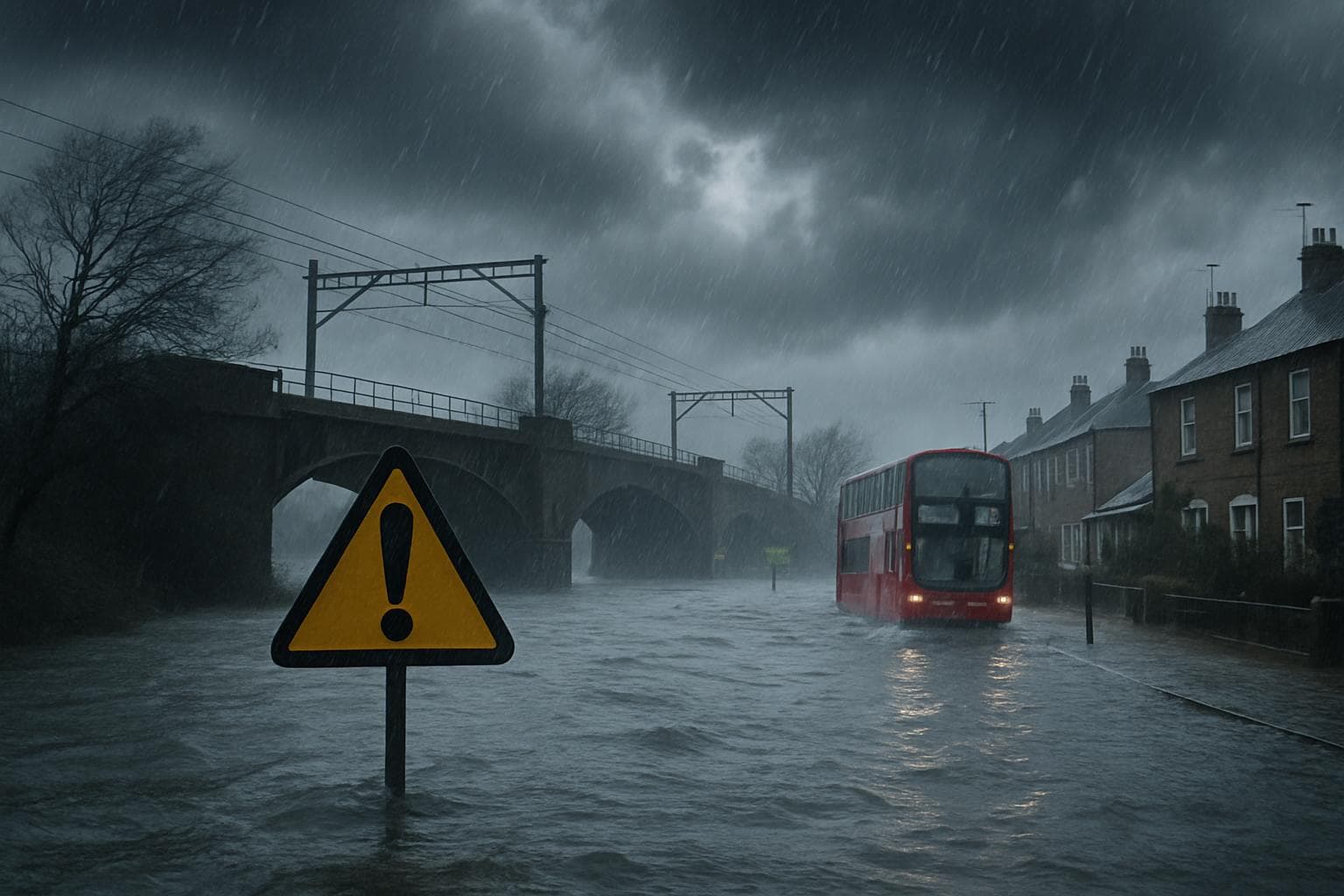
The UK is grappling with severe weather conditions as heavy rain and strong winds sweep across the nation, leading to widespread disruptions and safety warnings. The Met Office has issued an amber weather warning for south Wales, where rainfall could reach up to 120mm, significantly higher than the December average of 152mm. This deluge raises the risk of extensive flooding, with potential damage to buildings, power outages, and communities being cut off.
Weather Warnings and Impact
The Met Office's amber warning for south Wales ended at 21:00 GMT on Monday, but yellow warnings remain in effect for other regions, including north-west England, south-west Scotland, and parts of the Midlands and Yorkshire. The Environment Agency and Natural Resources Wales have issued flood warnings, urging residents to avoid driving through floodwaters, which can be deceptively deep and dangerous.
Travel Disruptions
The adverse weather has severely impacted transportation, particularly train services. In Wales, routes between Llandudno and Blaenau Ffestiniog, as well as Swansea and Shrewsbury, have been suspended, with rail replacement buses deployed. Similarly, the ScotRail route between Glasgow Central and Kilmarnock and Carlisle is experiencing disruptions.
Climate Change and Extreme Weather
Experts highlight that the increased frequency and intensity of such extreme weather events are linked to climate change. Warmer air holds more moisture, leading to heavier rainfall. This trend is observed globally, affecting Europe, Asia, and the Americas. Richard Preece from Natural Resources Wales emphasized the importance of public safety, advising people to stay away from swollen rivers and avoid walking or driving through floodwaters.
WHAT THIS MIGHT MEAN
As the UK continues to face severe weather, the immediate focus will be on managing the current disruptions and ensuring public safety. In the longer term, these events underscore the urgent need for climate adaptation strategies, including improved flood defenses and infrastructure resilience. Policymakers may need to prioritize investments in these areas to mitigate the impact of future extreme weather events. Additionally, public awareness campaigns on flood safety and preparedness could play a crucial role in reducing risks to communities.
Images from the Web
Related Articles

Saharan Dust to Illuminate UK Skies with Vivid Sunrises and Sunsets

Police Federation Chief Arrested Amid Fraud Investigation
US Supreme Court Ruling Sparks Trade Uncertainty in Asia and Beyond

Canada and Australia Forge Strategic Partnership Amid Global Uncertainty

UK Government to Reform Asylum Seeker Support and Employment Policies

Sisters Tragically Drown at Eryri National Park's Watkin Path
Severe Weather Hits UK: Flood Warnings and Travel Disruptions Amid Heavy Rain
In This Article
 Leila Hassan| Published
 HIGHLIGHTS
- The UK is experiencing severe weather with heavy rain and strong winds, prompting multiple Met Office warnings.
- An amber weather warning was issued for south Wales, with rainfall expected to reach up to 120mm, potentially causing extensive flooding.
- Yellow warnings are in place for other parts of the UK, including north-west England and south-west Scotland, with significant disruptions expected.
- Train services in Wales and parts of England have been suspended due to flooding, with rail replacement buses in operation.
- Experts attribute the increased frequency and intensity of extreme weather events to climate change, impacting regions globally.
The UK is grappling with severe weather conditions as heavy rain and strong winds sweep across the nation, leading to widespread disruptions and safety warnings. The Met Office has issued an amber weather warning for south Wales, where rainfall could reach up to 120mm, significantly higher than the December average of 152mm. This deluge raises the risk of extensive flooding, with potential damage to buildings, power outages, and communities being cut off.
Weather Warnings and Impact
The Met Office's amber warning for south Wales ended at 21:00 GMT on Monday, but yellow warnings remain in effect for other regions, including north-west England, south-west Scotland, and parts of the Midlands and Yorkshire. The Environment Agency and Natural Resources Wales have issued flood warnings, urging residents to avoid driving through floodwaters, which can be deceptively deep and dangerous.
Travel Disruptions
The adverse weather has severely impacted transportation, particularly train services. In Wales, routes between Llandudno and Blaenau Ffestiniog, as well as Swansea and Shrewsbury, have been suspended, with rail replacement buses deployed. Similarly, the ScotRail route between Glasgow Central and Kilmarnock and Carlisle is experiencing disruptions.
Climate Change and Extreme Weather
Experts highlight that the increased frequency and intensity of such extreme weather events are linked to climate change. Warmer air holds more moisture, leading to heavier rainfall. This trend is observed globally, affecting Europe, Asia, and the Americas. Richard Preece from Natural Resources Wales emphasized the importance of public safety, advising people to stay away from swollen rivers and avoid walking or driving through floodwaters.
WHAT THIS MIGHT MEAN
As the UK continues to face severe weather, the immediate focus will be on managing the current disruptions and ensuring public safety. In the longer term, these events underscore the urgent need for climate adaptation strategies, including improved flood defenses and infrastructure resilience. Policymakers may need to prioritize investments in these areas to mitigate the impact of future extreme weather events. Additionally, public awareness campaigns on flood safety and preparedness could play a crucial role in reducing risks to communities.
Images from the Web
Related Articles
Saharan Dust to Illuminate UK Skies with Vivid Sunrises and Sunsets
Police Federation Chief Arrested Amid Fraud Investigation
US Supreme Court Ruling Sparks Trade Uncertainty in Asia and Beyond
Canada and Australia Forge Strategic Partnership Amid Global Uncertainty
UK Government to Reform Asylum Seeker Support and Employment Policies
Sisters Tragically Drown at Eryri National Park's Watkin Path