
UK Food Delivery Giants Tighten Security to Combat Illegal Work
In This Article
HIGHLIGHTS
- Deliveroo, Uber Eats, and Just Eat will enhance security checks to prevent illegal work by asylum seekers in the UK.
- The companies will implement increased facial verification and fraud detection measures within 90 days.
- Asylum seekers are prohibited from working in the UK for the first 12 months or until their application is approved.
- The UK government emphasizes that illegal work undermines businesses and wages, and supports people-smuggling gangs.
- Companies failing to conduct proper checks may face fines up to £60,000 per worker and other severe penalties.
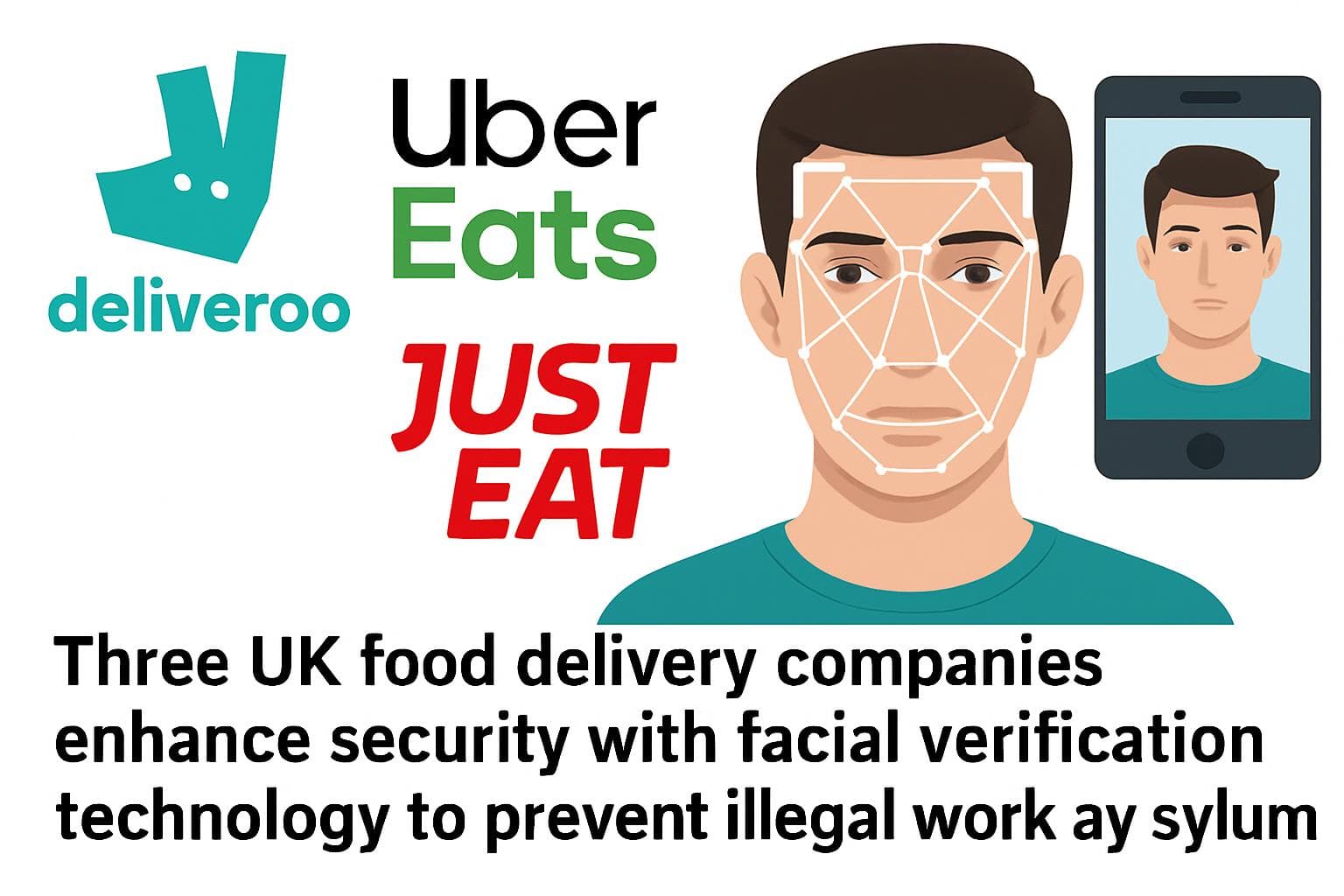
In a concerted effort to curb illegal employment practices, the UK's leading food delivery companies—Deliveroo, Uber Eats, and Just Eat—have pledged to enhance their security protocols. This move comes in response to government concerns about asylum seekers working illegally as couriers. The companies will roll out advanced facial verification and fraud detection technologies within the next 90 days to ensure that only registered account holders can operate on their platforms.
Increased Security Measures
The decision follows a meeting with Home Office ministers, where the issue of illegal work was discussed. Reports have surfaced indicating that some asylum seekers, who are not permitted to work during the first year of their stay in the UK or until their asylum applications are approved, have been using these platforms to earn money. The government has highlighted the problem of "illicit account sharing," which allows individuals without the right to work to use someone else's account.
Government and Industry Response
Dame Angela Eagle, the minister for border security and asylum, stated, "This government will not turn a blind eye to illegal working. It undercuts honest business, hits people's wages, and plays into the hands of people-smuggling gangs." The government has mandated that companies in the gig economy conduct right-to-work checks, aligning them with other employers. Failure to comply could result in fines up to £60,000 per worker, business closures, and even prison sentences.
Corporate Commitment
Deliveroo, Uber Eats, and Just Eat have expressed their commitment to tackling this issue. A Deliveroo spokesperson noted, "We take a zero-tolerance approach to anyone abusing our platform," while Uber Eats emphasized its investment in industry-leading tools to detect and remove fraudulent accounts. Just Eat reiterated its support for government efforts and pledged to continue investing in resources to protect its network's integrity.
WHAT THIS MIGHT MEAN
The implementation of these enhanced security measures could significantly impact the gig economy, potentially reducing the number of illegal workers and ensuring fair competition. However, there may be challenges in balancing security with privacy concerns, particularly regarding facial recognition technology. Experts suggest that while these measures are a step in the right direction, ongoing collaboration between the government and industry will be crucial to address evolving challenges. Additionally, the focus on illegal work may prompt broader discussions on immigration policies and employment rights in the UK.
Related Articles

Police Federation Chief Arrested Amid Fraud Investigation
UK Government to Reform Asylum Seeker Support and Employment Policies

Canada and Australia Forge Strategic Partnership Amid Global Uncertainty

Middle East Conflict Drives UK Energy Prices to New Highs

UK Faces Dilemmas Amid Iran Conflict and China Spying Allegations

UK Reinforces Military Presence in Cyprus Amid Middle East Tensions
UK Food Delivery Giants Tighten Security to Combat Illegal Work
In This Article
 Sofia Romano| Published
 HIGHLIGHTS
- Deliveroo, Uber Eats, and Just Eat will enhance security checks to prevent illegal work by asylum seekers in the UK.
- The companies will implement increased facial verification and fraud detection measures within 90 days.
- Asylum seekers are prohibited from working in the UK for the first 12 months or until their application is approved.
- The UK government emphasizes that illegal work undermines businesses and wages, and supports people-smuggling gangs.
- Companies failing to conduct proper checks may face fines up to £60,000 per worker and other severe penalties.
In a concerted effort to curb illegal employment practices, the UK's leading food delivery companies—Deliveroo, Uber Eats, and Just Eat—have pledged to enhance their security protocols. This move comes in response to government concerns about asylum seekers working illegally as couriers. The companies will roll out advanced facial verification and fraud detection technologies within the next 90 days to ensure that only registered account holders can operate on their platforms.
Increased Security Measures
The decision follows a meeting with Home Office ministers, where the issue of illegal work was discussed. Reports have surfaced indicating that some asylum seekers, who are not permitted to work during the first year of their stay in the UK or until their asylum applications are approved, have been using these platforms to earn money. The government has highlighted the problem of "illicit account sharing," which allows individuals without the right to work to use someone else's account.
Government and Industry Response
Dame Angela Eagle, the minister for border security and asylum, stated, "This government will not turn a blind eye to illegal working. It undercuts honest business, hits people's wages, and plays into the hands of people-smuggling gangs." The government has mandated that companies in the gig economy conduct right-to-work checks, aligning them with other employers. Failure to comply could result in fines up to £60,000 per worker, business closures, and even prison sentences.
Corporate Commitment
Deliveroo, Uber Eats, and Just Eat have expressed their commitment to tackling this issue. A Deliveroo spokesperson noted, "We take a zero-tolerance approach to anyone abusing our platform," while Uber Eats emphasized its investment in industry-leading tools to detect and remove fraudulent accounts. Just Eat reiterated its support for government efforts and pledged to continue investing in resources to protect its network's integrity.
WHAT THIS MIGHT MEAN
The implementation of these enhanced security measures could significantly impact the gig economy, potentially reducing the number of illegal workers and ensuring fair competition. However, there may be challenges in balancing security with privacy concerns, particularly regarding facial recognition technology. Experts suggest that while these measures are a step in the right direction, ongoing collaboration between the government and industry will be crucial to address evolving challenges. Additionally, the focus on illegal work may prompt broader discussions on immigration policies and employment rights in the UK.
Related Articles
Police Federation Chief Arrested Amid Fraud Investigation
UK Government to Reform Asylum Seeker Support and Employment Policies
Canada and Australia Forge Strategic Partnership Amid Global Uncertainty
Middle East Conflict Drives UK Energy Prices to New Highs
UK Faces Dilemmas Amid Iran Conflict and China Spying Allegations
UK Reinforces Military Presence in Cyprus Amid Middle East Tensions