
UK Food Inflation Hits 18-Month High Amid Rising Grocery Prices
In This Article
HIGHLIGHTS
- Food inflation in the UK has surged to 4.2% in August, the highest in 18 months, driven by rising costs of staples like eggs and butter.
- The British Retail Consortium (BRC) attributes the increase to high demand, supply chain issues, and increased labor costs.
- The Office for National Statistics (ONS) reported a 4.9% rise in food and non-alcoholic beverage prices in July, contributing to overall inflation.
- Retailers face additional financial pressures from new costs introduced in the autumn budget, potentially impacting future pricing.
- Climate change and poor harvests have exacerbated the situation, particularly affecting cocoa prices and contributing to higher chocolate costs.
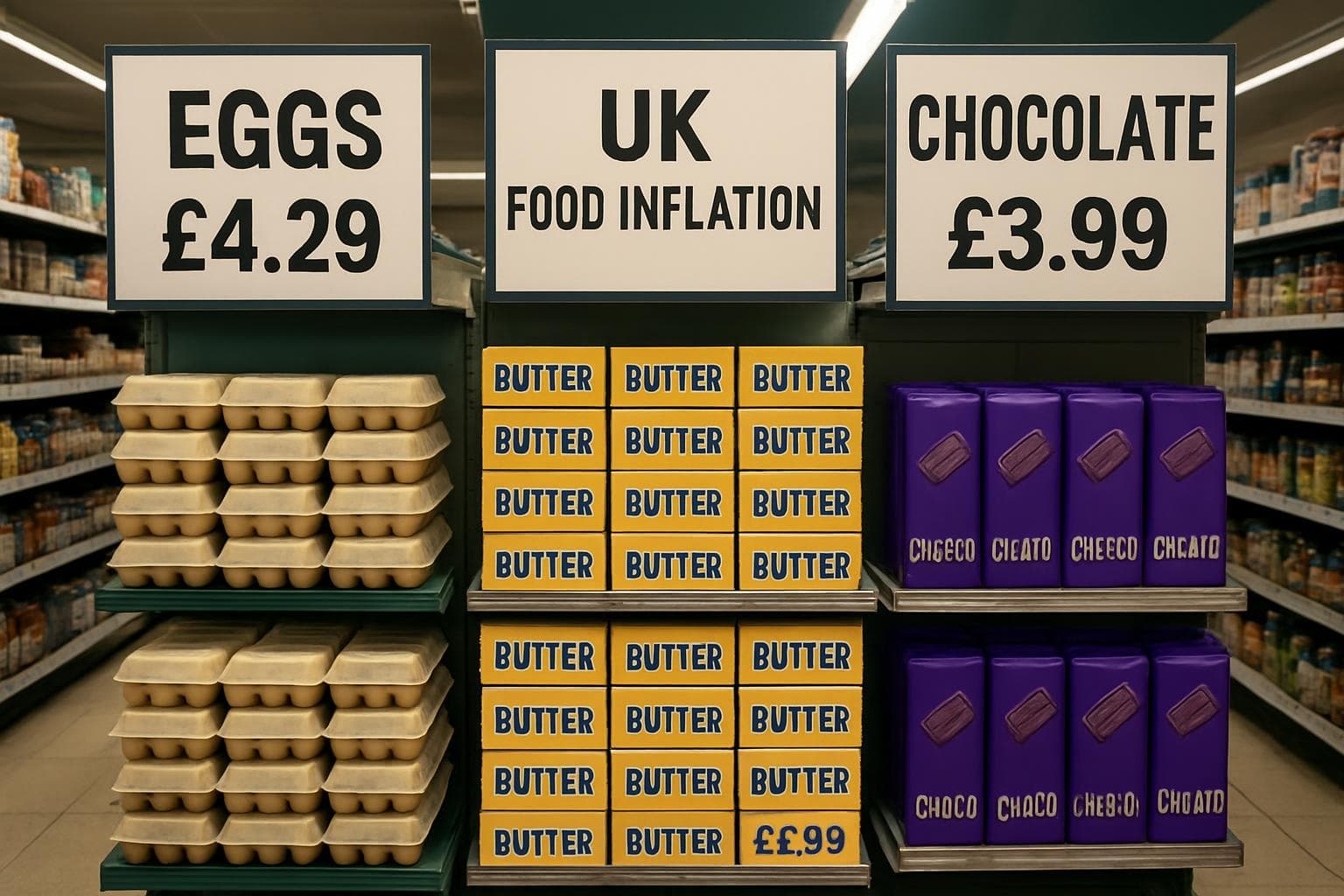
The UK is experiencing a significant surge in food inflation, with prices rising at their fastest pace in 18 months. According to the British Retail Consortium (BRC), food inflation reached 4.2% in August, up from 4% in July, marking the highest level since early 2024. This increase is largely attributed to the rising costs of essential grocery items such as eggs, butter, and chocolate.
Rising Costs and Supply Chain Challenges
Helen Dickinson, the BRC's chief executive, highlighted that the price hikes are driven by a combination of high demand, tightening supply chains, and increased labor costs. "Staples such as butter and eggs have seen significant increases," Dickinson noted. The global cocoa market has also been affected, with poor harvests due to climate change and crop diseases leading to higher chocolate prices.
Broader Economic Impact
The Office for National Statistics (ONS) reported a 4.9% increase in the cost of food and non-alcoholic beverages in July, contributing to an overall inflation rate of 3.8%. This marks the tenth consecutive month that inflation has exceeded the Bank of England's 2% target. The rising costs are putting additional pressure on households already grappling with the cost of living crisis.
Retail Industry Under Pressure
Retailers are also facing financial challenges due to new costs introduced in the autumn budget, including changes to employer national insurance contributions and the minimum wage. A letter coordinated by the BRC, signed by over 60 retail leaders, warned against further tax increases, which could undermine efforts to improve living standards.
Climate Change and Global Supply Chain Issues
Climate change has played a significant role in exacerbating food inflation. Droughts in key agricultural regions such as Spain, Italy, and Portugal have driven up the prices of fresh produce. Additionally, global supply chain disruptions and seasonal factors have contributed to the rising costs, as noted by Mike Watkins, head of retailer and business insight at NIQ.
WHAT THIS MIGHT MEAN
Looking ahead, the UK may continue to face upward pressure on food prices if global supply chain disruptions persist and climate change impacts worsen. Retailers are likely to pass on some of these costs to consumers, potentially leading to further increases in food inflation. Policymakers may need to consider measures to alleviate the financial burden on households, such as targeted subsidies or tax relief. Additionally, the ongoing dialogue between the government and the retail industry will be crucial in balancing economic growth with the need to maintain affordable living standards.
Related Articles
UK Achieves Record Budget Surplus Amid Calls for Fiscal Policy Reform

Breakthrough Drug Offers Hope for Children with Severe Epilepsy

Spain's Sánchez Stands Firm Against Trump's Trade Threat Over Iran Stance

St Francis of Assisi's Bones Draw Global Pilgrims to Italy
Trump Raises Import Tariffs to 15% After Supreme Court Setback

Arrest of Andrew Mountbatten-Windsor Captured in Iconic Photograph
UK Food Inflation Hits 18-Month High Amid Rising Grocery Prices
In This Article
 Aya Nakamura| Published
 HIGHLIGHTS
- Food inflation in the UK has surged to 4.2% in August, the highest in 18 months, driven by rising costs of staples like eggs and butter.
- The British Retail Consortium (BRC) attributes the increase to high demand, supply chain issues, and increased labor costs.
- The Office for National Statistics (ONS) reported a 4.9% rise in food and non-alcoholic beverage prices in July, contributing to overall inflation.
- Retailers face additional financial pressures from new costs introduced in the autumn budget, potentially impacting future pricing.
- Climate change and poor harvests have exacerbated the situation, particularly affecting cocoa prices and contributing to higher chocolate costs.
The UK is experiencing a significant surge in food inflation, with prices rising at their fastest pace in 18 months. According to the British Retail Consortium (BRC), food inflation reached 4.2% in August, up from 4% in July, marking the highest level since early 2024. This increase is largely attributed to the rising costs of essential grocery items such as eggs, butter, and chocolate.
Rising Costs and Supply Chain Challenges
Helen Dickinson, the BRC's chief executive, highlighted that the price hikes are driven by a combination of high demand, tightening supply chains, and increased labor costs. "Staples such as butter and eggs have seen significant increases," Dickinson noted. The global cocoa market has also been affected, with poor harvests due to climate change and crop diseases leading to higher chocolate prices.
Broader Economic Impact
The Office for National Statistics (ONS) reported a 4.9% increase in the cost of food and non-alcoholic beverages in July, contributing to an overall inflation rate of 3.8%. This marks the tenth consecutive month that inflation has exceeded the Bank of England's 2% target. The rising costs are putting additional pressure on households already grappling with the cost of living crisis.
Retail Industry Under Pressure
Retailers are also facing financial challenges due to new costs introduced in the autumn budget, including changes to employer national insurance contributions and the minimum wage. A letter coordinated by the BRC, signed by over 60 retail leaders, warned against further tax increases, which could undermine efforts to improve living standards.
Climate Change and Global Supply Chain Issues
Climate change has played a significant role in exacerbating food inflation. Droughts in key agricultural regions such as Spain, Italy, and Portugal have driven up the prices of fresh produce. Additionally, global supply chain disruptions and seasonal factors have contributed to the rising costs, as noted by Mike Watkins, head of retailer and business insight at NIQ.
WHAT THIS MIGHT MEAN
Looking ahead, the UK may continue to face upward pressure on food prices if global supply chain disruptions persist and climate change impacts worsen. Retailers are likely to pass on some of these costs to consumers, potentially leading to further increases in food inflation. Policymakers may need to consider measures to alleviate the financial burden on households, such as targeted subsidies or tax relief. Additionally, the ongoing dialogue between the government and the retail industry will be crucial in balancing economic growth with the need to maintain affordable living standards.
Related Articles
UK Achieves Record Budget Surplus Amid Calls for Fiscal Policy Reform
Breakthrough Drug Offers Hope for Children with Severe Epilepsy
Spain's Sánchez Stands Firm Against Trump's Trade Threat Over Iran Stance
St Francis of Assisi's Bones Draw Global Pilgrims to Italy
Trump Raises Import Tariffs to 15% After Supreme Court Setback
Arrest of Andrew Mountbatten-Windsor Captured in Iconic Photograph