
UK-France Migrant Deal Faces EU Scrutiny Amidst Mixed Reactions
In This Article
HIGHLIGHTS
- The UK and France have agreed on a "one in, one out" migrant return scheme, aiming to return 50 migrants to France weekly.
- Dover MP Mike Tapp supports the deal, viewing it as a humane alternative to previous policies like the Rwanda deal.
- The EU will assess the legality of the UK-France agreement, as migration is a bloc-wide competency requiring EU approval.
- Five EU nations, including Italy and Spain, have expressed concerns, questioning France's decision to bypass EU treaties.
- The deal's effectiveness is debated, with critics arguing it addresses only a fraction of the small boats crisis.
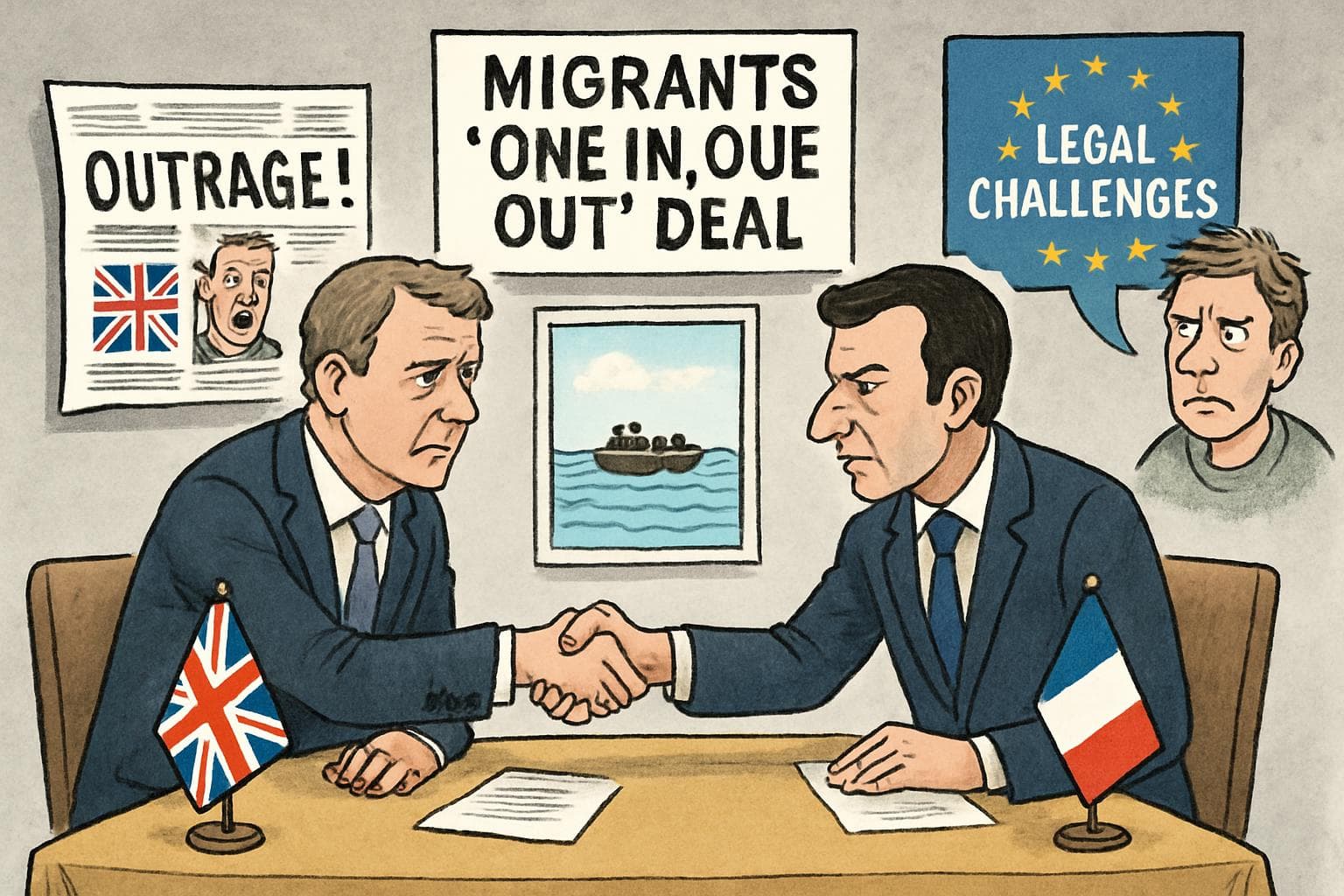
The UK and France have struck a new agreement aimed at addressing the ongoing small boats crisis in the English Channel. The "one in, one out" scheme, announced on Thursday, proposes that for every migrant returned to France, the UK will accept another who has made a legal asylum claim in France. This initiative is expected to see 50 migrants returned to France each week.
Support and Criticism
Dover MP Mike Tapp has expressed confidence in the new scheme, describing it as both "humane" and "immediate." Tapp argues that the deal will gradually undermine smuggling operations, comparing it to a car dealership where one in 17 vehicles is faulty, ultimately leading to a breakdown of the business model. He contrasts this approach with the scrapped Rwanda deal, which he criticized for its high costs and questionable human rights implications.
However, the deal has faced criticism from various quarters. Reform UK leader Nigel Farage and Conservative shadow home secretary Chris Philp have questioned its impact, suggesting it will only address a small fraction of the migrants arriving in the UK. More than 170,000 people have arrived in the UK via small boats since 2018, with nearly 20,000 recorded in the first half of this year alone.
EU's Legal Assessment
The European Union is set to evaluate the legality of the UK-France agreement. As migration is a bloc-wide competency, the deal requires ratification by the European Commission and EU member states. A spokesperson for the European Commission emphasized the need to understand the "substance and form" of the agreement before expressing support.
Five EU countries, including Italy and Spain, have voiced concerns, arguing that France may have overstepped EU treaties. A diplomat from one of these nations noted the surprise at France's decision, given the EU's ongoing efforts to implement a unified migration policy.
Implications and Future Prospects
The deal's future remains uncertain as the EU assesses its compatibility with existing laws. Steve Peers, a professor of EU law, noted that while France is consulting with the EU, the commission may have limited power to prevent the deal if it deems it incompatible. The situation echoes past instances where the commission has taken legal action against member states over bilateral agreements.
WHAT THIS MIGHT MEAN
The UK-France migrant deal's success hinges on its ability to withstand legal scrutiny from the EU. If approved, it could set a precedent for future bilateral agreements on migration, potentially influencing broader EU migration policy. However, if the EU finds the deal incompatible with its laws, it may lead to legal challenges and diplomatic tensions between France and other EU member states.
Politically, the deal reflects ongoing efforts to balance national interests with international obligations. As the UK navigates post-Brexit relations with the EU, this agreement could either strengthen or strain ties, depending on its implementation and reception. The outcome may also impact public opinion on migration policies, influencing future electoral dynamics in both the UK and France.
Related Articles

UK Government to Reform Asylum Seeker Support and Employment Policies
Reform UK Aims to Reshape Welsh Politics with New Manifesto

Russian LNG Tanker Sinks in Mediterranean Amid Accusations of Ukrainian Drone Attack

UK Faces Dilemmas Amid Iran Conflict and China Spying Allegations

UK Reinforces Military Presence in Cyprus Amid Middle East Tensions

UK-Iran Tensions: Starmer Defends Cautious Approach Amid Trump Criticism
UK-France Migrant Deal Faces EU Scrutiny Amidst Mixed Reactions
In This Article
 Ethan Brooks| Published
 HIGHLIGHTS
- The UK and France have agreed on a "one in, one out" migrant return scheme, aiming to return 50 migrants to France weekly.
- Dover MP Mike Tapp supports the deal, viewing it as a humane alternative to previous policies like the Rwanda deal.
- The EU will assess the legality of the UK-France agreement, as migration is a bloc-wide competency requiring EU approval.
- Five EU nations, including Italy and Spain, have expressed concerns, questioning France's decision to bypass EU treaties.
- The deal's effectiveness is debated, with critics arguing it addresses only a fraction of the small boats crisis.
The UK and France have struck a new agreement aimed at addressing the ongoing small boats crisis in the English Channel. The "one in, one out" scheme, announced on Thursday, proposes that for every migrant returned to France, the UK will accept another who has made a legal asylum claim in France. This initiative is expected to see 50 migrants returned to France each week.
Support and Criticism
Dover MP Mike Tapp has expressed confidence in the new scheme, describing it as both "humane" and "immediate." Tapp argues that the deal will gradually undermine smuggling operations, comparing it to a car dealership where one in 17 vehicles is faulty, ultimately leading to a breakdown of the business model. He contrasts this approach with the scrapped Rwanda deal, which he criticized for its high costs and questionable human rights implications.
However, the deal has faced criticism from various quarters. Reform UK leader Nigel Farage and Conservative shadow home secretary Chris Philp have questioned its impact, suggesting it will only address a small fraction of the migrants arriving in the UK. More than 170,000 people have arrived in the UK via small boats since 2018, with nearly 20,000 recorded in the first half of this year alone.
EU's Legal Assessment
The European Union is set to evaluate the legality of the UK-France agreement. As migration is a bloc-wide competency, the deal requires ratification by the European Commission and EU member states. A spokesperson for the European Commission emphasized the need to understand the "substance and form" of the agreement before expressing support.
Five EU countries, including Italy and Spain, have voiced concerns, arguing that France may have overstepped EU treaties. A diplomat from one of these nations noted the surprise at France's decision, given the EU's ongoing efforts to implement a unified migration policy.
Implications and Future Prospects
The deal's future remains uncertain as the EU assesses its compatibility with existing laws. Steve Peers, a professor of EU law, noted that while France is consulting with the EU, the commission may have limited power to prevent the deal if it deems it incompatible. The situation echoes past instances where the commission has taken legal action against member states over bilateral agreements.
WHAT THIS MIGHT MEAN
The UK-France migrant deal's success hinges on its ability to withstand legal scrutiny from the EU. If approved, it could set a precedent for future bilateral agreements on migration, potentially influencing broader EU migration policy. However, if the EU finds the deal incompatible with its laws, it may lead to legal challenges and diplomatic tensions between France and other EU member states.
Politically, the deal reflects ongoing efforts to balance national interests with international obligations. As the UK navigates post-Brexit relations with the EU, this agreement could either strengthen or strain ties, depending on its implementation and reception. The outcome may also impact public opinion on migration policies, influencing future electoral dynamics in both the UK and France.
Related Articles
UK Government to Reform Asylum Seeker Support and Employment Policies
Reform UK Aims to Reshape Welsh Politics with New Manifesto
Russian LNG Tanker Sinks in Mediterranean Amid Accusations of Ukrainian Drone Attack
UK Faces Dilemmas Amid Iran Conflict and China Spying Allegations
UK Reinforces Military Presence in Cyprus Amid Middle East Tensions
UK-Iran Tensions: Starmer Defends Cautious Approach Amid Trump Criticism