
Government Reforms Aim to Address NHS Dental Crisis Amidst Growing Concerns
In This Article
HIGHLIGHTS
- The UK government plans to prioritize urgent and complex dental care under new NHS dentistry reforms, potentially saving patients up to £225.
- Many areas in England, known as "dental deserts," lack access to NHS dentists, leading to a rise in DIY dentistry.
- The British Dental Association (BDA) criticizes the reforms, citing a lack of new funding and calling for more substantial changes.
- Health Minister Stephen Kinnock describes the reforms as a "first step" towards addressing long-standing issues in NHS dentistry.
- The changes, effective from April next year, aim to incentivize dentists to provide emergency and complex treatments through a standardized payment package.
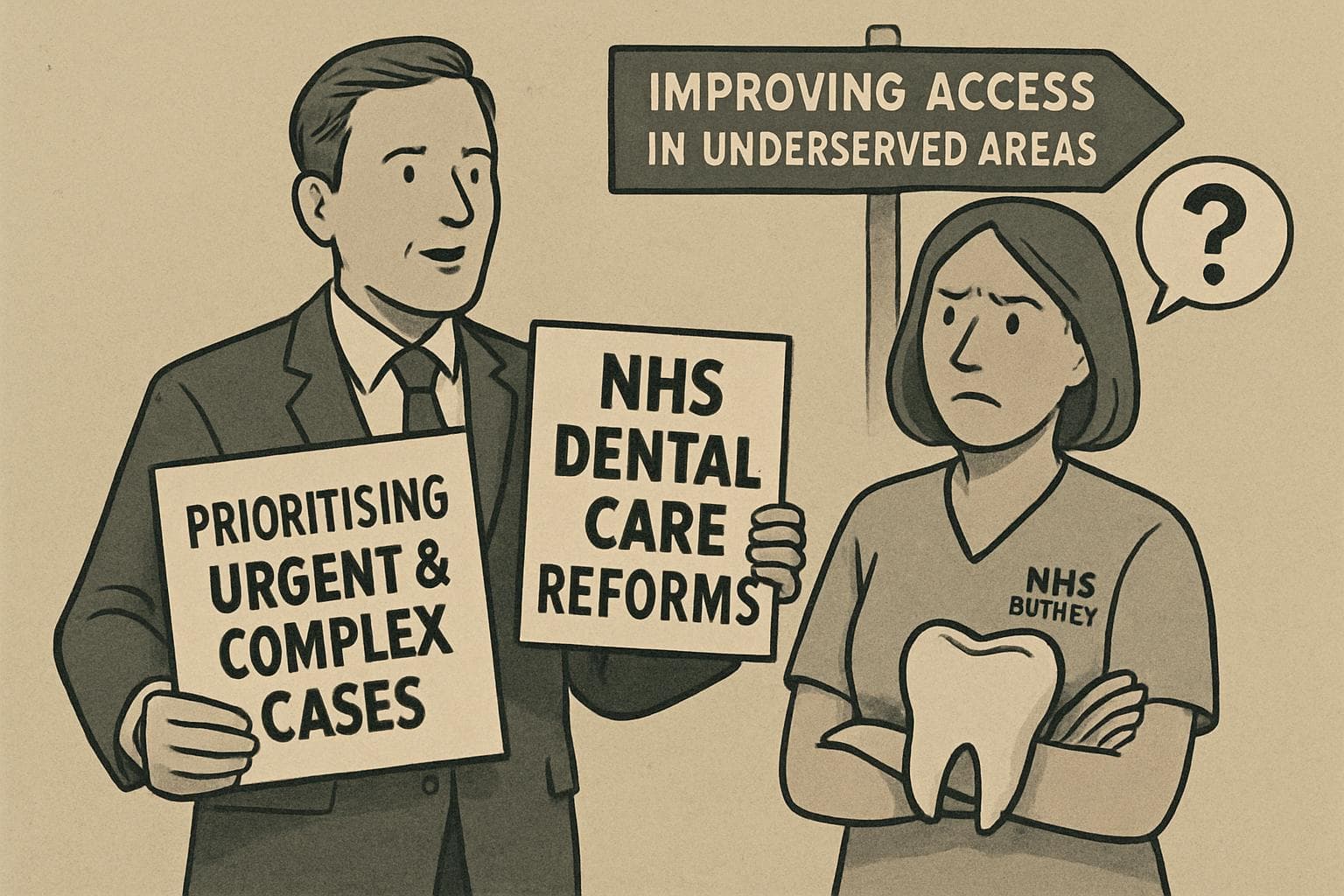
In a bid to tackle the ongoing crisis in NHS dentistry, the UK government has announced plans to prioritize urgent and complex dental care, potentially saving patients up to £225. The reforms, set to be implemented from April next year, aim to improve access to dental services across England, particularly in areas known as "dental deserts," where NHS dental care is scarce.
Urgent and Complex Care Prioritized
Under the new proposals, dentists will be incentivized to offer emergency and complex treatments through a standardized payment package. This initiative seeks to address the issue of patients being unable to access necessary care, often resorting to DIY dentistry. Health Minister Stephen Kinnock emphasized the importance of these changes, stating they mark "the first step towards a new era for NHS dentistry after a decade of decline."
Challenges and Criticisms
Despite the government's optimism, the British Dental Association (BDA) has expressed skepticism about the effectiveness of the reforms. Shiv Pabary, chair of the BDA's General Dental Practice Committee, criticized the lack of new funding, arguing that the changes merely tweak a broken system. "We need a response proportionate to the challenges we face, to give NHS dentistry a sustainable future," Pabary asserted.
Aiming for Long-Term Solutions
The government claims that the reforms will make it easier for patients requiring urgent care, such as those experiencing severe pain or infections, to secure NHS appointments. Additionally, patients needing complex treatments, like those for severe gum disease, will be able to receive a comprehensive package of care, reducing the need for multiple costly visits.
Public and Professional Reactions
Chris McCann, deputy chief executive of Healthwatch England, welcomed the move but cautioned that short-term tweaks have historically failed to resolve the NHS dentistry crisis. He stressed the need for transparent reporting to boost public confidence in the system. Meanwhile, the latest government survey revealed that 41% of adults show signs of tooth decay, underscoring the urgent need for effective dental care reforms.
WHAT THIS MIGHT MEAN
The proposed NHS dentistry reforms could significantly impact access to dental care in England, particularly in underserved areas. If successful, these changes may alleviate the burden on emergency services by preventing minor dental issues from escalating into severe conditions. However, without additional funding, the reforms may fall short of addressing the root causes of the dental crisis. Experts suggest that comprehensive data collection and transparent reporting will be crucial in evaluating the effectiveness of these measures. As the government moves forward, stakeholders will be closely monitoring the implementation and outcomes of these reforms to ensure they deliver on their promises.
Related Articles

Persistent Safety Concerns in Nottingham Maternity Services Amidst Calls for Systemic Reform

UK Government to Reform Asylum Seeker Support and Employment Policies

Saharan Dust to Illuminate UK Skies with Vivid Sunrises and Sunsets

Canada and Australia Forge Strategic Partnership Amid Global Uncertainty

Middle East Conflict Drives UK Energy Prices to New Highs

UK Faces Dilemmas Amid Iran Conflict and China Spying Allegations
Government Reforms Aim to Address NHS Dental Crisis Amidst Growing Concerns
In This Article
 Maya Singh| Published
 HIGHLIGHTS
- The UK government plans to prioritize urgent and complex dental care under new NHS dentistry reforms, potentially saving patients up to £225.
- Many areas in England, known as "dental deserts," lack access to NHS dentists, leading to a rise in DIY dentistry.
- The British Dental Association (BDA) criticizes the reforms, citing a lack of new funding and calling for more substantial changes.
- Health Minister Stephen Kinnock describes the reforms as a "first step" towards addressing long-standing issues in NHS dentistry.
- The changes, effective from April next year, aim to incentivize dentists to provide emergency and complex treatments through a standardized payment package.
In a bid to tackle the ongoing crisis in NHS dentistry, the UK government has announced plans to prioritize urgent and complex dental care, potentially saving patients up to £225. The reforms, set to be implemented from April next year, aim to improve access to dental services across England, particularly in areas known as "dental deserts," where NHS dental care is scarce.
Urgent and Complex Care Prioritized
Under the new proposals, dentists will be incentivized to offer emergency and complex treatments through a standardized payment package. This initiative seeks to address the issue of patients being unable to access necessary care, often resorting to DIY dentistry. Health Minister Stephen Kinnock emphasized the importance of these changes, stating they mark "the first step towards a new era for NHS dentistry after a decade of decline."
Challenges and Criticisms
Despite the government's optimism, the British Dental Association (BDA) has expressed skepticism about the effectiveness of the reforms. Shiv Pabary, chair of the BDA's General Dental Practice Committee, criticized the lack of new funding, arguing that the changes merely tweak a broken system. "We need a response proportionate to the challenges we face, to give NHS dentistry a sustainable future," Pabary asserted.
Aiming for Long-Term Solutions
The government claims that the reforms will make it easier for patients requiring urgent care, such as those experiencing severe pain or infections, to secure NHS appointments. Additionally, patients needing complex treatments, like those for severe gum disease, will be able to receive a comprehensive package of care, reducing the need for multiple costly visits.
Public and Professional Reactions
Chris McCann, deputy chief executive of Healthwatch England, welcomed the move but cautioned that short-term tweaks have historically failed to resolve the NHS dentistry crisis. He stressed the need for transparent reporting to boost public confidence in the system. Meanwhile, the latest government survey revealed that 41% of adults show signs of tooth decay, underscoring the urgent need for effective dental care reforms.
WHAT THIS MIGHT MEAN
The proposed NHS dentistry reforms could significantly impact access to dental care in England, particularly in underserved areas. If successful, these changes may alleviate the burden on emergency services by preventing minor dental issues from escalating into severe conditions. However, without additional funding, the reforms may fall short of addressing the root causes of the dental crisis. Experts suggest that comprehensive data collection and transparent reporting will be crucial in evaluating the effectiveness of these measures. As the government moves forward, stakeholders will be closely monitoring the implementation and outcomes of these reforms to ensure they deliver on their promises.
Related Articles
Persistent Safety Concerns in Nottingham Maternity Services Amidst Calls for Systemic Reform
UK Government to Reform Asylum Seeker Support and Employment Policies
Saharan Dust to Illuminate UK Skies with Vivid Sunrises and Sunsets
Canada and Australia Forge Strategic Partnership Amid Global Uncertainty
Middle East Conflict Drives UK Energy Prices to New Highs
UK Faces Dilemmas Amid Iran Conflict and China Spying Allegations