
New Government Offer Aims to Prevent Resident Doctors' Strike Amid NHS Winter Pressures
In This Article
HIGHLIGHTS
- The UK government has proposed a new offer to avert a planned strike by resident doctors, focusing on expanding specialist training posts.
- The British Medical Association (BMA) will survey its members to decide whether to accept the offer and cancel the strike scheduled for 17 December.
- Health Secretary Wes Streeting's offer includes increasing specialist training places from 2,000 to 4,000 by 2028, but does not include additional pay.
- The NHS is under significant pressure due to a flu surge, with hospitals declaring critical incidents, heightening concerns over the potential strike.
- Streeting criticized the BMA for not immediately calling off the strike, citing the impact on patients and NHS operations.
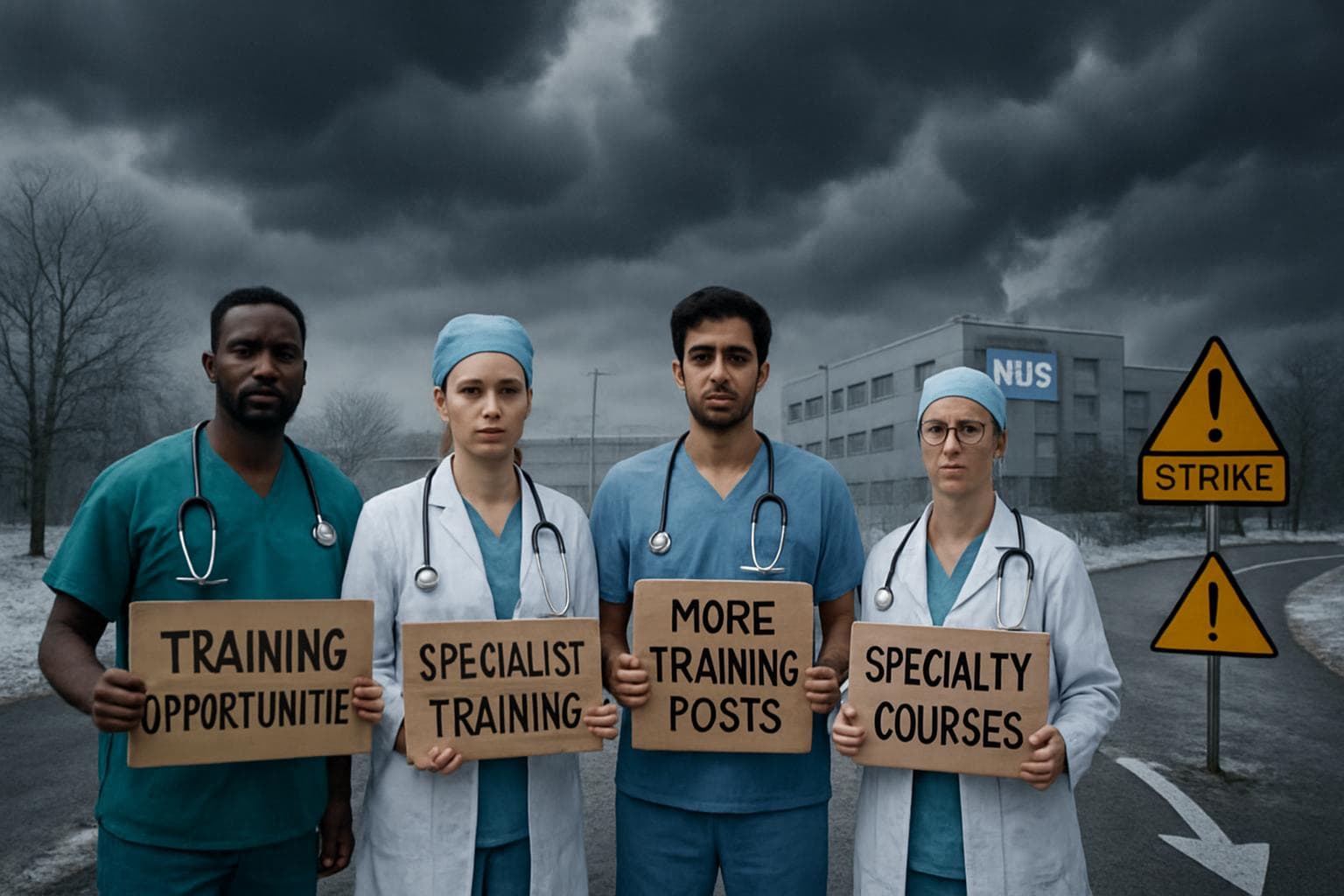
The UK government has extended a new proposal to resident doctors in an attempt to avert a five-day strike scheduled to begin on 17 December. The offer, presented by Health Secretary Wes Streeting, focuses on expanding specialist training opportunities rather than increasing pay, a sticking point in the ongoing dispute with the British Medical Association (BMA).
Government's Offer and BMA's Response
The proposal includes a significant increase in specialist training posts, doubling the planned expansion from 2,000 to 4,000 by 2028. This move aims to address the bottleneck in career progression for early-career doctors, a critical issue highlighted by the BMA. Despite the lack of additional pay, the BMA has agreed to survey its members to determine whether the offer is sufficient to call off the strike.
NHS Under Pressure
The NHS is currently grappling with a surge in flu cases, with 1,700 patients hospitalized, leading to several hospitals declaring critical incidents. This situation has intensified concerns about the potential impact of the strike on healthcare services. Sir Jim Mackey, Chief Executive of NHS England, described the planned industrial action as "cruel and calculated to cause mayhem."
Streeting's Criticism and Legislative Plans
Wes Streeting has expressed frustration with the BMA's decision not to immediately cancel the strike, citing the strain on NHS resources and the potential disruption to patient care. He emphasized that the offer addresses key demands related to job opportunities and competition from overseas doctors. Streeting also plans to introduce emergency legislation to prioritize UK-trained doctors for specialist training roles.
BMA's Stance
Dr. Jack Fletcher, chair of the BMA's resident doctors committee, acknowledged that the improved offer resulted from the collective action of resident doctors. He stated, "It should not have taken strike action, but make no mistake: it was strike action that got us this far."
WHAT THIS MIGHT MEAN
Should the BMA members accept the government's offer, the immediate threat of a strike will be averted, providing temporary relief to the NHS during a challenging winter period. However, the absence of a pay increase may leave underlying tensions unresolved, potentially leading to further disputes in the future.
If the strike proceeds, the NHS could face significant operational challenges, exacerbating existing pressures from seasonal illnesses. This scenario might prompt the government to revisit its stance on pay negotiations to prevent further disruptions.
In the long term, the expansion of specialist training posts could alleviate some career progression issues, but sustained dialogue between the government and the BMA will be crucial to address broader concerns within the UK healthcare system.
Related Articles
UK Government to Reform Asylum Seeker Support and Employment Policies
Persistent Safety Concerns in Nottingham Maternity Services Amidst Calls for Systemic Reform
Nottingham Attacks Inquiry: Families Demand Accountability and Truth

Prince Andrew's Ties to Epstein Under Scrutiny Amid Calls for Inquiry

Birmingham's Proactive Approach to Measles Outbreak Offers Lessons for North London
Government Criticized for Mishandling Maccabi Tel Aviv Fan Ban
New Government Offer Aims to Prevent Resident Doctors' Strike Amid NHS Winter Pressures
In This Article
 Ethan Brooks| Published
 HIGHLIGHTS
- The UK government has proposed a new offer to avert a planned strike by resident doctors, focusing on expanding specialist training posts.
- The British Medical Association (BMA) will survey its members to decide whether to accept the offer and cancel the strike scheduled for 17 December.
- Health Secretary Wes Streeting's offer includes increasing specialist training places from 2,000 to 4,000 by 2028, but does not include additional pay.
- The NHS is under significant pressure due to a flu surge, with hospitals declaring critical incidents, heightening concerns over the potential strike.
- Streeting criticized the BMA for not immediately calling off the strike, citing the impact on patients and NHS operations.
The UK government has extended a new proposal to resident doctors in an attempt to avert a five-day strike scheduled to begin on 17 December. The offer, presented by Health Secretary Wes Streeting, focuses on expanding specialist training opportunities rather than increasing pay, a sticking point in the ongoing dispute with the British Medical Association (BMA).
Government's Offer and BMA's Response
The proposal includes a significant increase in specialist training posts, doubling the planned expansion from 2,000 to 4,000 by 2028. This move aims to address the bottleneck in career progression for early-career doctors, a critical issue highlighted by the BMA. Despite the lack of additional pay, the BMA has agreed to survey its members to determine whether the offer is sufficient to call off the strike.
NHS Under Pressure
The NHS is currently grappling with a surge in flu cases, with 1,700 patients hospitalized, leading to several hospitals declaring critical incidents. This situation has intensified concerns about the potential impact of the strike on healthcare services. Sir Jim Mackey, Chief Executive of NHS England, described the planned industrial action as "cruel and calculated to cause mayhem."
Streeting's Criticism and Legislative Plans
Wes Streeting has expressed frustration with the BMA's decision not to immediately cancel the strike, citing the strain on NHS resources and the potential disruption to patient care. He emphasized that the offer addresses key demands related to job opportunities and competition from overseas doctors. Streeting also plans to introduce emergency legislation to prioritize UK-trained doctors for specialist training roles.
BMA's Stance
Dr. Jack Fletcher, chair of the BMA's resident doctors committee, acknowledged that the improved offer resulted from the collective action of resident doctors. He stated, "It should not have taken strike action, but make no mistake: it was strike action that got us this far."
WHAT THIS MIGHT MEAN
Should the BMA members accept the government's offer, the immediate threat of a strike will be averted, providing temporary relief to the NHS during a challenging winter period. However, the absence of a pay increase may leave underlying tensions unresolved, potentially leading to further disputes in the future.
If the strike proceeds, the NHS could face significant operational challenges, exacerbating existing pressures from seasonal illnesses. This scenario might prompt the government to revisit its stance on pay negotiations to prevent further disruptions.
In the long term, the expansion of specialist training posts could alleviate some career progression issues, but sustained dialogue between the government and the BMA will be crucial to address broader concerns within the UK healthcare system.
Related Articles
UK Government to Reform Asylum Seeker Support and Employment Policies
Persistent Safety Concerns in Nottingham Maternity Services Amidst Calls for Systemic Reform
Nottingham Attacks Inquiry: Families Demand Accountability and Truth
Prince Andrew's Ties to Epstein Under Scrutiny Amid Calls for Inquiry
Birmingham's Proactive Approach to Measles Outbreak Offers Lessons for North London
Government Criticized for Mishandling Maccabi Tel Aviv Fan Ban