
Government Halts Grenfell-Related Contract Ban Probes Amid Criminal Investigations
In This Article
HIGHLIGHTS
- The UK government has paused investigations into banning seven firms linked to the Grenfell Tower fire to avoid impacting ongoing criminal investigations.
- Grenfell United, representing survivors and bereaved families, criticized the decision as a "disgrace" and accused the government of incompetence.
- The firms under scrutiny include Arconic, Kingspan, Saint-Gobain, Exova, Rydon, Studio E, and Harley Facades, all criticized in the Grenfell Inquiry report.
- The Metropolitan Police and Crown Prosecution Service requested the pause, citing potential prejudice to criminal proceedings.
- Final decisions on potential criminal charges related to the Grenfell disaster are expected by the end of 2026.
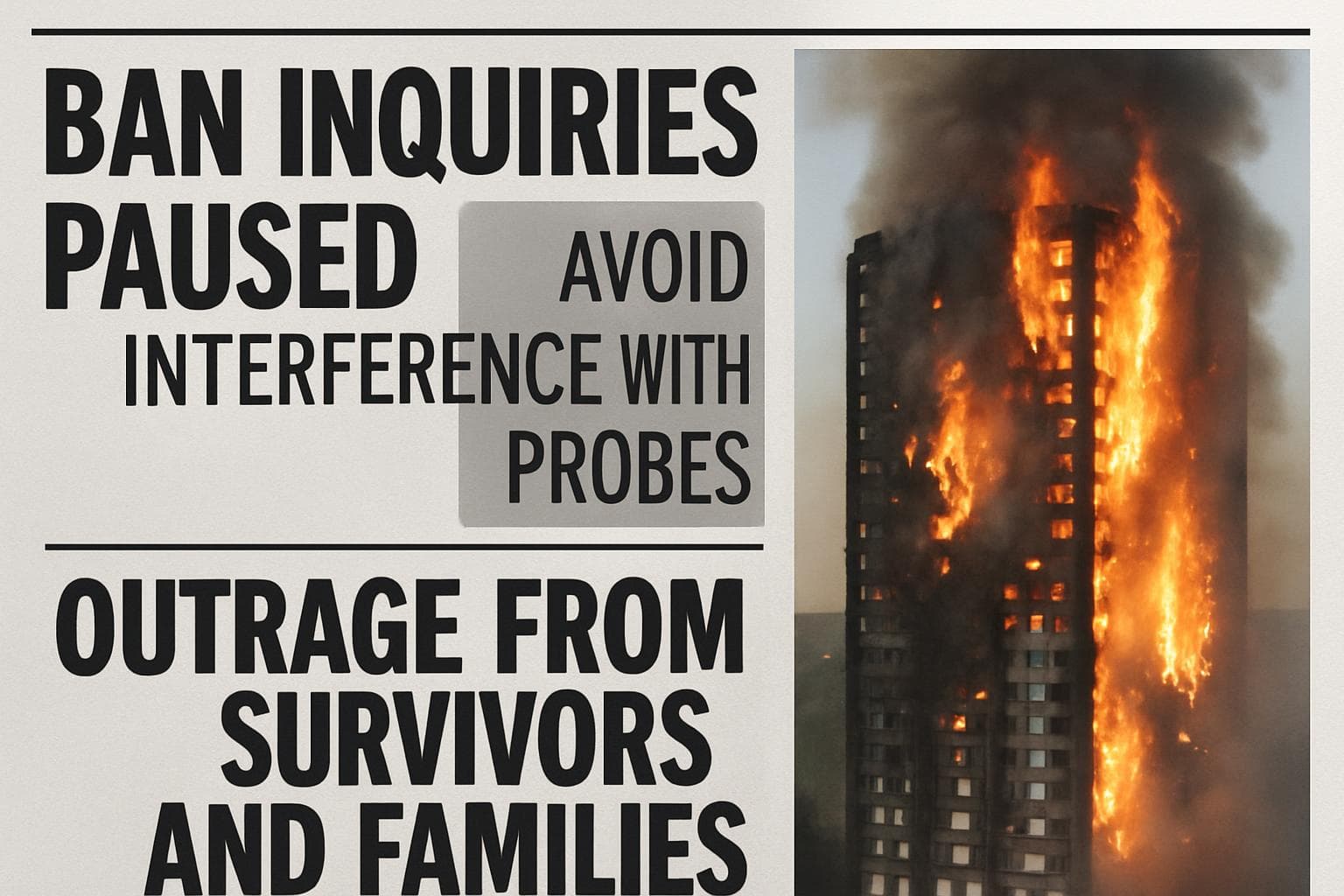
In a controversial move, the UK government has paused its investigations into banning seven companies linked to the Grenfell Tower fire from public contracts. The decision, announced on Thursday, aims to prevent interference with ongoing criminal investigations into the 2017 tragedy that claimed 72 lives.
Background and Criticism
The firms under scrutiny—Arconic, Kingspan, Saint-Gobain, Exova, Rydon, Studio E, and Harley Facades—were criticized in the final report of the Grenfell Inquiry. The government initially launched investigations in March to determine if these companies engaged in professional misconduct under the Procurement Act 2023, potentially leading to their debarment from public contracts.
However, the decision to pause these investigations has sparked outrage among survivors and bereaved families. Grenfell United, a group representing these individuals, condemned the move as a "disgrace" and accused the government of either incompetence or indifference. "This latest U-turn is yet another glaring example of a government that abandons its duty and shamelessly betrays those it vowed to protect," the group stated.
Legal and Procedural Context
The Metropolitan Police and the Crown Prosecution Service (CPS) requested the pause, expressing concerns that continuing the debarment investigations could prejudice ongoing criminal proceedings. The police and CPS had not been consulted prior to the government's initial announcement in February and formally requested the pause in May.
A government spokesperson explained, "To ensure the Metropolitan Police's criminal investigation and any future proceedings remain the priority, the Cabinet Office has paused its separate, non-criminal debarment investigations at the request of the CPS and the Metropolitan Police."
Frank Ferguson, head of the CPS special crime and counter-terrorism division, emphasized the importance of maintaining the integrity of potential future prosecutions, noting the ongoing collaboration with the Metropolitan Police.
WHAT THIS MIGHT MEAN
The pause in debarment investigations raises questions about the timeline and outcome of the criminal investigations into the Grenfell Tower fire. With the police and CPS estimating that their inquiry will continue until the end of 2025, followed by decisions on potential charges by the end of 2026, the delay in debarment actions could prolong accountability measures for the implicated firms.
Politically, the government's decision may further strain relations with Grenfell survivors and bereaved families, potentially impacting public trust. Experts suggest that the government must balance the need for thorough criminal investigations with the urgency of delivering justice and accountability to those affected by the tragedy.
Related Articles
UK Police Intensify Investigation into Andrew Mountbatten-Windsor Amid Misconduct Allegations
Prince Andrew's Arrest Raises Questions About Royal Succession and Monarchy's Future
Prince Andrew's Ties to Epstein Under Scrutiny Amid Calls for Inquiry
Prince Andrew's Arrest Intensifies Scrutiny on Royal Succession and Prince William's Future Role
Middle East Conflict Drives UK Energy Prices to New Highs
Labour MP's Husband Arrested in UK-China Espionage Probe
Government Halts Grenfell-Related Contract Ban Probes Amid Criminal Investigations
In This Article
 Sofia Romano| Published
 HIGHLIGHTS
- The UK government has paused investigations into banning seven firms linked to the Grenfell Tower fire to avoid impacting ongoing criminal investigations.
- Grenfell United, representing survivors and bereaved families, criticized the decision as a "disgrace" and accused the government of incompetence.
- The firms under scrutiny include Arconic, Kingspan, Saint-Gobain, Exova, Rydon, Studio E, and Harley Facades, all criticized in the Grenfell Inquiry report.
- The Metropolitan Police and Crown Prosecution Service requested the pause, citing potential prejudice to criminal proceedings.
- Final decisions on potential criminal charges related to the Grenfell disaster are expected by the end of 2026.
In a controversial move, the UK government has paused its investigations into banning seven companies linked to the Grenfell Tower fire from public contracts. The decision, announced on Thursday, aims to prevent interference with ongoing criminal investigations into the 2017 tragedy that claimed 72 lives.
Background and Criticism
The firms under scrutiny—Arconic, Kingspan, Saint-Gobain, Exova, Rydon, Studio E, and Harley Facades—were criticized in the final report of the Grenfell Inquiry. The government initially launched investigations in March to determine if these companies engaged in professional misconduct under the Procurement Act 2023, potentially leading to their debarment from public contracts.
However, the decision to pause these investigations has sparked outrage among survivors and bereaved families. Grenfell United, a group representing these individuals, condemned the move as a "disgrace" and accused the government of either incompetence or indifference. "This latest U-turn is yet another glaring example of a government that abandons its duty and shamelessly betrays those it vowed to protect," the group stated.
Legal and Procedural Context
The Metropolitan Police and the Crown Prosecution Service (CPS) requested the pause, expressing concerns that continuing the debarment investigations could prejudice ongoing criminal proceedings. The police and CPS had not been consulted prior to the government's initial announcement in February and formally requested the pause in May.
A government spokesperson explained, "To ensure the Metropolitan Police's criminal investigation and any future proceedings remain the priority, the Cabinet Office has paused its separate, non-criminal debarment investigations at the request of the CPS and the Metropolitan Police."
Frank Ferguson, head of the CPS special crime and counter-terrorism division, emphasized the importance of maintaining the integrity of potential future prosecutions, noting the ongoing collaboration with the Metropolitan Police.
WHAT THIS MIGHT MEAN
The pause in debarment investigations raises questions about the timeline and outcome of the criminal investigations into the Grenfell Tower fire. With the police and CPS estimating that their inquiry will continue until the end of 2025, followed by decisions on potential charges by the end of 2026, the delay in debarment actions could prolong accountability measures for the implicated firms.
Politically, the government's decision may further strain relations with Grenfell survivors and bereaved families, potentially impacting public trust. Experts suggest that the government must balance the need for thorough criminal investigations with the urgency of delivering justice and accountability to those affected by the tragedy.
Related Articles
UK Police Intensify Investigation into Andrew Mountbatten-Windsor Amid Misconduct Allegations
Prince Andrew's Arrest Raises Questions About Royal Succession and Monarchy's Future
Prince Andrew's Ties to Epstein Under Scrutiny Amid Calls for Inquiry
Prince Andrew's Arrest Intensifies Scrutiny on Royal Succession and Prince William's Future Role
Middle East Conflict Drives UK Energy Prices to New Highs
Labour MP's Husband Arrested in UK-China Espionage Probe