
Tensions Rise as Protests Erupt at UK Hotels Housing Asylum Seekers
In This Article
HIGHLIGHTS
- Two men were charged with racially aggravated public order offences after a protest in Diss, Norfolk, involving about 150 people.
- In Essex, protests at the Bell Hotel saw 300-400 anti-immigrant protesters and 2,000 pro-immigration counter-protesters, resulting in three arrests.
- The protests began after an asylum seeker was charged with sexual offences, sparking repeated demonstrations since July 13.
- A large police presence, including multiple forces, was deployed to maintain peace and separate the rival groups.
- Asylum seekers have expressed concerns over harmful stereotypes, emphasizing their desire to contribute positively to society.
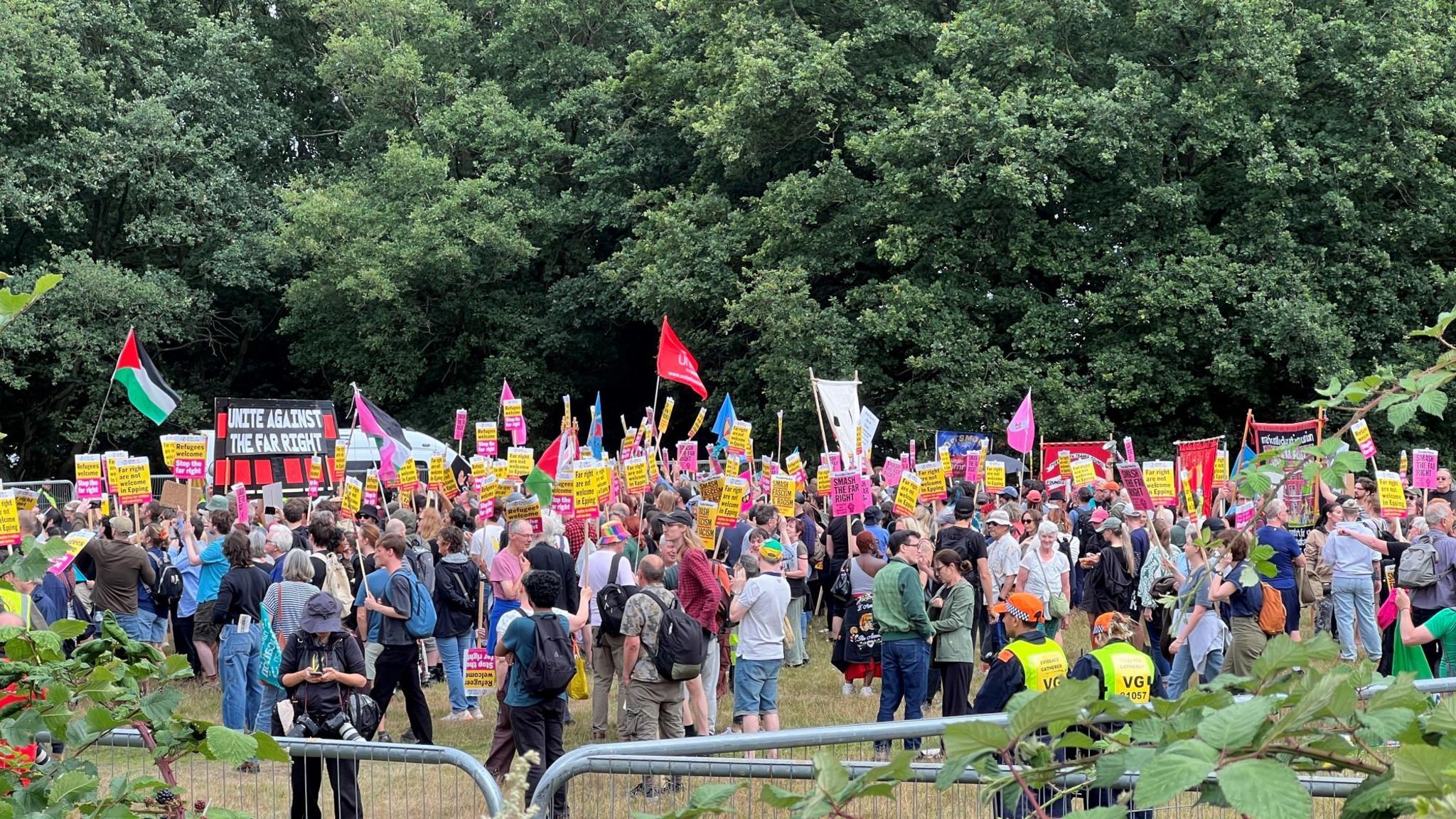
Protests have intensified across the UK as hotels housing asylum seekers become focal points for both anti-immigrant and pro-immigration demonstrations. The Bell Hotel in Epping, Essex, witnessed one of the largest gatherings, with 300-400 anti-immigrant protesters clashing with approximately 2,000 pro-immigration counter-protesters. The demonstrations, which began on July 13, were sparked by the arrest of Hadush Kebatu, an Ethiopian asylum seeker charged with sexual offences. Kebatu has denied the charges and remains in custody.
Protests in Norfolk and Essex
In Diss, Norfolk, two men were charged with racially aggravated public order offences following a protest involving around 150 people. James Harvey, 22, and Luke Sharman, 23, were arrested after police reviewed footage of the event. Both men have been released on bail and are scheduled to appear in court on September 16.
Meanwhile, the Bell Hotel in Essex has become a hotspot for demonstrations. The protests have been marked by a significant police presence, with officers from multiple forces ensuring the separation of the rival groups. Despite the tensions, Essex Police Chief Superintendent Simon Anslow praised the peaceful nature of the protests, stating, "Our role is to ensure that you can express your democratic right to protest safely and lawfully."
Voices from the Protests
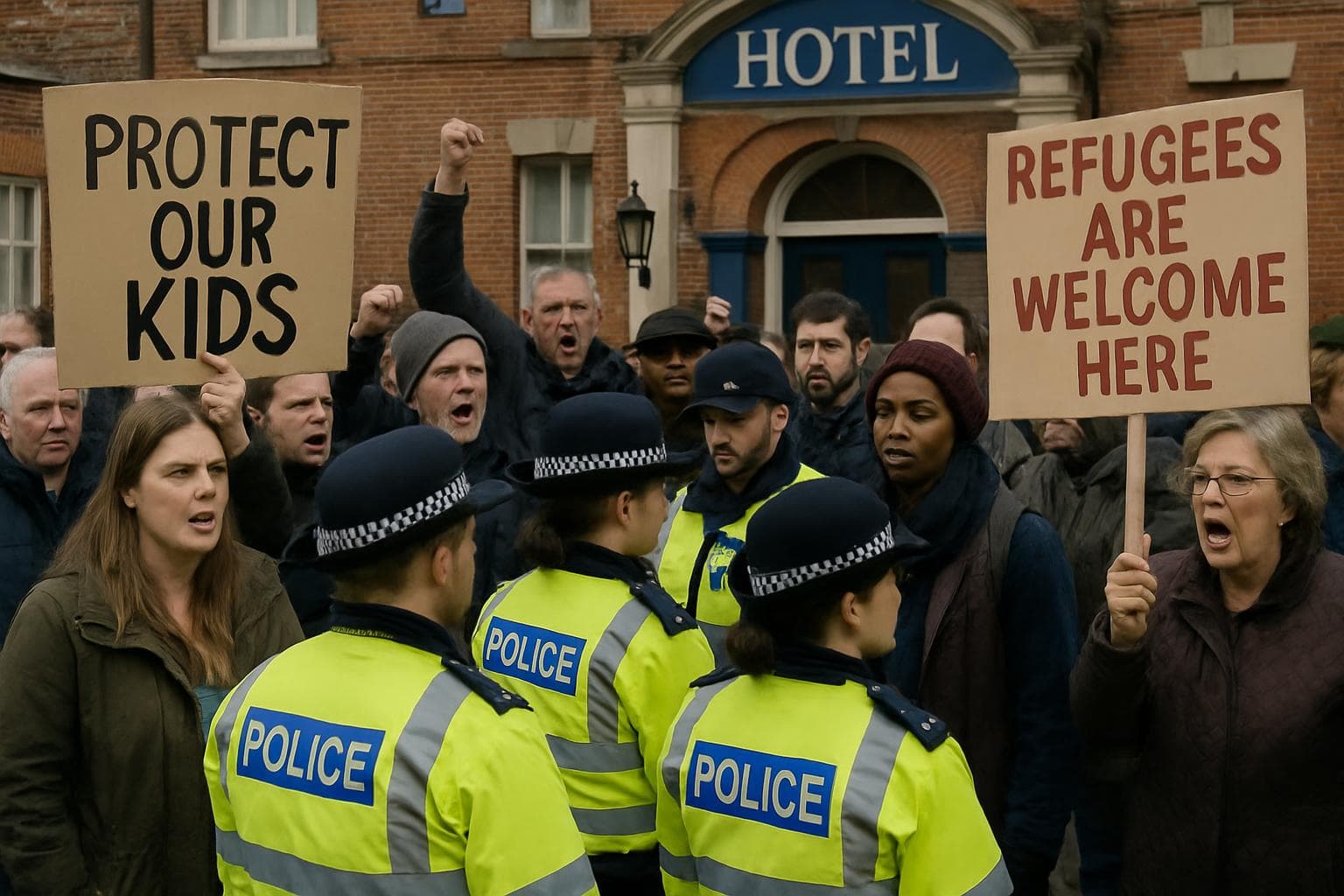
The anti-immigrant protesters, some waving St George's flags and singing patriotic songs, have expressed concerns over safety, with slogans like "Protect our kids." In contrast, pro-immigration counter-protesters have rallied under banners reading "Refugees are welcome here" and "Unity is strength," emphasizing the importance of standing against racism.
A letter from asylum seekers published in The Guardian highlighted the challenges they face, urging the public to avoid harmful stereotypes. "We are here to rebuild our lives, to work, and to contribute," the letter stated, calling for understanding and fairness.
WHAT THIS MIGHT MEAN
The ongoing protests at hotels housing asylum seekers highlight the deep divisions within the UK over immigration policy. As the legal proceedings against Hadush Kebatu unfold, tensions may continue to rise, potentially leading to further demonstrations. The involvement of multiple police forces underscores the seriousness of the situation and the need for careful management to prevent violence.
Politically, these events could influence public opinion and policy discussions on immigration and asylum. The government may face increased pressure to address the concerns of both protesters and asylum seekers, balancing security with humanitarian obligations. As the situation develops, the voices of asylum seekers and their advocates will be crucial in shaping a more informed and empathetic public discourse.
Images from the Web
Related Articles
UK Government to Reform Asylum Seeker Support and Employment Policies

UK Faces Dilemmas Amid Iran Conflict and China Spying Allegations
UK Reinforces Military Presence in Cyprus Amid Middle East Tensions

UK-Iran Tensions: Starmer Defends Cautious Approach Amid Trump Criticism
Persistent Safety Concerns in Nottingham Maternity Services Amidst Calls for Systemic Reform

Diplomatic Tensions Rise as Trump Criticizes Starmer's Iran Policy
Tensions Rise as Protests Erupt at UK Hotels Housing Asylum Seekers
In This Article
 Ethan Brooks| Published
 HIGHLIGHTS
- Two men were charged with racially aggravated public order offences after a protest in Diss, Norfolk, involving about 150 people.
- In Essex, protests at the Bell Hotel saw 300-400 anti-immigrant protesters and 2,000 pro-immigration counter-protesters, resulting in three arrests.
- The protests began after an asylum seeker was charged with sexual offences, sparking repeated demonstrations since July 13.
- A large police presence, including multiple forces, was deployed to maintain peace and separate the rival groups.
- Asylum seekers have expressed concerns over harmful stereotypes, emphasizing their desire to contribute positively to society.
Protests have intensified across the UK as hotels housing asylum seekers become focal points for both anti-immigrant and pro-immigration demonstrations. The Bell Hotel in Epping, Essex, witnessed one of the largest gatherings, with 300-400 anti-immigrant protesters clashing with approximately 2,000 pro-immigration counter-protesters. The demonstrations, which began on July 13, were sparked by the arrest of Hadush Kebatu, an Ethiopian asylum seeker charged with sexual offences. Kebatu has denied the charges and remains in custody.
Protests in Norfolk and Essex
In Diss, Norfolk, two men were charged with racially aggravated public order offences following a protest involving around 150 people. James Harvey, 22, and Luke Sharman, 23, were arrested after police reviewed footage of the event. Both men have been released on bail and are scheduled to appear in court on September 16.
Meanwhile, the Bell Hotel in Essex has become a hotspot for demonstrations. The protests have been marked by a significant police presence, with officers from multiple forces ensuring the separation of the rival groups. Despite the tensions, Essex Police Chief Superintendent Simon Anslow praised the peaceful nature of the protests, stating, "Our role is to ensure that you can express your democratic right to protest safely and lawfully."
Voices from the Protests
The anti-immigrant protesters, some waving St George's flags and singing patriotic songs, have expressed concerns over safety, with slogans like "Protect our kids." In contrast, pro-immigration counter-protesters have rallied under banners reading "Refugees are welcome here" and "Unity is strength," emphasizing the importance of standing against racism.
A letter from asylum seekers published in The Guardian highlighted the challenges they face, urging the public to avoid harmful stereotypes. "We are here to rebuild our lives, to work, and to contribute," the letter stated, calling for understanding and fairness.
WHAT THIS MIGHT MEAN
The ongoing protests at hotels housing asylum seekers highlight the deep divisions within the UK over immigration policy. As the legal proceedings against Hadush Kebatu unfold, tensions may continue to rise, potentially leading to further demonstrations. The involvement of multiple police forces underscores the seriousness of the situation and the need for careful management to prevent violence.
Politically, these events could influence public opinion and policy discussions on immigration and asylum. The government may face increased pressure to address the concerns of both protesters and asylum seekers, balancing security with humanitarian obligations. As the situation develops, the voices of asylum seekers and their advocates will be crucial in shaping a more informed and empathetic public discourse.
Images from the Web
Related Articles
UK Government to Reform Asylum Seeker Support and Employment Policies
UK Faces Dilemmas Amid Iran Conflict and China Spying Allegations
UK Reinforces Military Presence in Cyprus Amid Middle East Tensions
UK-Iran Tensions: Starmer Defends Cautious Approach Amid Trump Criticism
Persistent Safety Concerns in Nottingham Maternity Services Amidst Calls for Systemic Reform
Diplomatic Tensions Rise as Trump Criticizes Starmer's Iran Policy