
UK Immigration Overhaul: New Policies Extend Wait for Settled Status and Benefits
In This Article
HIGHLIGHTS
- Home Secretary Shabana Mahmood proposes increasing payments to failed asylum seekers to encourage voluntary departure, citing cost-effectiveness.
- New immigration rules could extend the wait for settled status to up to 20 years for migrants reliant on benefits, impacting over 2.6 million people.
- Migrants will only be eligible for benefits and social housing upon becoming British citizens, a shift from current policies.
- The proposed changes have sparked criticism from NGOs and unions, warning of prolonged instability for migrants.
- The government aims to replace the current system with an "earned settlement" model, emphasizing economic contribution and integration.
The UK government has unveiled a series of sweeping changes to its immigration policies, spearheaded by Home Secretary Shabana Mahmood. These reforms aim to reshape the path to settled status and benefits eligibility for migrants, amidst rising concerns over the country's immigration system.
Incentives for Voluntary Departure
Mahmood has proposed a significant increase in payments to failed asylum seekers who opt to leave the UK voluntarily. Speaking on BBC Radio 4, she argued that the current cost of maintaining failed asylum seekers, estimated at £30,000 per person annually, makes these payments a more economical choice for taxpayers. "A voluntary return is often the best way to get people to return to their home country as quickly as possible," Mahmood stated, defending the controversial plan to deport families, including children, who refuse to leave.
Extended Wait for Settled Status
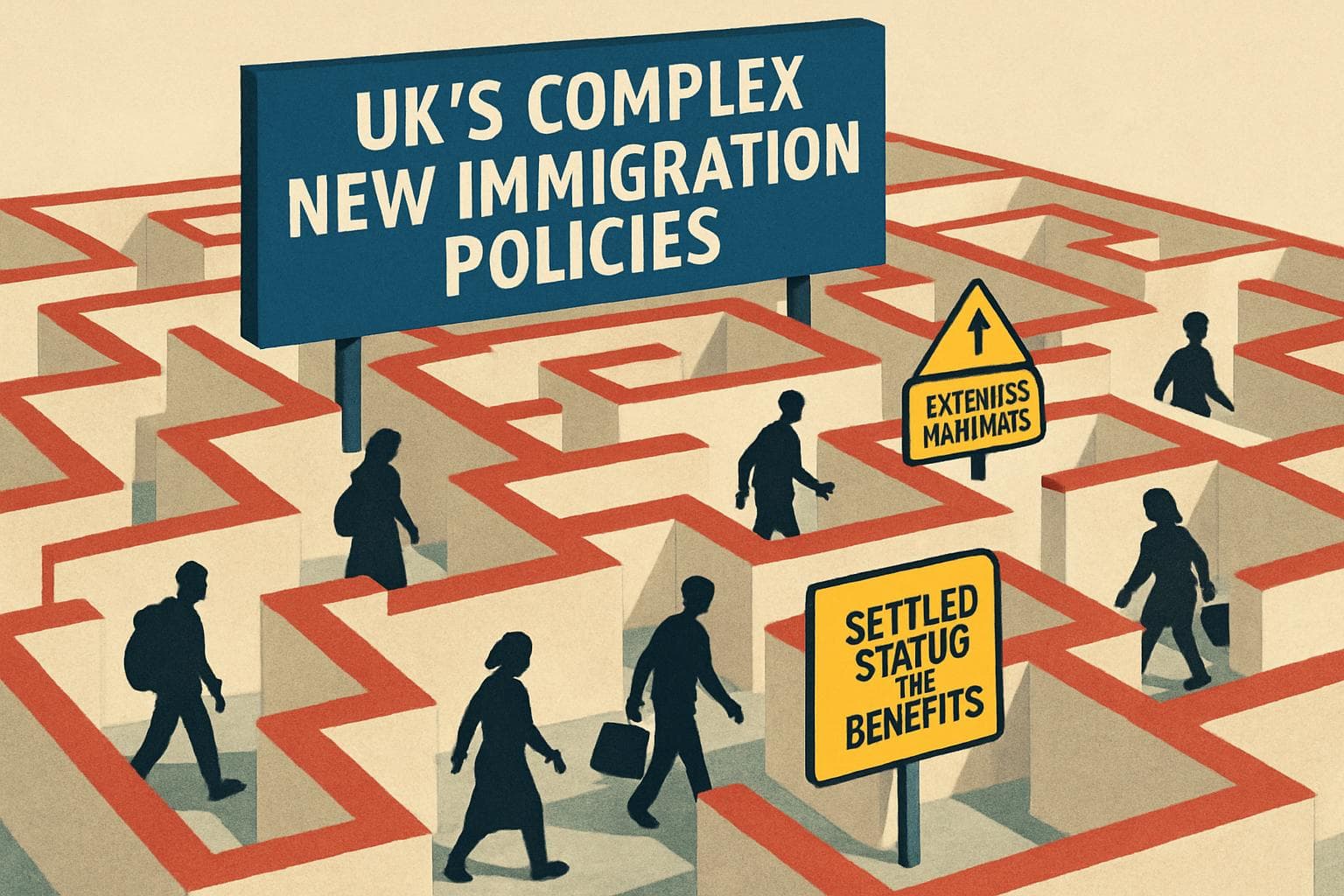
Under the new proposals, the qualifying period for Indefinite Leave to Remain (ILR) will double from five to ten years for most migrants. Those reliant on benefits for over a year could face a 20-year wait, the longest in Europe. The changes, affecting an estimated 2.6 million migrants since 2021, are part of a broader strategy to ensure settlement is "earned" through economic contribution and social integration.
Benefits Tied to Citizenship
In a further shift, migrants will only gain access to benefits and social housing upon obtaining British citizenship, rather than upon receiving settled status. This policy change could particularly impact the over 600,000 health workers who arrived during the "Boriswave" and may now face a 25-year wait if they have claimed benefits.
Criticism and Concerns
The proposed reforms have drawn criticism from various quarters. Enver Solomon of the Refugee Council warned that the changes could trap migrants in prolonged uncertainty, while Unison's Christina McAnea highlighted the detrimental impact on essential workers. Despite these concerns, Mahmood insists the reforms are necessary to address the unprecedented scale of recent arrivals and to prioritize integration and contribution.
WHAT THIS MIGHT MEAN
The proposed immigration reforms could significantly alter the landscape for migrants in the UK, potentially leading to a decrease in applications for settled status due to the extended waiting periods and stringent criteria. Politically, these changes may bolster the Labour Party's stance on immigration, appealing to voters concerned about the current system's sustainability. However, they also risk alienating key sectors reliant on migrant workers, such as healthcare, and could face legal challenges from human rights organizations. As the debate continues, the government will need to balance economic considerations with humanitarian obligations, ensuring that the new policies do not exacerbate the challenges faced by vulnerable migrant communities.
Related Articles

UK Government to Reform Asylum Seeker Support and Employment Policies

UK Government Announces Major Overhaul of SEND System with £3.4 Billion Investment

Middle East Conflict Drives UK Energy Prices to New Highs

UK Faces Dilemmas Amid Iran Conflict and China Spying Allegations

Labour MP's Husband Arrested in UK-China Espionage Probe

Government Announces £4 Billion Overhaul of SEND Support in England
UK Immigration Overhaul: New Policies Extend Wait for Settled Status and Benefits
In This Article
 Leila Hassan| Published
 HIGHLIGHTS
- Home Secretary Shabana Mahmood proposes increasing payments to failed asylum seekers to encourage voluntary departure, citing cost-effectiveness.
- New immigration rules could extend the wait for settled status to up to 20 years for migrants reliant on benefits, impacting over 2.6 million people.
- Migrants will only be eligible for benefits and social housing upon becoming British citizens, a shift from current policies.
- The proposed changes have sparked criticism from NGOs and unions, warning of prolonged instability for migrants.
- The government aims to replace the current system with an "earned settlement" model, emphasizing economic contribution and integration.
The UK government has unveiled a series of sweeping changes to its immigration policies, spearheaded by Home Secretary Shabana Mahmood. These reforms aim to reshape the path to settled status and benefits eligibility for migrants, amidst rising concerns over the country's immigration system.
Incentives for Voluntary Departure
Mahmood has proposed a significant increase in payments to failed asylum seekers who opt to leave the UK voluntarily. Speaking on BBC Radio 4, she argued that the current cost of maintaining failed asylum seekers, estimated at £30,000 per person annually, makes these payments a more economical choice for taxpayers. "A voluntary return is often the best way to get people to return to their home country as quickly as possible," Mahmood stated, defending the controversial plan to deport families, including children, who refuse to leave.
Extended Wait for Settled Status
Under the new proposals, the qualifying period for Indefinite Leave to Remain (ILR) will double from five to ten years for most migrants. Those reliant on benefits for over a year could face a 20-year wait, the longest in Europe. The changes, affecting an estimated 2.6 million migrants since 2021, are part of a broader strategy to ensure settlement is "earned" through economic contribution and social integration.
Benefits Tied to Citizenship
In a further shift, migrants will only gain access to benefits and social housing upon obtaining British citizenship, rather than upon receiving settled status. This policy change could particularly impact the over 600,000 health workers who arrived during the "Boriswave" and may now face a 25-year wait if they have claimed benefits.
Criticism and Concerns
The proposed reforms have drawn criticism from various quarters. Enver Solomon of the Refugee Council warned that the changes could trap migrants in prolonged uncertainty, while Unison's Christina McAnea highlighted the detrimental impact on essential workers. Despite these concerns, Mahmood insists the reforms are necessary to address the unprecedented scale of recent arrivals and to prioritize integration and contribution.
WHAT THIS MIGHT MEAN
The proposed immigration reforms could significantly alter the landscape for migrants in the UK, potentially leading to a decrease in applications for settled status due to the extended waiting periods and stringent criteria. Politically, these changes may bolster the Labour Party's stance on immigration, appealing to voters concerned about the current system's sustainability. However, they also risk alienating key sectors reliant on migrant workers, such as healthcare, and could face legal challenges from human rights organizations. As the debate continues, the government will need to balance economic considerations with humanitarian obligations, ensuring that the new policies do not exacerbate the challenges faced by vulnerable migrant communities.
Related Articles
UK Government to Reform Asylum Seeker Support and Employment Policies
UK Government Announces Major Overhaul of SEND System with £3.4 Billion Investment
Middle East Conflict Drives UK Energy Prices to New Highs
UK Faces Dilemmas Amid Iran Conflict and China Spying Allegations
Labour MP's Husband Arrested in UK-China Espionage Probe
Government Announces £4 Billion Overhaul of SEND Support in England