
UK Disposable Income Growth Highlights Regional Disparities
In This Article
HIGHLIGHTS
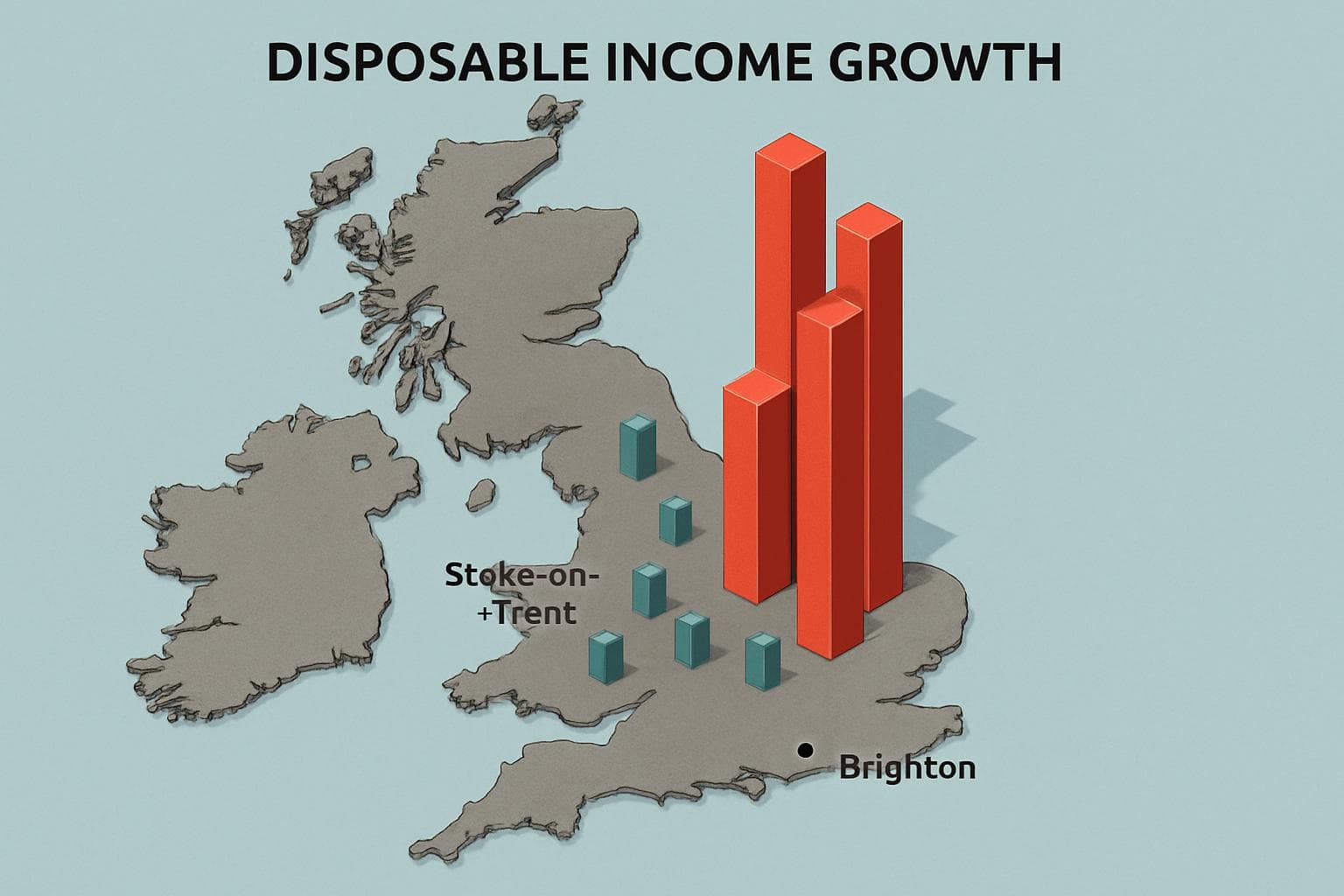
- Disposable incomes in Stoke-on-Trent could have been £5,500 higher if growth matched top UK cities, according to Centre for Cities.
- Eleven UK towns and cities, including Brighton and Warrington, saw disposable incomes rise by 5.2% from 2013 to 2023, double the national average.
- West Midlands cities experienced slower growth, with disposable incomes rising by only 1.2% compared to the UK average of 2.4%.
- The think tank emphasizes the need for planning reform and industrial strategy to boost economic growth and improve living standards.
- Birmingham City Council highlights the importance of cities in driving economic growth to tackle poverty and create jobs.
Over the past decade, the growth in disposable incomes across UK towns and cities has revealed significant regional disparities, according to a report by the Centre for Cities. The think tank's analysis highlights that residents in Stoke-on-Trent missed out on an additional £5,500 in disposable income, had their city's growth matched that of the UK's top-performing areas.
Regional Growth Disparities
The report found that between 2013 and 2023, disposable incomes in eleven towns and cities, including Brighton, Warrington, and Barnsley, rose by an average of 5.2%. This growth rate is more than double the national average of 2.4%. In contrast, cities in the West Midlands, such as Birmingham and Coventry, saw a modest increase of only 1.2%.
Economic Strategies and Challenges
The Centre for Cities attributes the success of the top-performing areas to their focus on building strong local business bases and creating higher-skilled jobs. These cities have leveraged industries like software, marketing, and finance to drive economic growth. However, the think tank criticizes government efforts for being too focused on short-term solutions rather than addressing the root causes of stagnant incomes and economic disparity.
Local Perspectives
Birmingham City Council leader John Cotton emphasized the role of cities in driving economic growth to improve living standards, tackle poverty, and create employment opportunities. He noted Birmingham's potential as one of the most investable cities in the UK, with significant opportunities for growth.
The Need for Strategic Reform
The Centre for Cities calls for planning reform, devolution, and industrial strategy to deliver the economic growth necessary to improve living standards. The report suggests that targeted interventions, such as improving transport links and providing skills support, are essential for enabling households to access growth opportunities.
WHAT THIS MIGHT MEAN
Looking ahead, the disparities in disposable income growth across UK regions could prompt policymakers to reevaluate their economic strategies. If the government prioritizes long-term economic reforms over short-term fixes, cities like Stoke-on-Trent and Coventry may see improved living standards. Experts suggest that fostering local business development and enhancing infrastructure could be key to bridging the income gap. As cities strive to emulate the success of top performers, the focus may shift towards creating sustainable economic environments that support higher-skilled jobs and robust local economies.
Related Articles

Lib Dems Propose Replacing Treasury with New Department for Growth
Council Tax Increases Across England: A Balancing Act Amid Financial Pressures

Birmingham's Proactive Approach to Measles Outbreak Offers Lessons for North London

Government Criticized for Mishandling Maccabi Tel Aviv Fan Ban

Arrest of Andrew Mountbatten-Windsor Captured in Iconic Photograph

Jesse Jackson's Legacy: A Lifelong Fight for Racial Equality and Social Justice
UK Disposable Income Growth Highlights Regional Disparities
In This Article
 Daniel Rivera| Published
 HIGHLIGHTS
- Disposable incomes in Stoke-on-Trent could have been £5,500 higher if growth matched top UK cities, according to Centre for Cities.
- Eleven UK towns and cities, including Brighton and Warrington, saw disposable incomes rise by 5.2% from 2013 to 2023, double the national average.
- West Midlands cities experienced slower growth, with disposable incomes rising by only 1.2% compared to the UK average of 2.4%.
- The think tank emphasizes the need for planning reform and industrial strategy to boost economic growth and improve living standards.
- Birmingham City Council highlights the importance of cities in driving economic growth to tackle poverty and create jobs.
Over the past decade, the growth in disposable incomes across UK towns and cities has revealed significant regional disparities, according to a report by the Centre for Cities. The think tank's analysis highlights that residents in Stoke-on-Trent missed out on an additional £5,500 in disposable income, had their city's growth matched that of the UK's top-performing areas.
Regional Growth Disparities
The report found that between 2013 and 2023, disposable incomes in eleven towns and cities, including Brighton, Warrington, and Barnsley, rose by an average of 5.2%. This growth rate is more than double the national average of 2.4%. In contrast, cities in the West Midlands, such as Birmingham and Coventry, saw a modest increase of only 1.2%.
Economic Strategies and Challenges
The Centre for Cities attributes the success of the top-performing areas to their focus on building strong local business bases and creating higher-skilled jobs. These cities have leveraged industries like software, marketing, and finance to drive economic growth. However, the think tank criticizes government efforts for being too focused on short-term solutions rather than addressing the root causes of stagnant incomes and economic disparity.
Local Perspectives
Birmingham City Council leader John Cotton emphasized the role of cities in driving economic growth to improve living standards, tackle poverty, and create employment opportunities. He noted Birmingham's potential as one of the most investable cities in the UK, with significant opportunities for growth.
The Need for Strategic Reform
The Centre for Cities calls for planning reform, devolution, and industrial strategy to deliver the economic growth necessary to improve living standards. The report suggests that targeted interventions, such as improving transport links and providing skills support, are essential for enabling households to access growth opportunities.
WHAT THIS MIGHT MEAN
Looking ahead, the disparities in disposable income growth across UK regions could prompt policymakers to reevaluate their economic strategies. If the government prioritizes long-term economic reforms over short-term fixes, cities like Stoke-on-Trent and Coventry may see improved living standards. Experts suggest that fostering local business development and enhancing infrastructure could be key to bridging the income gap. As cities strive to emulate the success of top performers, the focus may shift towards creating sustainable economic environments that support higher-skilled jobs and robust local economies.
Related Articles
Lib Dems Propose Replacing Treasury with New Department for Growth
Council Tax Increases Across England: A Balancing Act Amid Financial Pressures
Birmingham's Proactive Approach to Measles Outbreak Offers Lessons for North London
Government Criticized for Mishandling Maccabi Tel Aviv Fan Ban
Arrest of Andrew Mountbatten-Windsor Captured in Iconic Photograph
Jesse Jackson's Legacy: A Lifelong Fight for Racial Equality and Social Justice