
UK MPs Urge Government to Block Chinese Embassy Plans Amid Security Concerns
In This Article
HIGHLIGHTS
- MPs from multiple parties have urged the UK government to block plans for a new Chinese embassy in London, citing national security concerns.
- The proposed embassy, located at Royal Mint Court, includes a controversial "hidden chamber" near sensitive data cables.
- Planning Minister Matthew Pennycook stated that a decision will be made by January 20, emphasizing the quasi-judicial nature of the process.
- Labour MP Sarah Champion and others have raised concerns about the potential impact on Hong Kong and Uyghur communities in the UK.
- Keir Starmer's upcoming visit to China adds a diplomatic dimension to the decision, though officials deny political influence in the planning process.
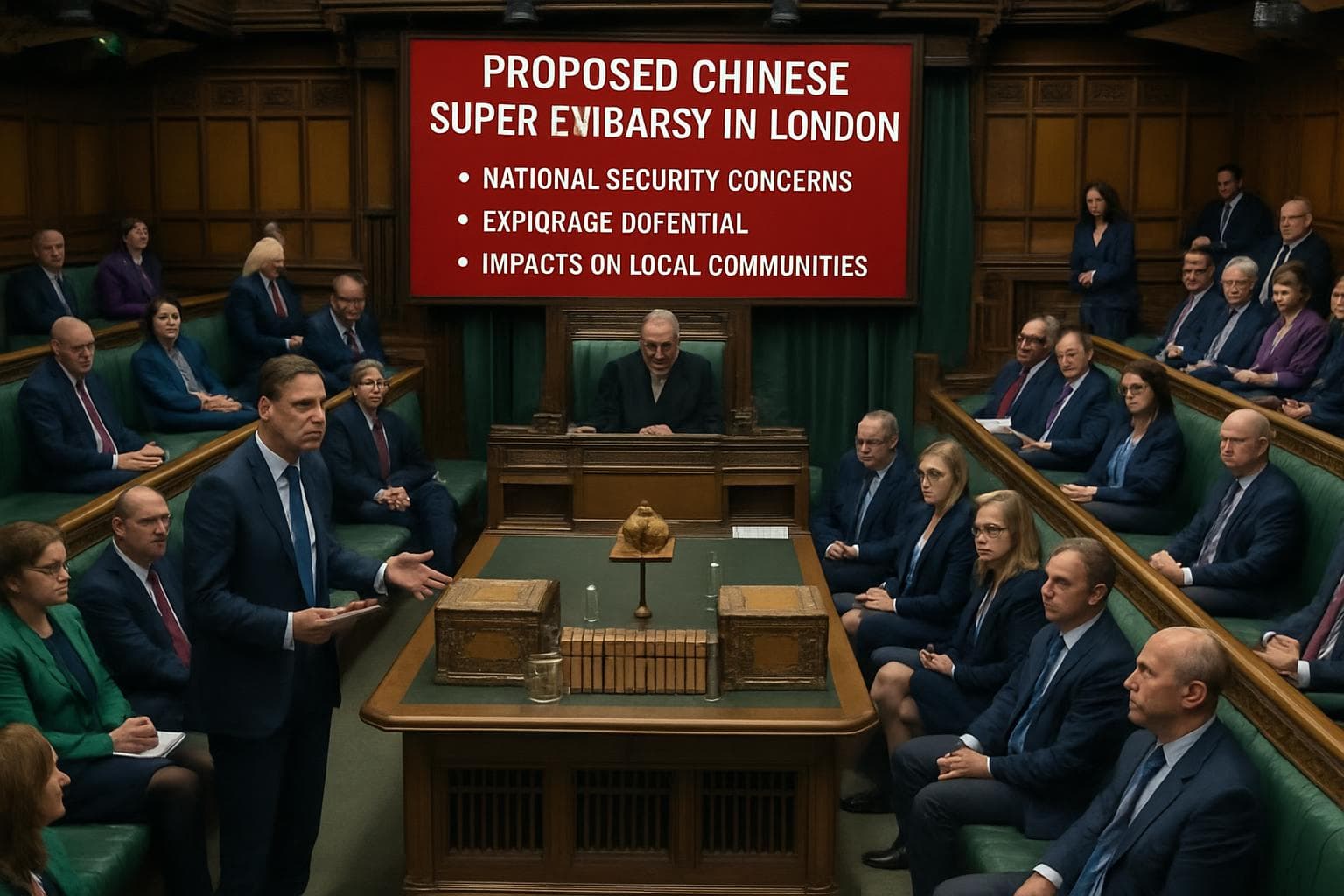
In a heated debate in the UK Parliament, MPs from across the political spectrum have called on the government to reject plans for a new Chinese embassy in London, citing significant national security risks. The proposed "super-embassy," set to be located at Royal Mint Court near Tower Bridge, has sparked controversy due to its proximity to sensitive communication cables and potential implications for Hong Kong and Uyghur communities in the UK.
Security Concerns and Political Reactions
The plans for the embassy, which spans 20,000 square meters, have drawn criticism from MPs who fear it could serve as a "launch pad for economic warfare" against the UK. Alicia Kearns, the Conservative shadow Home Office minister, highlighted a report revealing a "hidden chamber" near data cables, which could potentially be exploited for espionage. Labour MP Sarah Champion echoed these concerns, emphasizing that multiple government agencies have flagged China as a hostile state.
Planning Process and Government Stance
Planning Minister Matthew Pennycook assured MPs that all material considerations would be evaluated before a decision is made by January 20. He reiterated the quasi-judicial nature of the planning process, stating it would be inappropriate to comment further on the live case. Despite the security concerns, MI5 reportedly has no objections to the project, as previously reported by the Guardian.
Diplomatic Implications and Community Impact
The timing of the embassy's potential approval coincides with Labour leader Keir Starmer's planned visit to China later this month, raising questions about diplomatic motivations. However, government officials maintain that the planning decision is independent of political considerations. Meanwhile, MPs have voiced concerns about the embassy's impact on UK-based Hong Kongers and Uyghurs, with fears of increased surveillance and repression.
WHAT THIS MIGHT MEAN
As the January 20 decision deadline approaches, the UK government faces a complex balancing act between national security and diplomatic relations with China. Should the embassy plans be approved, it could strain UK-China relations, particularly if perceived as prioritizing economic ties over security concerns. Conversely, rejecting the plans might provoke a diplomatic backlash from China, potentially affecting trade and cooperation. Experts suggest that the government must weigh these factors carefully, considering both the immediate security implications and the long-term geopolitical landscape.
Images from the Web

Related Articles

Labour MP's Husband Arrested in UK-China Espionage Probe

UK Faces Dilemmas Amid Iran Conflict and China Spying Allegations

UK Government to Reform Asylum Seeker Support and Employment Policies

UK-Iran Tensions: Starmer Defends Cautious Approach Amid Trump Criticism

Diplomatic Tensions Rise as Trump Criticizes Starmer's Iran Policy

Nottingham Attacks Inquiry: Families Demand Accountability and Truth
UK MPs Urge Government to Block Chinese Embassy Plans Amid Security Concerns
In This Article
 Ethan Brooks| Published
 HIGHLIGHTS
- MPs from multiple parties have urged the UK government to block plans for a new Chinese embassy in London, citing national security concerns.
- The proposed embassy, located at Royal Mint Court, includes a controversial "hidden chamber" near sensitive data cables.
- Planning Minister Matthew Pennycook stated that a decision will be made by January 20, emphasizing the quasi-judicial nature of the process.
- Labour MP Sarah Champion and others have raised concerns about the potential impact on Hong Kong and Uyghur communities in the UK.
- Keir Starmer's upcoming visit to China adds a diplomatic dimension to the decision, though officials deny political influence in the planning process.
In a heated debate in the UK Parliament, MPs from across the political spectrum have called on the government to reject plans for a new Chinese embassy in London, citing significant national security risks. The proposed "super-embassy," set to be located at Royal Mint Court near Tower Bridge, has sparked controversy due to its proximity to sensitive communication cables and potential implications for Hong Kong and Uyghur communities in the UK.
Security Concerns and Political Reactions
The plans for the embassy, which spans 20,000 square meters, have drawn criticism from MPs who fear it could serve as a "launch pad for economic warfare" against the UK. Alicia Kearns, the Conservative shadow Home Office minister, highlighted a report revealing a "hidden chamber" near data cables, which could potentially be exploited for espionage. Labour MP Sarah Champion echoed these concerns, emphasizing that multiple government agencies have flagged China as a hostile state.
Planning Process and Government Stance
Planning Minister Matthew Pennycook assured MPs that all material considerations would be evaluated before a decision is made by January 20. He reiterated the quasi-judicial nature of the planning process, stating it would be inappropriate to comment further on the live case. Despite the security concerns, MI5 reportedly has no objections to the project, as previously reported by the Guardian.
Diplomatic Implications and Community Impact
The timing of the embassy's potential approval coincides with Labour leader Keir Starmer's planned visit to China later this month, raising questions about diplomatic motivations. However, government officials maintain that the planning decision is independent of political considerations. Meanwhile, MPs have voiced concerns about the embassy's impact on UK-based Hong Kongers and Uyghurs, with fears of increased surveillance and repression.
WHAT THIS MIGHT MEAN
As the January 20 decision deadline approaches, the UK government faces a complex balancing act between national security and diplomatic relations with China. Should the embassy plans be approved, it could strain UK-China relations, particularly if perceived as prioritizing economic ties over security concerns. Conversely, rejecting the plans might provoke a diplomatic backlash from China, potentially affecting trade and cooperation. Experts suggest that the government must weigh these factors carefully, considering both the immediate security implications and the long-term geopolitical landscape.
Images from the Web
Related Articles
Labour MP's Husband Arrested in UK-China Espionage Probe
UK Faces Dilemmas Amid Iran Conflict and China Spying Allegations
UK Government to Reform Asylum Seeker Support and Employment Policies
UK-Iran Tensions: Starmer Defends Cautious Approach Amid Trump Criticism
Diplomatic Tensions Rise as Trump Criticizes Starmer's Iran Policy
Nottingham Attacks Inquiry: Families Demand Accountability and Truth