
UK Government to Overhaul Water Regulation Amidst Industry Criticism
In This Article
HIGHLIGHTS
- The UK government plans to abolish Ofwat and consolidate water regulation under a single entity, following Sir Jon Cunliffe's review.
- The review recommends 88 changes, including stronger environmental regulations and addressing financial mismanagement in the water sector.
- Water companies are expected to invest over £100 billion in infrastructure upgrades, leading to higher consumer bills.
- Critics argue that the focus should be on immediate infrastructure improvements rather than regulatory restructuring.
- The report suggests new measures like compulsory metering and banning plastic-containing wet wipes to improve water quality.
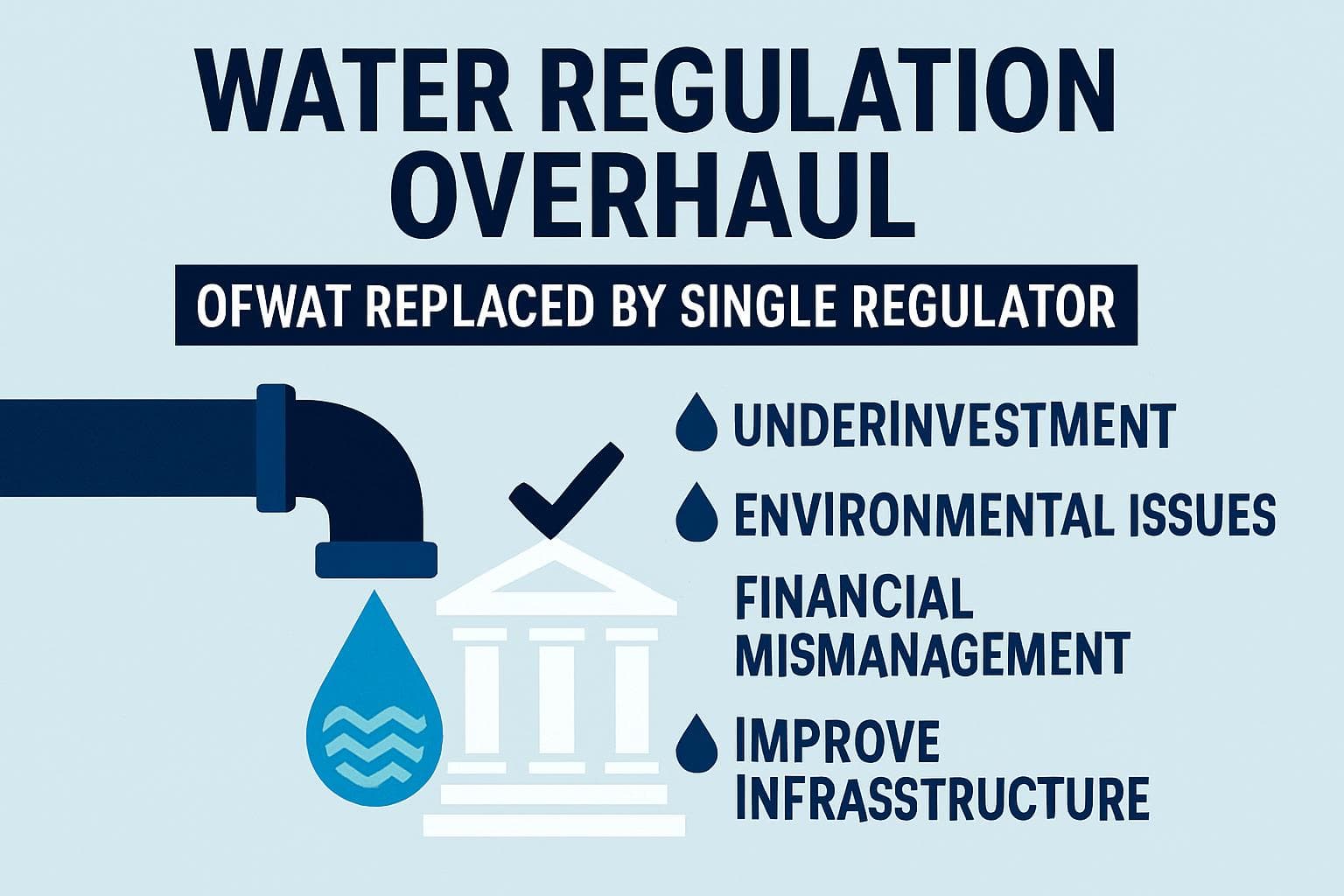
In a landmark move, the UK government has announced plans to abolish the water regulator Ofwat, following a comprehensive review by Sir Jon Cunliffe. This decision marks the most significant reform of the water industry in England and Wales since its privatisation over three decades ago. The review, which proposes 88 recommendations, aims to address longstanding issues of underinvestment, environmental neglect, and financial mismanagement within the sector.
Regulatory Shake-Up
The proposed changes will see the consolidation of powers from Ofwat, the Drinking Water Inspectorate, and the Environment Agency into a single regulatory body. This new entity will oversee the entire water sector, with a focus on safeguarding customer interests, encouraging investment, and enhancing environmental standards. Environment Secretary Steve Reed emphasized the need for a robust regulatory framework to prevent past abuses and ensure sustainable water management.
Investment and Financial Challenges
Water companies are set to invest over £100 billion in upgrading infrastructure over the next five years, a move that will inevitably lead to increased consumer bills. The review highlights the necessity of this investment to address issues such as leaking pipes and sewage spills, which have plagued the industry. Thames Water, burdened with £20 billion in debt, exemplifies the financial challenges facing the sector.
Environmental and Consumer Protections
The review also calls for stronger environmental regulations and consumer protections. Recommendations include compulsory smart metering, banning wet wipes containing plastic, and implementing new infrastructure standards. An ombudsman with legal powers is proposed to compensate consumers affected by service failures, such as burst pipes and sewage leaks.
Criticism and Calls for Action
While the review has been welcomed as a step in the right direction, critics argue that immediate action is needed to address the sector's pressing issues. Hannah Cloke, a hydrologist at the University of Reading, stressed the importance of focusing on practical solutions like fixing leaks and stopping sewage dumping, rather than merely reorganizing regulatory structures.
WHAT THIS MIGHT MEAN
The proposed overhaul of the water regulatory framework could lead to significant improvements in infrastructure and environmental standards. However, the transition to a new regulatory body may face challenges, including potential delays and resistance from industry stakeholders. If successfully implemented, the reforms could set a precedent for other sectors facing similar issues of underinvestment and environmental neglect. In the short term, consumers may experience higher bills, but the long-term benefits could include improved water quality and more resilient infrastructure. As the government moves forward with these changes, it will be crucial to balance regulatory restructuring with immediate action to address the sector's most pressing challenges.
Related Articles

Saharan Dust to Illuminate UK Skies with Vivid Sunrises and Sunsets

Government Announces £4 Billion Overhaul of SEND Support in England

UK Government Announces Major Overhaul of SEND System with £3.4 Billion Investment

Government Unveils Ambitious Plan to Halve Attainment Gap in England's Schools

UK Government's SEND Reforms: A Critical Turning Point for Special Education

Sisters Tragically Drown at Eryri National Park's Watkin Path
UK Government to Overhaul Water Regulation Amidst Industry Criticism
In This Article
 Leila Hassan| Published
 HIGHLIGHTS
- The UK government plans to abolish Ofwat and consolidate water regulation under a single entity, following Sir Jon Cunliffe's review.
- The review recommends 88 changes, including stronger environmental regulations and addressing financial mismanagement in the water sector.
- Water companies are expected to invest over £100 billion in infrastructure upgrades, leading to higher consumer bills.
- Critics argue that the focus should be on immediate infrastructure improvements rather than regulatory restructuring.
- The report suggests new measures like compulsory metering and banning plastic-containing wet wipes to improve water quality.
In a landmark move, the UK government has announced plans to abolish the water regulator Ofwat, following a comprehensive review by Sir Jon Cunliffe. This decision marks the most significant reform of the water industry in England and Wales since its privatisation over three decades ago. The review, which proposes 88 recommendations, aims to address longstanding issues of underinvestment, environmental neglect, and financial mismanagement within the sector.
Regulatory Shake-Up
The proposed changes will see the consolidation of powers from Ofwat, the Drinking Water Inspectorate, and the Environment Agency into a single regulatory body. This new entity will oversee the entire water sector, with a focus on safeguarding customer interests, encouraging investment, and enhancing environmental standards. Environment Secretary Steve Reed emphasized the need for a robust regulatory framework to prevent past abuses and ensure sustainable water management.
Investment and Financial Challenges
Water companies are set to invest over £100 billion in upgrading infrastructure over the next five years, a move that will inevitably lead to increased consumer bills. The review highlights the necessity of this investment to address issues such as leaking pipes and sewage spills, which have plagued the industry. Thames Water, burdened with £20 billion in debt, exemplifies the financial challenges facing the sector.
Environmental and Consumer Protections
The review also calls for stronger environmental regulations and consumer protections. Recommendations include compulsory smart metering, banning wet wipes containing plastic, and implementing new infrastructure standards. An ombudsman with legal powers is proposed to compensate consumers affected by service failures, such as burst pipes and sewage leaks.
Criticism and Calls for Action
While the review has been welcomed as a step in the right direction, critics argue that immediate action is needed to address the sector's pressing issues. Hannah Cloke, a hydrologist at the University of Reading, stressed the importance of focusing on practical solutions like fixing leaks and stopping sewage dumping, rather than merely reorganizing regulatory structures.
WHAT THIS MIGHT MEAN
The proposed overhaul of the water regulatory framework could lead to significant improvements in infrastructure and environmental standards. However, the transition to a new regulatory body may face challenges, including potential delays and resistance from industry stakeholders. If successfully implemented, the reforms could set a precedent for other sectors facing similar issues of underinvestment and environmental neglect. In the short term, consumers may experience higher bills, but the long-term benefits could include improved water quality and more resilient infrastructure. As the government moves forward with these changes, it will be crucial to balance regulatory restructuring with immediate action to address the sector's most pressing challenges.
Related Articles
Saharan Dust to Illuminate UK Skies with Vivid Sunrises and Sunsets
Government Announces £4 Billion Overhaul of SEND Support in England
UK Government Announces Major Overhaul of SEND System with £3.4 Billion Investment
Government Unveils Ambitious Plan to Halve Attainment Gap in England's Schools
UK Government's SEND Reforms: A Critical Turning Point for Special Education
Sisters Tragically Drown at Eryri National Park's Watkin Path