
UK Parliament Faces Crucial Vote on Assisted Dying Bill
In This Article
HIGHLIGHTS
- The UK parliament is set to vote on the assisted dying bill, a pivotal moment for social change in England and Wales.
- Labour MP Kim Leadbeater, the bill's sponsor, argues the UK lags behind other progressive nations in legalizing assisted dying.
- The bill proposes legalizing assisted dying for terminally ill patients with less than six months to live, pending approval by medical and legal experts.
- Opposition includes concerns over insufficient safeguards for individuals with mental illness or disabilities.
- The vote is closely contested, with some MPs switching sides and significant debate expected in the Commons.
The UK parliament is poised for a significant vote on the assisted dying bill, a legislative proposal that could mark a transformative moment for social change in England and Wales. The bill, championed by Labour MP Kim Leadbeater, seeks to legalize assisted dying for terminally ill patients with a prognosis of less than six months, contingent upon approval from two doctors and a panel of experts.
A Divisive Debate
As the vote approaches, the debate has intensified, with Leadbeater emphasizing that the UK is "behind the curve" compared to other progressive nations. "Other countries are looking at us and saying, goodness me, why are you not doing what is essentially the right thing to do?" Leadbeater remarked, highlighting the urgency of the moment. She warned that failing to pass the bill now could delay similar legislation for another decade.
Concerns Over Safeguards
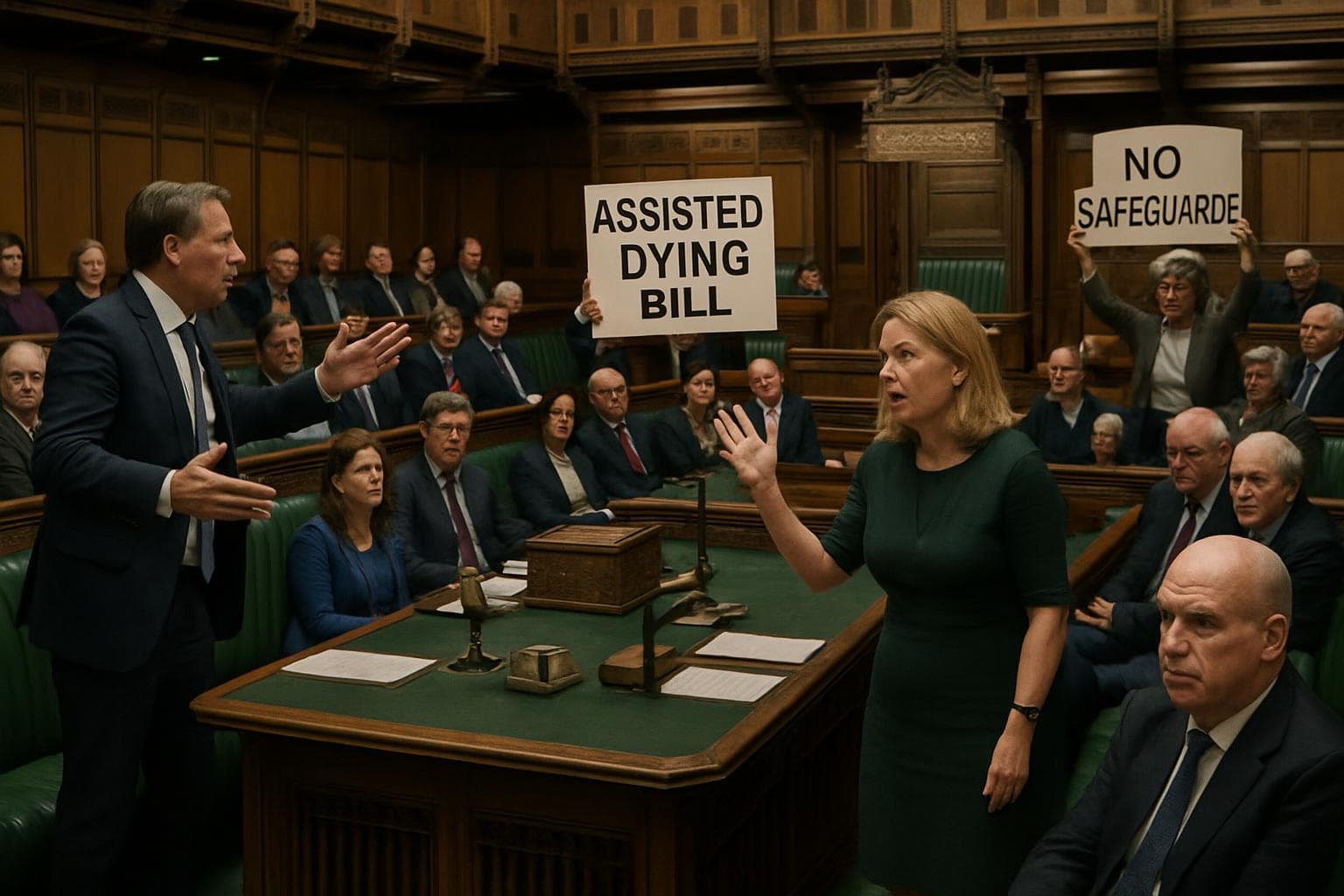
Despite the push for change, the bill faces significant opposition. Critics, including the Royal College of Psychiatrists and disability rights activists, argue that the proposed safeguards are inadequate, particularly for those with mental health issues or disabilities. Protests are planned outside parliament as the final vote looms.
Political Dynamics
The political landscape surrounding the bill is complex. While Labour leader Keir Starmer has expressed support, other prominent figures, such as Conservative leader Kemi Badenoch, have urged MPs to oppose it. Notably, at least 19 MPs have indicated they will switch their stance to vote against the bill, citing concerns over its implications.
Potential Outcomes
Should the bill pass, it would initiate a four-year implementation period, although Leadbeater has expressed a desire to expedite this timeline if safety can be ensured. The legislation has already undergone significant changes, including the removal of a requirement for high court approval, now replaced by a panel of experts.
WHAT THIS MIGHT MEAN
The outcome of the vote remains uncertain, with both proponents and opponents actively lobbying for support. If the bill passes, it could pave the way for similar legislation in other parts of the UK, aligning the nation with other progressive countries. However, failure to pass could stall efforts for reform, leaving terminally ill patients without the legal option for assisted dying. The decision will likely have lasting implications on the UK's approach to end-of-life care and the broader debate on individual rights and medical ethics.
Related Articles

Labour MP's Husband Arrested in UK-China Espionage Probe

UK-Iran Tensions: Starmer Defends Cautious Approach Amid Trump Criticism

UK Government to Reform Asylum Seeker Support and Employment Policies

UK Faces Dilemmas Amid Iran Conflict and China Spying Allegations

Saharan Dust to Illuminate UK Skies with Vivid Sunrises and Sunsets

UK Government Announces Major Overhaul of SEND System with £3.4 Billion Investment
UK Parliament Faces Crucial Vote on Assisted Dying Bill
In This Article
 Alex Carter| Published
 HIGHLIGHTS
- The UK parliament is set to vote on the assisted dying bill, a pivotal moment for social change in England and Wales.
- Labour MP Kim Leadbeater, the bill's sponsor, argues the UK lags behind other progressive nations in legalizing assisted dying.
- The bill proposes legalizing assisted dying for terminally ill patients with less than six months to live, pending approval by medical and legal experts.
- Opposition includes concerns over insufficient safeguards for individuals with mental illness or disabilities.
- The vote is closely contested, with some MPs switching sides and significant debate expected in the Commons.
The UK parliament is poised for a significant vote on the assisted dying bill, a legislative proposal that could mark a transformative moment for social change in England and Wales. The bill, championed by Labour MP Kim Leadbeater, seeks to legalize assisted dying for terminally ill patients with a prognosis of less than six months, contingent upon approval from two doctors and a panel of experts.
A Divisive Debate
As the vote approaches, the debate has intensified, with Leadbeater emphasizing that the UK is "behind the curve" compared to other progressive nations. "Other countries are looking at us and saying, goodness me, why are you not doing what is essentially the right thing to do?" Leadbeater remarked, highlighting the urgency of the moment. She warned that failing to pass the bill now could delay similar legislation for another decade.
Concerns Over Safeguards
Despite the push for change, the bill faces significant opposition. Critics, including the Royal College of Psychiatrists and disability rights activists, argue that the proposed safeguards are inadequate, particularly for those with mental health issues or disabilities. Protests are planned outside parliament as the final vote looms.
Political Dynamics
The political landscape surrounding the bill is complex. While Labour leader Keir Starmer has expressed support, other prominent figures, such as Conservative leader Kemi Badenoch, have urged MPs to oppose it. Notably, at least 19 MPs have indicated they will switch their stance to vote against the bill, citing concerns over its implications.
Potential Outcomes
Should the bill pass, it would initiate a four-year implementation period, although Leadbeater has expressed a desire to expedite this timeline if safety can be ensured. The legislation has already undergone significant changes, including the removal of a requirement for high court approval, now replaced by a panel of experts.
WHAT THIS MIGHT MEAN
The outcome of the vote remains uncertain, with both proponents and opponents actively lobbying for support. If the bill passes, it could pave the way for similar legislation in other parts of the UK, aligning the nation with other progressive countries. However, failure to pass could stall efforts for reform, leaving terminally ill patients without the legal option for assisted dying. The decision will likely have lasting implications on the UK's approach to end-of-life care and the broader debate on individual rights and medical ethics.
Related Articles
Labour MP's Husband Arrested in UK-China Espionage Probe
UK-Iran Tensions: Starmer Defends Cautious Approach Amid Trump Criticism
UK Government to Reform Asylum Seeker Support and Employment Policies
UK Faces Dilemmas Amid Iran Conflict and China Spying Allegations
Saharan Dust to Illuminate UK Skies with Vivid Sunrises and Sunsets
UK Government Announces Major Overhaul of SEND System with £3.4 Billion Investment