
UK Government Unveils Ambitious Plan to Phase Out Animal Testing
In This Article
HIGHLIGHTS
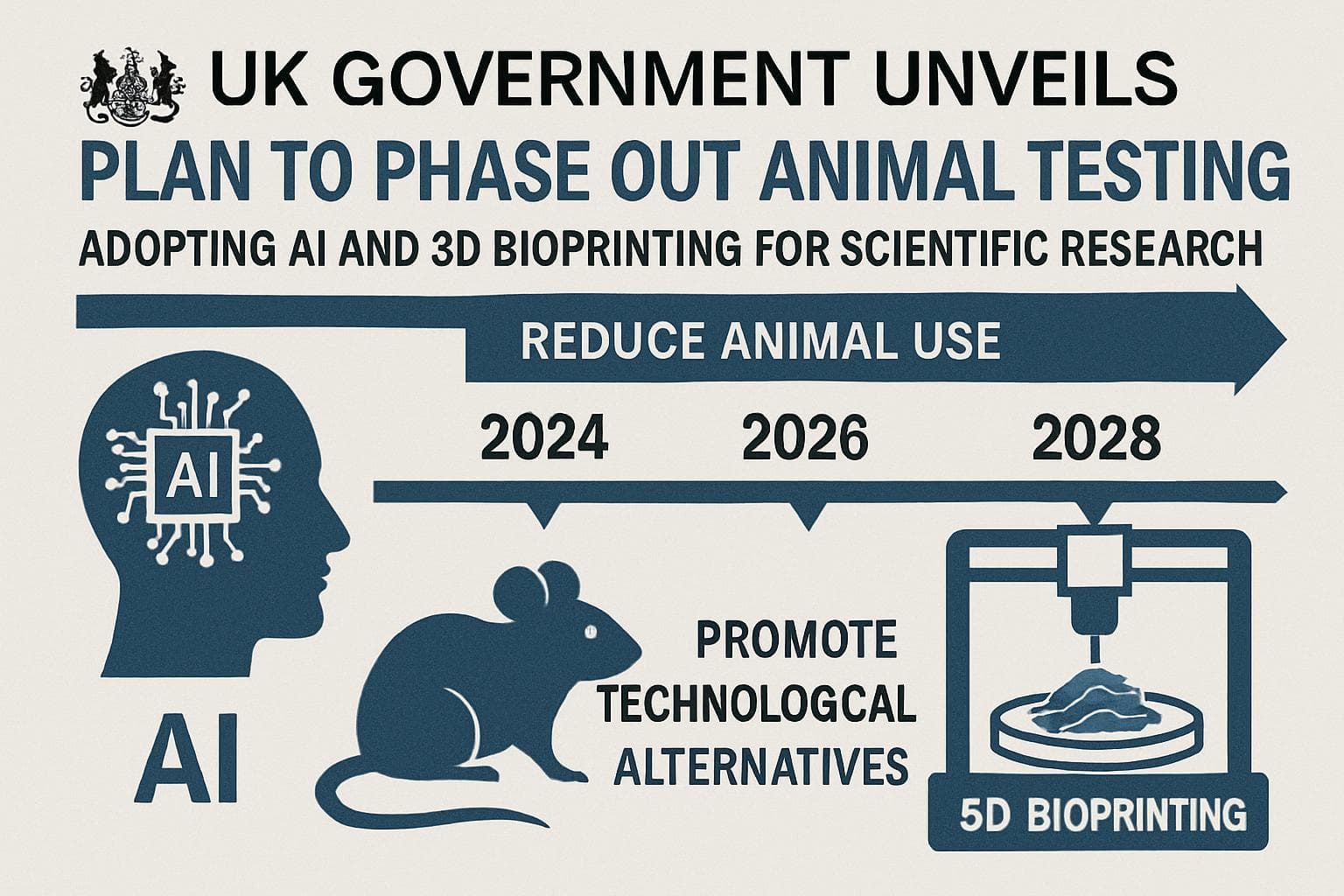
- The UK government plans to phase out animal testing by increasing the use of AI and 3D bioprinted tissues.
- By 2030, the use of dogs and non-human primates in pharmacokinetic studies will be reduced by 35%.
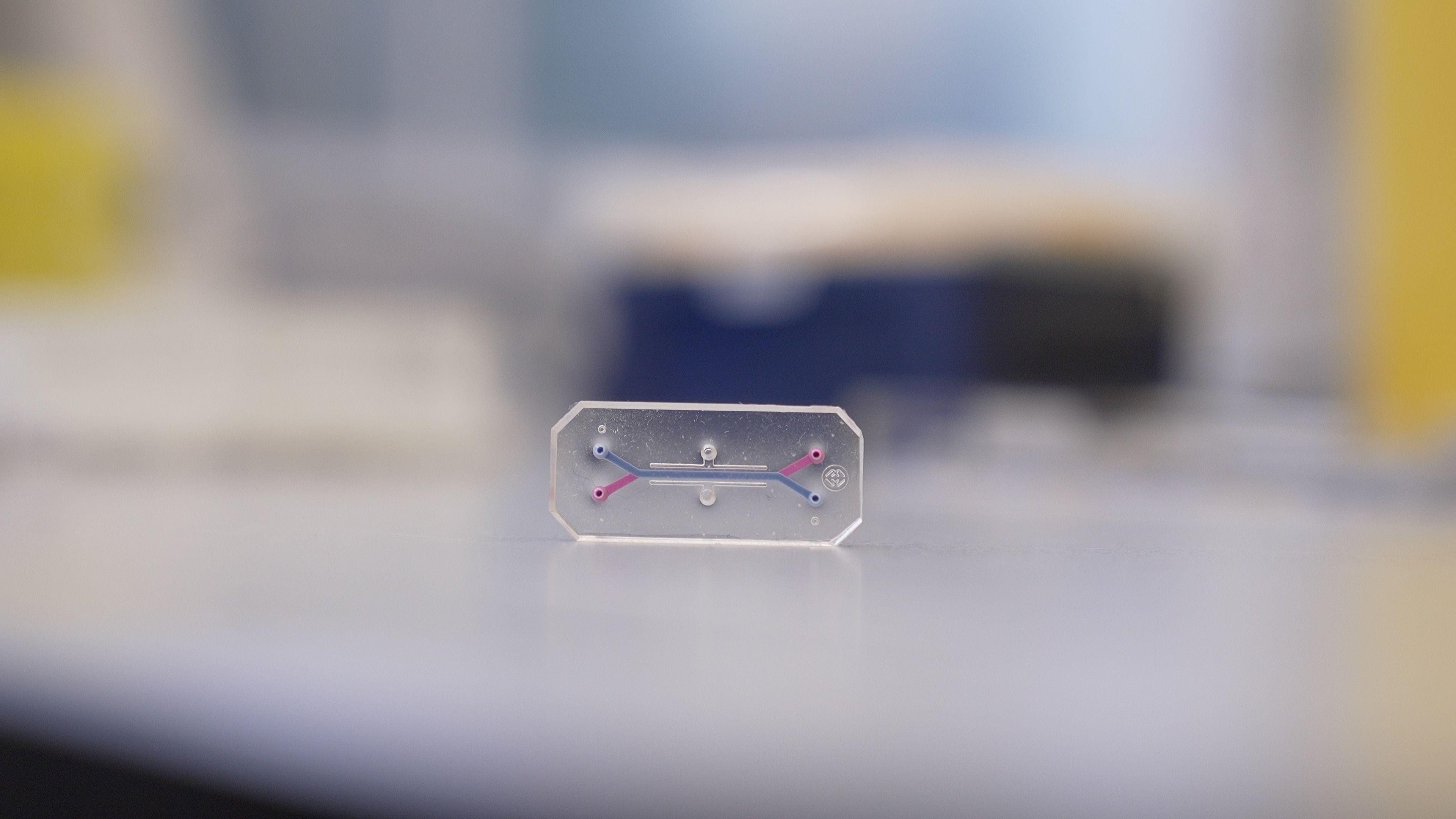
- New methods like organ-on-a-chip technology are being developed to replace animal testing.
- The strategy includes ending regulatory testing on animals for skin and eye irritation by 2026.
- The plan aims to balance ethical science with safety, ensuring alternatives are reliable and effective.
The UK government has announced a comprehensive strategy to phase out animal testing, leveraging advanced technologies such as artificial intelligence and 3D bioprinted tissues. This initiative, spearheaded by Science Minister Lord Patrick Vallance, aims to significantly reduce the use of animals in scientific research, aligning with the nation's ethical stance on animal welfare.
A Shift Towards Technological Alternatives
The roadmap outlines a phased approach to replace animal testing with innovative methods, including AI and organ-on-a-chip technology. These alternatives are designed to ensure the safety and efficacy of products such as vaccines and pesticides without relying on animal subjects. By 2025, the government plans to eliminate certain safety tests on animals, transitioning to lab methods using human cells.
Timeline for Reduction
The strategy sets ambitious targets, including a 35% reduction in the use of dogs and non-human primates for pharmacokinetic studies by 2030. Additionally, regulatory testing for skin and eye irritation on animals is expected to cease by 2026. The plan also envisions ending botox strength tests on mice by 2027.
Collaboration and Support
The government has pledged new funding and streamlined regulations to support the development of non-animal testing methods. This initiative is backed by collaborations with scientists, industry leaders, and animal welfare groups. Barney Reed of the RSPCA emphasized the importance of this strategy in promoting high-quality, ethical science.
Challenges and Perspectives
While the plan is ambitious, experts like Prof Frances Balkwill of Queen Mary University of London caution that completely eliminating animal testing may not be feasible due to the complexity of biological systems. However, the development of technologies like organ-on-a-chip offers promising alternatives that could significantly reduce reliance on animal testing.
WHAT THIS MIGHT MEAN
The UK government's plan to phase out animal testing could set a precedent for other countries, potentially leading to global shifts in scientific research practices. If successful, this strategy could enhance the UK's reputation as a leader in ethical science and innovation. However, the transition will require careful balancing of safety and efficacy concerns, as well as continued investment in alternative technologies. As these methods gain traction, they could revolutionize the way scientific research is conducted, offering more humane and potentially more accurate testing solutions.
Images from the Web
Related Articles

UK Defence Faces Scrutiny Amid Ajax Armoured Vehicle Delays and Soldier Safety Concerns
Middle East Conflict Drives UK Energy Prices to New Highs

Government Announces £4 Billion Overhaul of SEND Support in England

UK Government Announces Major Overhaul of SEND System with £3.4 Billion Investment

Prince Andrew's Ties to Epstein Under Scrutiny Amid Calls for Inquiry

Government Criticized for Mishandling Maccabi Tel Aviv Fan Ban
UK Government Unveils Ambitious Plan to Phase Out Animal Testing
In This Article
 Himanshu Kaushik| Published
 HIGHLIGHTS
- The UK government plans to phase out animal testing by increasing the use of AI and 3D bioprinted tissues.
- By 2030, the use of dogs and non-human primates in pharmacokinetic studies will be reduced by 35%.
- New methods like organ-on-a-chip technology are being developed to replace animal testing.
- The strategy includes ending regulatory testing on animals for skin and eye irritation by 2026.
- The plan aims to balance ethical science with safety, ensuring alternatives are reliable and effective.
The UK government has announced a comprehensive strategy to phase out animal testing, leveraging advanced technologies such as artificial intelligence and 3D bioprinted tissues. This initiative, spearheaded by Science Minister Lord Patrick Vallance, aims to significantly reduce the use of animals in scientific research, aligning with the nation's ethical stance on animal welfare.
A Shift Towards Technological Alternatives
The roadmap outlines a phased approach to replace animal testing with innovative methods, including AI and organ-on-a-chip technology. These alternatives are designed to ensure the safety and efficacy of products such as vaccines and pesticides without relying on animal subjects. By 2025, the government plans to eliminate certain safety tests on animals, transitioning to lab methods using human cells.
Timeline for Reduction
The strategy sets ambitious targets, including a 35% reduction in the use of dogs and non-human primates for pharmacokinetic studies by 2030. Additionally, regulatory testing for skin and eye irritation on animals is expected to cease by 2026. The plan also envisions ending botox strength tests on mice by 2027.
Collaboration and Support
The government has pledged new funding and streamlined regulations to support the development of non-animal testing methods. This initiative is backed by collaborations with scientists, industry leaders, and animal welfare groups. Barney Reed of the RSPCA emphasized the importance of this strategy in promoting high-quality, ethical science.
Challenges and Perspectives
While the plan is ambitious, experts like Prof Frances Balkwill of Queen Mary University of London caution that completely eliminating animal testing may not be feasible due to the complexity of biological systems. However, the development of technologies like organ-on-a-chip offers promising alternatives that could significantly reduce reliance on animal testing.
WHAT THIS MIGHT MEAN
The UK government's plan to phase out animal testing could set a precedent for other countries, potentially leading to global shifts in scientific research practices. If successful, this strategy could enhance the UK's reputation as a leader in ethical science and innovation. However, the transition will require careful balancing of safety and efficacy concerns, as well as continued investment in alternative technologies. As these methods gain traction, they could revolutionize the way scientific research is conducted, offering more humane and potentially more accurate testing solutions.
Images from the Web
Related Articles
UK Defence Faces Scrutiny Amid Ajax Armoured Vehicle Delays and Soldier Safety Concerns
Middle East Conflict Drives UK Energy Prices to New Highs
Government Announces £4 Billion Overhaul of SEND Support in England
UK Government Announces Major Overhaul of SEND System with £3.4 Billion Investment
Prince Andrew's Ties to Epstein Under Scrutiny Amid Calls for Inquiry
Government Criticized for Mishandling Maccabi Tel Aviv Fan Ban