
Palestine Action Faces Legal Challenges Amidst UK Government Ban Proposal
In This Article
HIGHLIGHTS
- Seven individuals were charged following a Palestine Action protest in London, with offences including assaulting emergency workers and breaching the Public Order Act.
- The UK government plans to ban Palestine Action under anti-terror laws, potentially classifying it as a terrorist organization.
- Allegations of Iranian funding for Palestine Action have been dismissed by the group as "baseless smears."
- The protest group has launched a legal challenge against the proposed ban, raising significant funds for their defense.
- The Home Office's move has drawn criticism from human rights organizations, including Amnesty International and Liberty.
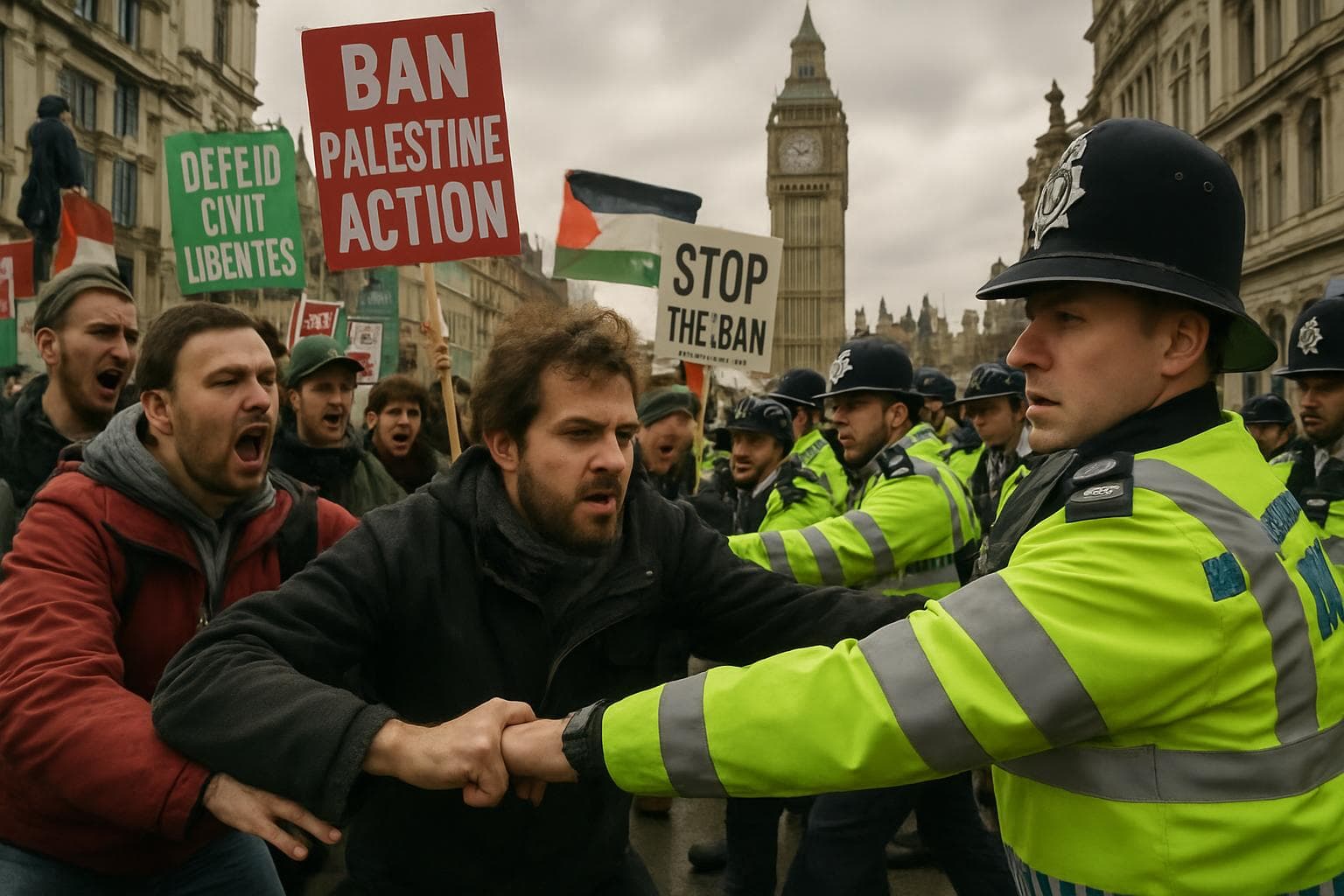
The UK government has announced plans to ban the protest group Palestine Action under anti-terrorism laws, following a series of high-profile demonstrations. The move, spearheaded by Home Secretary Yvette Cooper, comes in the wake of a protest in central London that resulted in seven individuals being charged with various offences, including assaulting emergency workers and breaching the Public Order Act.
Protest and Charges
On Monday, hundreds gathered in Trafalgar Square, leading to 13 arrests. The Metropolitan Police reported several clashes between officers and protesters, resulting in charges against seven individuals. Among those charged, Liam Mizrahi, 25, faces a racially aggravated public order offence, while Lavina Richards, 37, is charged with assaulting emergency workers. The protest followed a recent incident where Palestine Action activists defaced military aircraft at RAF Brize Norton.
Government's Ban Proposal
The proposed ban would categorize Palestine Action alongside groups like al-Qaida, making membership and support illegal. This unprecedented move against a direct action protest group has sparked significant debate. Cooper cited the group's history of criminal damage and increased activity as reasons for the ban. However, the decision has faced backlash from human rights organizations, with Greenpeace UK's Areeba Hamid warning it would be a "grave mistake."
Funding Allegations and Legal Defense
Allegations have surfaced suggesting potential Iranian funding for Palestine Action, though the group has vehemently denied these claims, labeling them as "baseless smears." A spokesperson for Palestine Action emphasized their funding comes from ordinary supporters, not foreign entities. In response to the ban, the group has initiated a legal challenge, quickly raising over £5,000 for legal fees through a crowdfunding campaign.
Public and Political Reactions
The proposal to proscribe Palestine Action has drawn criticism from various quarters. Amnesty International and Liberty have expressed concerns over the implications for civil liberties. The Home Office's investigation into alleged Iranian ties has also been questioned, with critics arguing it lacks substantial evidence.
WHAT THIS MIGHT MEAN
If the UK Parliament approves the ban on Palestine Action, it could set a precedent for how direct action protest groups are treated under anti-terror laws. This move may lead to increased scrutiny of other activist organizations, potentially stifling protest activities. Legal experts suggest that the group's challenge could result in a landmark case, testing the boundaries of protest rights and government authority. The outcome of this legal battle will likely influence future policies on civil liberties and protest rights in the UK.
Related Articles

Labour MP's Husband Arrested in UK-China Espionage Probe
UK Government to Reform Asylum Seeker Support and Employment Policies

UK Faces Dilemmas Amid Iran Conflict and China Spying Allegations
UK Reinforces Military Presence in Cyprus Amid Middle East Tensions

UK-Iran Tensions: Starmer Defends Cautious Approach Amid Trump Criticism

Diplomatic Tensions Rise as Trump Criticizes Starmer's Iran Policy
Palestine Action Faces Legal Challenges Amidst UK Government Ban Proposal
In This Article
 Ethan Brooks| Published
 HIGHLIGHTS
- Seven individuals were charged following a Palestine Action protest in London, with offences including assaulting emergency workers and breaching the Public Order Act.
- The UK government plans to ban Palestine Action under anti-terror laws, potentially classifying it as a terrorist organization.
- Allegations of Iranian funding for Palestine Action have been dismissed by the group as "baseless smears."
- The protest group has launched a legal challenge against the proposed ban, raising significant funds for their defense.
- The Home Office's move has drawn criticism from human rights organizations, including Amnesty International and Liberty.
The UK government has announced plans to ban the protest group Palestine Action under anti-terrorism laws, following a series of high-profile demonstrations. The move, spearheaded by Home Secretary Yvette Cooper, comes in the wake of a protest in central London that resulted in seven individuals being charged with various offences, including assaulting emergency workers and breaching the Public Order Act.
Protest and Charges
On Monday, hundreds gathered in Trafalgar Square, leading to 13 arrests. The Metropolitan Police reported several clashes between officers and protesters, resulting in charges against seven individuals. Among those charged, Liam Mizrahi, 25, faces a racially aggravated public order offence, while Lavina Richards, 37, is charged with assaulting emergency workers. The protest followed a recent incident where Palestine Action activists defaced military aircraft at RAF Brize Norton.
Government's Ban Proposal
The proposed ban would categorize Palestine Action alongside groups like al-Qaida, making membership and support illegal. This unprecedented move against a direct action protest group has sparked significant debate. Cooper cited the group's history of criminal damage and increased activity as reasons for the ban. However, the decision has faced backlash from human rights organizations, with Greenpeace UK's Areeba Hamid warning it would be a "grave mistake."
Funding Allegations and Legal Defense
Allegations have surfaced suggesting potential Iranian funding for Palestine Action, though the group has vehemently denied these claims, labeling them as "baseless smears." A spokesperson for Palestine Action emphasized their funding comes from ordinary supporters, not foreign entities. In response to the ban, the group has initiated a legal challenge, quickly raising over £5,000 for legal fees through a crowdfunding campaign.
Public and Political Reactions
The proposal to proscribe Palestine Action has drawn criticism from various quarters. Amnesty International and Liberty have expressed concerns over the implications for civil liberties. The Home Office's investigation into alleged Iranian ties has also been questioned, with critics arguing it lacks substantial evidence.
WHAT THIS MIGHT MEAN
If the UK Parliament approves the ban on Palestine Action, it could set a precedent for how direct action protest groups are treated under anti-terror laws. This move may lead to increased scrutiny of other activist organizations, potentially stifling protest activities. Legal experts suggest that the group's challenge could result in a landmark case, testing the boundaries of protest rights and government authority. The outcome of this legal battle will likely influence future policies on civil liberties and protest rights in the UK.
Related Articles
Labour MP's Husband Arrested in UK-China Espionage Probe
UK Government to Reform Asylum Seeker Support and Employment Policies
UK Faces Dilemmas Amid Iran Conflict and China Spying Allegations
UK Reinforces Military Presence in Cyprus Amid Middle East Tensions
UK-Iran Tensions: Starmer Defends Cautious Approach Amid Trump Criticism
Diplomatic Tensions Rise as Trump Criticizes Starmer's Iran Policy