
UK Porn Site Traffic Drops as Age Verification Rules Take Effect
In This Article
HIGHLIGHTS
- UK adult site traffic plummeted by 47% after age verification rules were enforced on 25 July.
- Pornhub's daily visits dropped from 3.2 million to 2 million by early August, while XVideos and xHamster saw similar declines.
- VPN app downloads surged in the UK, topping Apple's App Store charts as users sought to bypass restrictions.
- Critics warn the Online Safety Act could drive users to unregulated sites or extreme content on the dark web.
- Nigel Farage's Reform UK party opposes the act, sparking political debate with the technology secretary.
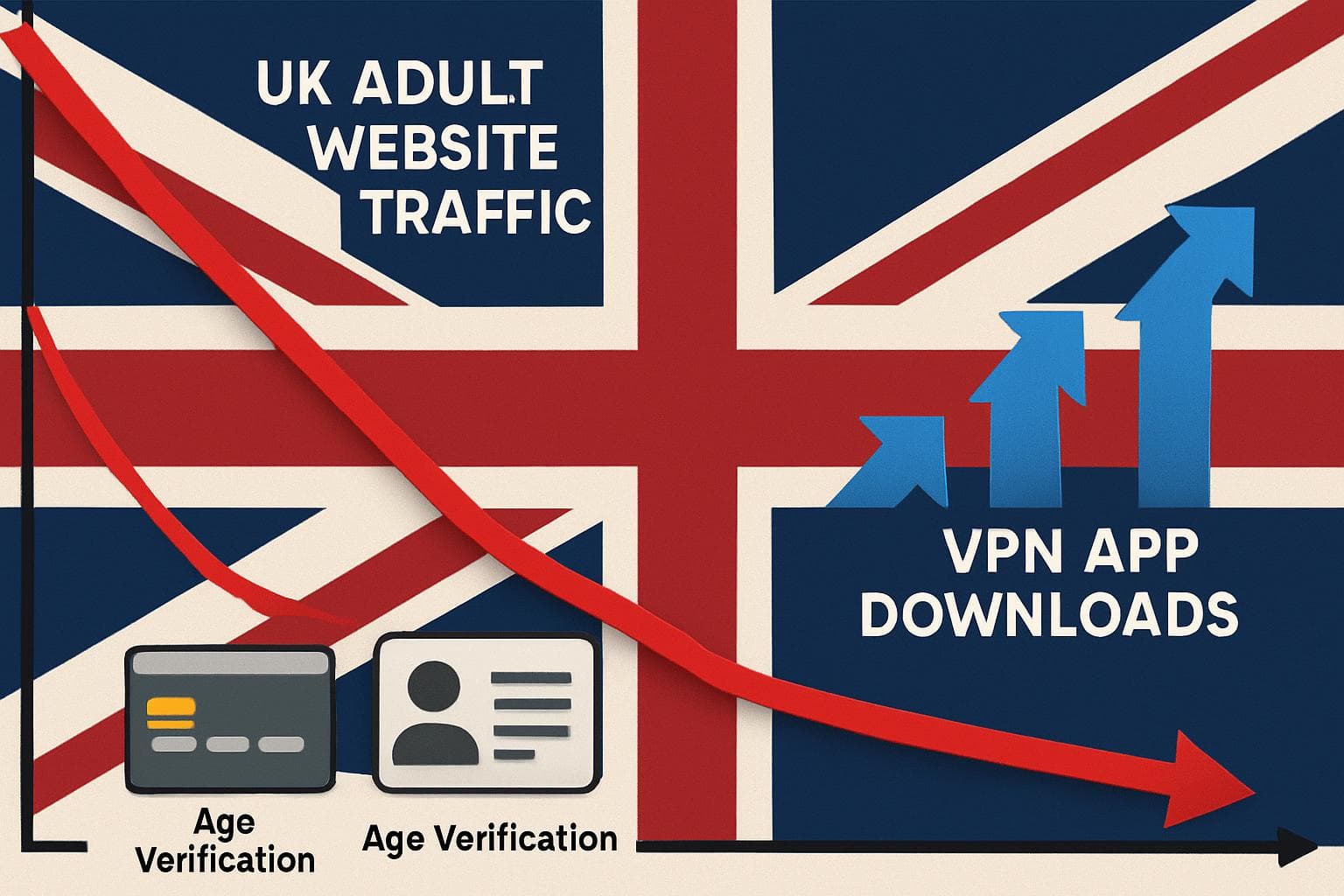
The introduction of stringent age verification rules under the UK's Online Safety Act has led to a significant decline in traffic to popular pornography websites. Data from Similarweb, a digital market intelligence firm, reveals that visits to Pornhub, the UK's most frequented adult site, plummeted by 47% from 3.2 million daily visits on 24 July to 2 million by 8 August. Similar declines were observed on other major sites like XVideos and xHamster.
Impact of Age Verification Rules
The Online Safety Act, which came into effect on 25 July, mandates that adult websites implement robust age checks to prevent under-18s from accessing explicit content. The act outlines several methods for age verification, including credit card checks, photo ID matching, and digital identity wallets. Despite these measures, some smaller, less regulated sites have reportedly seen an uptick in traffic, as users seek alternatives to bypass the new restrictions.
Rise in VPN Usage
In response to the new regulations, there has been a notable surge in the download of virtual private network (VPN) apps in the UK. These apps, which allow users to mask their location and access content as if they were in another country, have consistently topped Apple's App Store charts. This trend highlights the public's desire to circumvent the restrictions imposed by the Online Safety Act.
Political Reactions and Criticisms
The act has sparked political controversy, with Nigel Farage's Reform UK party pledging to repeal it. Farage's stance led to a heated exchange with the technology secretary, Peter Kyle, who accused him of aligning with unsavory figures. Critics of the act argue that it could inadvertently push users towards more extreme content on the dark web, raising concerns about the potential for over-regulation and its impact on freedom of expression.
WHAT THIS MIGHT MEAN
The enforcement of the Online Safety Act marks a pivotal moment in the UK's approach to digital content regulation. Moving forward, the effectiveness of age verification measures will likely be scrutinized, especially if users continue to find ways to circumvent them through VPNs. The political debate surrounding the act could intensify, particularly if evidence emerges that the regulations are driving users to unregulated or extreme content. As the situation evolves, Ofcom's role in balancing child protection with freedom of expression will be critical, and any amendments to the act could set precedents for digital regulation globally.
Related Articles

Police Federation Chief Arrested Amid Fraud Investigation

Reform UK Aims to Reshape Welsh Politics with New Manifesto

Canada and Australia Forge Strategic Partnership Amid Global Uncertainty

UK Government to Reform Asylum Seeker Support and Employment Policies
Middle East Conflict Drives UK Energy Prices to New Highs

UK Faces Dilemmas Amid Iran Conflict and China Spying Allegations
UK Porn Site Traffic Drops as Age Verification Rules Take Effect
In This Article
 Sofia Romano| Published
 HIGHLIGHTS
- UK adult site traffic plummeted by 47% after age verification rules were enforced on 25 July.
- Pornhub's daily visits dropped from 3.2 million to 2 million by early August, while XVideos and xHamster saw similar declines.
- VPN app downloads surged in the UK, topping Apple's App Store charts as users sought to bypass restrictions.
- Critics warn the Online Safety Act could drive users to unregulated sites or extreme content on the dark web.
- Nigel Farage's Reform UK party opposes the act, sparking political debate with the technology secretary.
The introduction of stringent age verification rules under the UK's Online Safety Act has led to a significant decline in traffic to popular pornography websites. Data from Similarweb, a digital market intelligence firm, reveals that visits to Pornhub, the UK's most frequented adult site, plummeted by 47% from 3.2 million daily visits on 24 July to 2 million by 8 August. Similar declines were observed on other major sites like XVideos and xHamster.
Impact of Age Verification Rules
The Online Safety Act, which came into effect on 25 July, mandates that adult websites implement robust age checks to prevent under-18s from accessing explicit content. The act outlines several methods for age verification, including credit card checks, photo ID matching, and digital identity wallets. Despite these measures, some smaller, less regulated sites have reportedly seen an uptick in traffic, as users seek alternatives to bypass the new restrictions.
Rise in VPN Usage
In response to the new regulations, there has been a notable surge in the download of virtual private network (VPN) apps in the UK. These apps, which allow users to mask their location and access content as if they were in another country, have consistently topped Apple's App Store charts. This trend highlights the public's desire to circumvent the restrictions imposed by the Online Safety Act.
Political Reactions and Criticisms
The act has sparked political controversy, with Nigel Farage's Reform UK party pledging to repeal it. Farage's stance led to a heated exchange with the technology secretary, Peter Kyle, who accused him of aligning with unsavory figures. Critics of the act argue that it could inadvertently push users towards more extreme content on the dark web, raising concerns about the potential for over-regulation and its impact on freedom of expression.
WHAT THIS MIGHT MEAN
The enforcement of the Online Safety Act marks a pivotal moment in the UK's approach to digital content regulation. Moving forward, the effectiveness of age verification measures will likely be scrutinized, especially if users continue to find ways to circumvent them through VPNs. The political debate surrounding the act could intensify, particularly if evidence emerges that the regulations are driving users to unregulated or extreme content. As the situation evolves, Ofcom's role in balancing child protection with freedom of expression will be critical, and any amendments to the act could set precedents for digital regulation globally.
Related Articles
Police Federation Chief Arrested Amid Fraud Investigation
Reform UK Aims to Reshape Welsh Politics with New Manifesto
Canada and Australia Forge Strategic Partnership Amid Global Uncertainty
UK Government to Reform Asylum Seeker Support and Employment Policies
Middle East Conflict Drives UK Energy Prices to New Highs
UK Faces Dilemmas Amid Iran Conflict and China Spying Allegations