
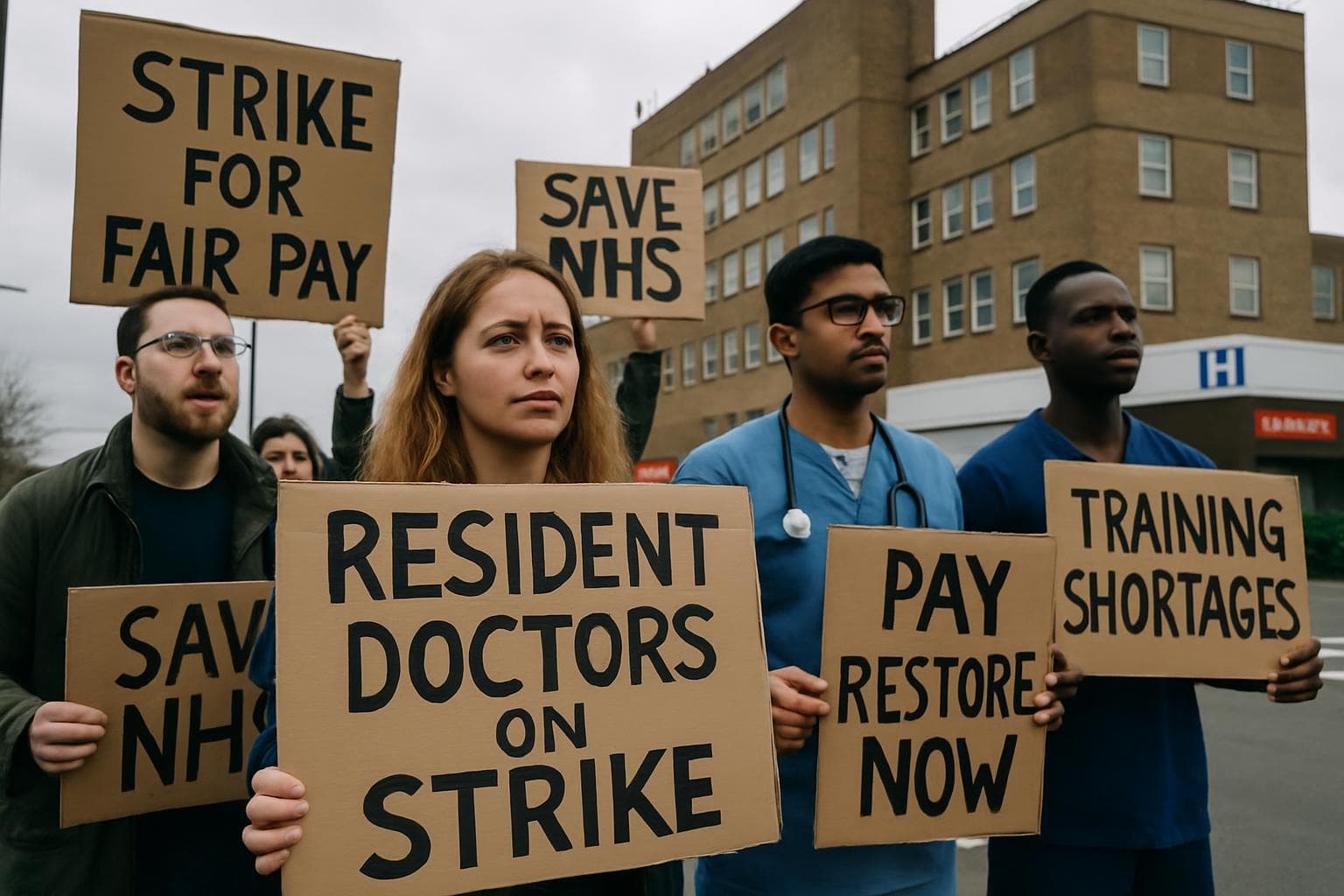
Resident Doctors in England Vote to Extend Strike Action Amid Ongoing Pay Dispute
In This Article
HIGHLIGHTS
- Resident doctors in England have voted to continue their strike action for another six months, with 93% supporting the move.
- The British Medical Association (BMA) cites inadequate pay increases and a shortage of training posts as key issues.
- The government has proposed a 2.5% pay rise, but the BMA argues this is insufficient given inflation and past pay cuts.
- Talks between the BMA and the government have been described as "intensive and constructive," but no resolution has been reached.
- The strike action, which began in March 2023, could extend into its fourth year if no agreement is found.
Resident doctors in England have overwhelmingly voted to extend their strike action for another six months, as their long-standing dispute with the government over pay and training opportunities continues. The British Medical Association (BMA) announced that 93% of its members supported the continuation of industrial action, with a turnout of 53% in the latest ballot.
Background of the Dispute
The conflict, which began in March 2023, centers on the BMA's demands for a substantial pay increase and more training posts for early-career doctors. Despite receiving pay rises totaling nearly 30% over the past three years, the BMA argues that inflation-adjusted pay remains a fifth lower than in 2008. The union also highlights a significant shortage of training positions, with over 30,000 applicants vying for just 10,000 specialty training places last year.
Government's Response
The government has proposed a 2.5% pay increase starting in April, a figure the BMA deems inadequate. Health Secretary Wes Streeting has pledged to double the number of training places from 1,000 to 4,000 in an effort to address the bottleneck in medical training. However, despite "intensive and constructive discussions" between the BMA and the Department of Health and Social Care, no agreement has been reached.
Potential for Resolution
Dr. Jack Fletcher, chair of the BMA's resident doctors committee, emphasized that further strikes are not inevitable. He noted an improvement in the government's tone during recent talks and expressed hope for a deal that includes a fair pay raise and a comprehensive jobs package. "A responsible approach could lead to a timely settlement with no further need for strikes," Fletcher stated.
The ongoing industrial action has significant implications for the NHS, affecting both staff and patients. The Department of Health and Social Care remains hopeful that continued negotiations will prevent further disruptions.
WHAT THIS MIGHT MEAN
As the strike action enters its potential fourth year, the pressure mounts on both the government and the BMA to find a resolution. If no agreement is reached, the NHS could face further disruptions, impacting patient care and staff morale. The government's ability to address the BMA's demands for increased pay and training opportunities will be crucial in determining the outcome of this dispute.
Experts suggest that a compromise involving phased pay increases and a strategic expansion of training posts could pave the way for a resolution. However, the political climate and economic constraints may pose challenges to achieving such an agreement. The coming months will be critical in shaping the future of the UK's healthcare system and its workforce.
Related Articles

UK Government to Reform Asylum Seeker Support and Employment Policies
Persistent Safety Concerns in Nottingham Maternity Services Amidst Calls for Systemic Reform
Nottingham Attacks Inquiry: Families Demand Accountability and Truth

Birmingham's Proactive Approach to Measles Outbreak Offers Lessons for North London

NHS Faces Joint Surgery Delays Amid Bone Cement Shortage

Government Announces £4 Billion Overhaul of SEND Support in England
Resident Doctors in England Vote to Extend Strike Action Amid Ongoing Pay Dispute
In This Article
 Ethan Brooks| Published
 HIGHLIGHTS
- Resident doctors in England have voted to continue their strike action for another six months, with 93% supporting the move.
- The British Medical Association (BMA) cites inadequate pay increases and a shortage of training posts as key issues.
- The government has proposed a 2.5% pay rise, but the BMA argues this is insufficient given inflation and past pay cuts.
- Talks between the BMA and the government have been described as "intensive and constructive," but no resolution has been reached.
- The strike action, which began in March 2023, could extend into its fourth year if no agreement is found.
Resident doctors in England have overwhelmingly voted to extend their strike action for another six months, as their long-standing dispute with the government over pay and training opportunities continues. The British Medical Association (BMA) announced that 93% of its members supported the continuation of industrial action, with a turnout of 53% in the latest ballot.
Background of the Dispute
The conflict, which began in March 2023, centers on the BMA's demands for a substantial pay increase and more training posts for early-career doctors. Despite receiving pay rises totaling nearly 30% over the past three years, the BMA argues that inflation-adjusted pay remains a fifth lower than in 2008. The union also highlights a significant shortage of training positions, with over 30,000 applicants vying for just 10,000 specialty training places last year.
Government's Response
The government has proposed a 2.5% pay increase starting in April, a figure the BMA deems inadequate. Health Secretary Wes Streeting has pledged to double the number of training places from 1,000 to 4,000 in an effort to address the bottleneck in medical training. However, despite "intensive and constructive discussions" between the BMA and the Department of Health and Social Care, no agreement has been reached.
Potential for Resolution
Dr. Jack Fletcher, chair of the BMA's resident doctors committee, emphasized that further strikes are not inevitable. He noted an improvement in the government's tone during recent talks and expressed hope for a deal that includes a fair pay raise and a comprehensive jobs package. "A responsible approach could lead to a timely settlement with no further need for strikes," Fletcher stated.
The ongoing industrial action has significant implications for the NHS, affecting both staff and patients. The Department of Health and Social Care remains hopeful that continued negotiations will prevent further disruptions.
WHAT THIS MIGHT MEAN
As the strike action enters its potential fourth year, the pressure mounts on both the government and the BMA to find a resolution. If no agreement is reached, the NHS could face further disruptions, impacting patient care and staff morale. The government's ability to address the BMA's demands for increased pay and training opportunities will be crucial in determining the outcome of this dispute.
Experts suggest that a compromise involving phased pay increases and a strategic expansion of training posts could pave the way for a resolution. However, the political climate and economic constraints may pose challenges to achieving such an agreement. The coming months will be critical in shaping the future of the UK's healthcare system and its workforce.
Related Articles
UK Government to Reform Asylum Seeker Support and Employment Policies
Persistent Safety Concerns in Nottingham Maternity Services Amidst Calls for Systemic Reform
Nottingham Attacks Inquiry: Families Demand Accountability and Truth
Birmingham's Proactive Approach to Measles Outbreak Offers Lessons for North London
NHS Faces Joint Surgery Delays Amid Bone Cement Shortage
Government Announces £4 Billion Overhaul of SEND Support in England