
UK Road Safety Reforms Spark Debate Over Young Driver Restrictions
In This Article
HIGHLIGHTS
- The UK government plans to introduce mandatory eye tests for drivers over 70, with potential driving bans for those who fail.
- Critics argue that the reforms overlook necessary restrictions for young drivers, such as limiting peer-age passengers.
- Road safety groups highlight the need for a comprehensive strategy as traffic fatalities have plateaued, with 1,633 deaths last year.
- Proposed changes include aligning England and Wales's drink-drive limit with Scotland's stricter standards.
- The AA and other motoring groups call for more robust measures to protect both older and younger drivers.
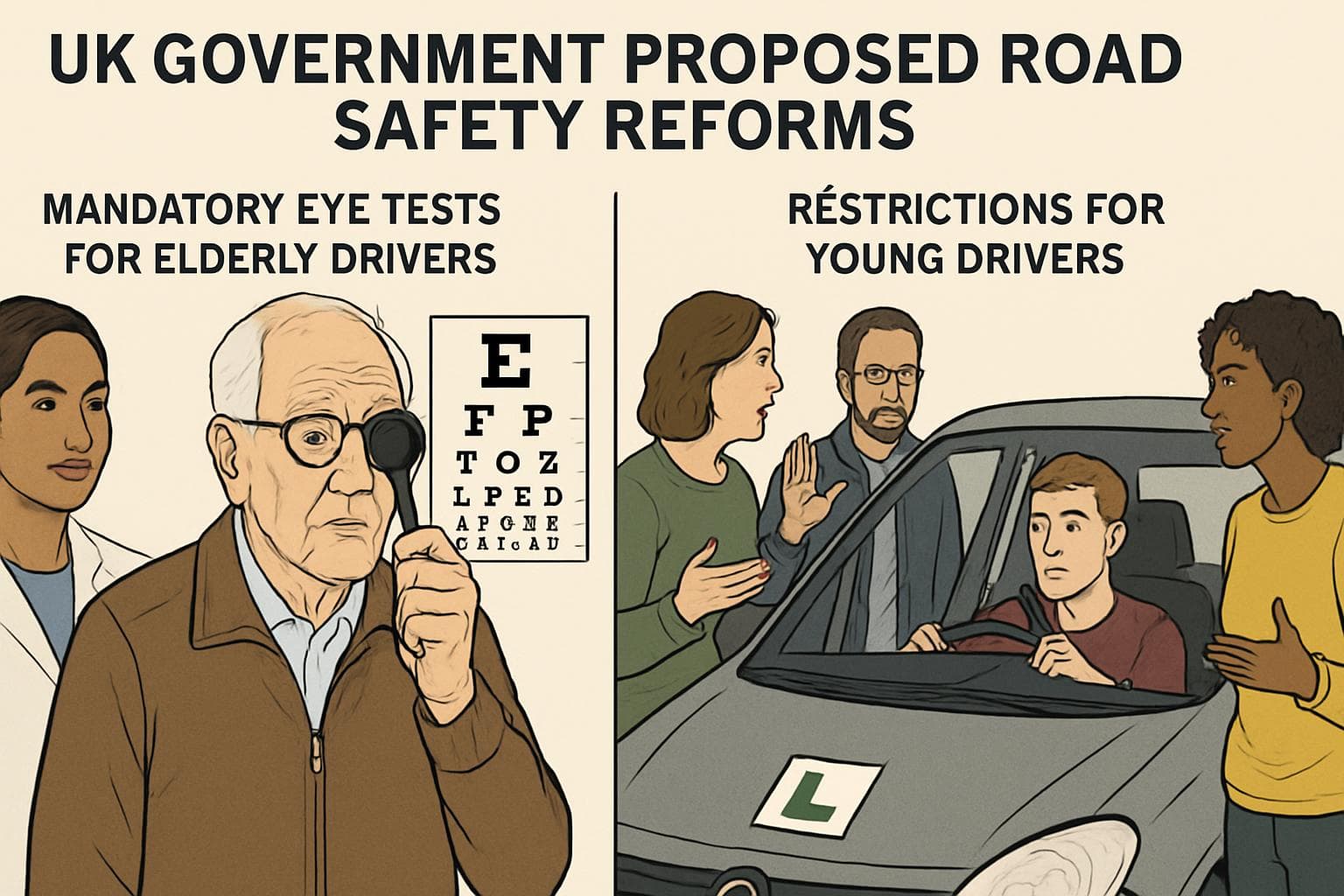
The UK government's proposed overhaul of driving laws has ignited a debate over the adequacy of measures to enhance road safety. Central to the reforms is the introduction of mandatory eye tests for drivers over the age of 70, with potential driving bans for those who fail. This move follows a series of tragic incidents involving older drivers with undisclosed eyesight issues, prompting calls for stricter regulations.
Mandatory Eye Tests for Older Drivers
The proposed reforms have been welcomed by many, including Labour MP Paul Waugh, who has been advocating for change following the death of Anne Ferguson, a 75-year-old woman killed by a driver with poor eyesight. The driver, Vernon Law, was sentenced to four years in prison after it was revealed he had cataracts and failed to report his condition to the Driver and Vehicle Licensing Agency (DVLA). Waugh emphasized that while these measures won't reverse past tragedies, they could prevent future ones.
Calls for Young Driver Restrictions
Despite the focus on older drivers, motoring groups and road safety charities argue that the reforms fall short by not addressing the risks posed by young drivers. The AA has criticized the absence of a graduated licensing scheme, which would limit new drivers from carrying peer-age passengers for an initial period. Statistics show that young drivers, particularly males aged 17 to 24, are disproportionately involved in road fatalities.
Broader Road Safety Measures
The government's strategy also includes proposals to reduce the drink-drive limit in England and Wales to match Scotland's, alongside tougher penalties for uninsured driving and failing to wear a seatbelt. These measures are part of a broader effort to modernize road safety laws, as the number of traffic fatalities has remained stubbornly high, with 1,633 deaths recorded last year.
Edmund King, president of the AA, stated, "The time has come for a bold and proactive approach to road safety." He emphasized that while the proposed measures are a step in the right direction, more comprehensive actions are needed to protect all road users.
WHAT THIS MIGHT MEAN
As the UK government prepares to finalize its road safety strategy, the debate over young driver restrictions is likely to intensify. If the proposed reforms proceed without addressing this issue, pressure from motoring groups and safety advocates may lead to future amendments. Additionally, aligning the drink-drive limit with Scotland's could face resistance but may ultimately gain support as part of a broader European alignment. The success of these reforms will depend on effective enforcement and public awareness campaigns to ensure compliance and enhance road safety across the nation.
Images from the Web

Related Articles

Saharan Dust to Illuminate UK Skies with Vivid Sunrises and Sunsets

Government Announces £4 Billion Overhaul of SEND Support in England

UK Government Announces Major Overhaul of SEND System with £3.4 Billion Investment

Government Unveils Ambitious Plan to Halve Attainment Gap in England's Schools

UK Government's SEND Reforms: A Critical Turning Point for Special Education

UK Government Eases Deer Culling to Protect Woodlands and Farmland
UK Road Safety Reforms Spark Debate Over Young Driver Restrictions
In This Article
 Alex Carter| Published
 HIGHLIGHTS
- The UK government plans to introduce mandatory eye tests for drivers over 70, with potential driving bans for those who fail.
- Critics argue that the reforms overlook necessary restrictions for young drivers, such as limiting peer-age passengers.
- Road safety groups highlight the need for a comprehensive strategy as traffic fatalities have plateaued, with 1,633 deaths last year.
- Proposed changes include aligning England and Wales's drink-drive limit with Scotland's stricter standards.
- The AA and other motoring groups call for more robust measures to protect both older and younger drivers.
The UK government's proposed overhaul of driving laws has ignited a debate over the adequacy of measures to enhance road safety. Central to the reforms is the introduction of mandatory eye tests for drivers over the age of 70, with potential driving bans for those who fail. This move follows a series of tragic incidents involving older drivers with undisclosed eyesight issues, prompting calls for stricter regulations.
Mandatory Eye Tests for Older Drivers
The proposed reforms have been welcomed by many, including Labour MP Paul Waugh, who has been advocating for change following the death of Anne Ferguson, a 75-year-old woman killed by a driver with poor eyesight. The driver, Vernon Law, was sentenced to four years in prison after it was revealed he had cataracts and failed to report his condition to the Driver and Vehicle Licensing Agency (DVLA). Waugh emphasized that while these measures won't reverse past tragedies, they could prevent future ones.
Calls for Young Driver Restrictions
Despite the focus on older drivers, motoring groups and road safety charities argue that the reforms fall short by not addressing the risks posed by young drivers. The AA has criticized the absence of a graduated licensing scheme, which would limit new drivers from carrying peer-age passengers for an initial period. Statistics show that young drivers, particularly males aged 17 to 24, are disproportionately involved in road fatalities.
Broader Road Safety Measures
The government's strategy also includes proposals to reduce the drink-drive limit in England and Wales to match Scotland's, alongside tougher penalties for uninsured driving and failing to wear a seatbelt. These measures are part of a broader effort to modernize road safety laws, as the number of traffic fatalities has remained stubbornly high, with 1,633 deaths recorded last year.
Edmund King, president of the AA, stated, "The time has come for a bold and proactive approach to road safety." He emphasized that while the proposed measures are a step in the right direction, more comprehensive actions are needed to protect all road users.
WHAT THIS MIGHT MEAN
As the UK government prepares to finalize its road safety strategy, the debate over young driver restrictions is likely to intensify. If the proposed reforms proceed without addressing this issue, pressure from motoring groups and safety advocates may lead to future amendments. Additionally, aligning the drink-drive limit with Scotland's could face resistance but may ultimately gain support as part of a broader European alignment. The success of these reforms will depend on effective enforcement and public awareness campaigns to ensure compliance and enhance road safety across the nation.
Images from the Web
Related Articles
Saharan Dust to Illuminate UK Skies with Vivid Sunrises and Sunsets
Government Announces £4 Billion Overhaul of SEND Support in England
UK Government Announces Major Overhaul of SEND System with £3.4 Billion Investment
Government Unveils Ambitious Plan to Halve Attainment Gap in England's Schools
UK Government's SEND Reforms: A Critical Turning Point for Special Education
UK Government Eases Deer Culling to Protect Woodlands and Farmland