
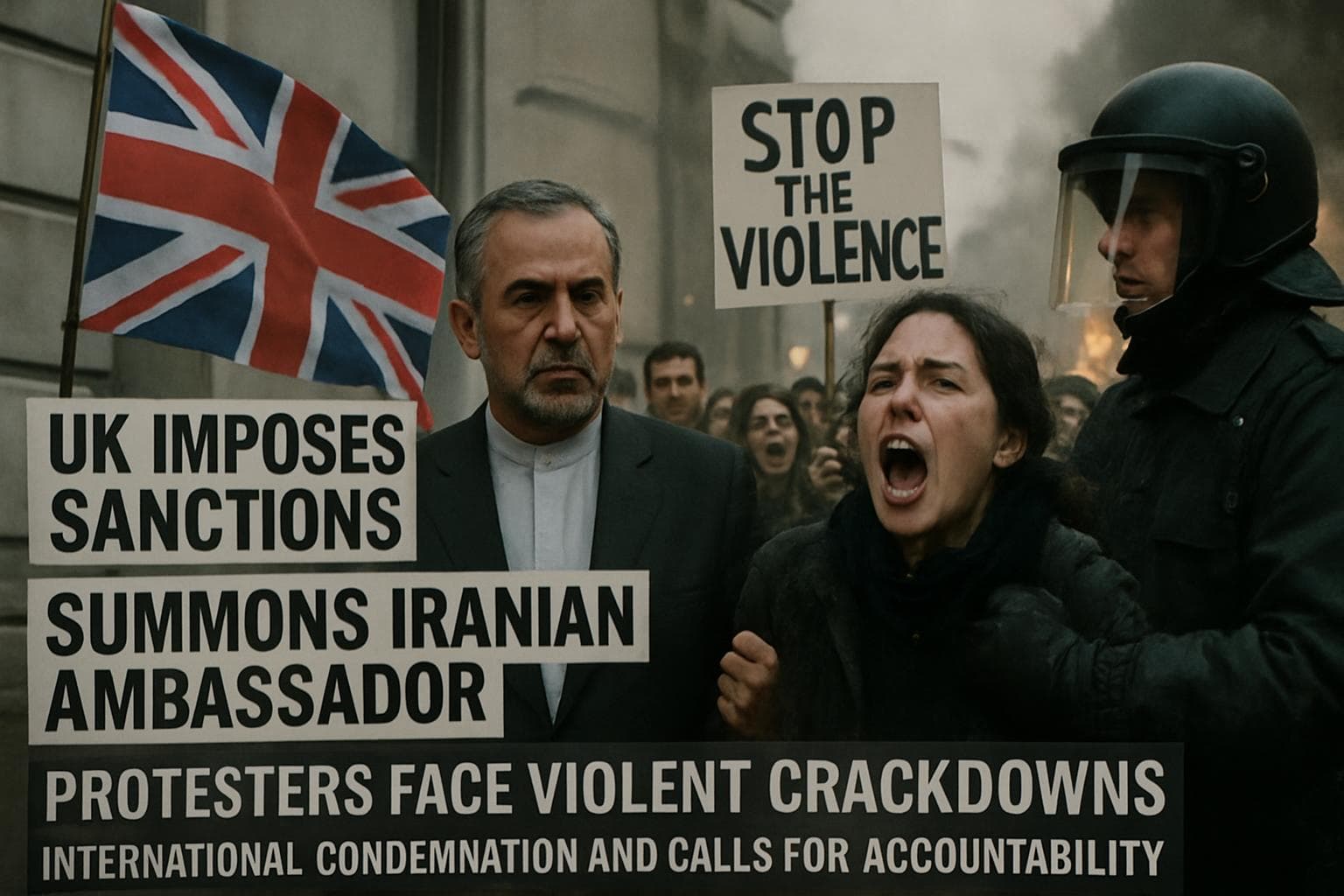
UK Imposes Sanctions and Summons Iranian Ambassador Amidst Violent Crackdown
In This Article
HIGHLIGHTS
- The UK has summoned Iran's ambassador and announced "full and further sanctions" in response to the violent crackdown on protests in Iran.
- Thousands are feared dead or detained as Iranian security forces use live ammunition and impose an internet blackout to suppress unrest.
- The protests, initially driven by economic hardship, have evolved into broader anti-regime demonstrations across Iran.
- The UK and EU are coordinating additional measures against Iran, targeting key industries like finance, energy, and transport.
- US President Donald Trump has imposed a 25% tariff on countries trading with Iran, further escalating international tensions.
The United Kingdom has taken decisive diplomatic action against Iran following reports of severe repression against protesters in the country. Foreign Secretary Yvette Cooper announced that the UK has summoned the Iranian ambassador, Seyed Ali Mousavi, to express its condemnation of the "brutal" killings and widespread arrests of demonstrators. The meeting, which lasted a brief nine minutes, underscored the UK's urgent response to the escalating situation.
International Condemnation and Sanctions
In a statement to the House of Commons, Cooper detailed the UK's plans to implement "full and further sanctions" targeting Iran's finance, energy, transport, and software sectors. These measures are part of a broader international effort to hold the Iranian regime accountable for its actions. Cooper emphasized the UK's commitment to working with the European Union and other global partners to explore additional sanctions.
The protests, which began in December due to economic grievances, have grown into widespread anti-regime demonstrations. In response, Iranian security forces have resorted to using live ammunition against crowds and have imposed a near-total internet blackout, effectively isolating the country from the outside world. This has made it difficult to independently verify the number of casualties, though thousands are feared dead or detained.
Global Reactions and Diplomatic Efforts
The UK's diplomatic offensive is mirrored by similar actions from several European countries, including France, Spain, and Germany, which have also summoned Iranian ambassadors. Meanwhile, US President Donald Trump has introduced a 25% tariff on imports from countries doing business with Iran, a move that has angered China, Iran's leading export partner. Trump has also voiced support for the Iranian protesters, urging them to "keep protesting" and assuring them that "help is on its way."
Iran's Response and Accusations
Iranian authorities have accused foreign governments of fomenting unrest and have condemned what they describe as "terrorist actions." However, Cooper dismissed these claims as "lies and propaganda," asserting that the Iranian regime is attempting to deflect blame for the domestic upheaval. She reiterated the UK's demand for Iran to respect the fundamental rights and freedoms of its citizens.
The situation remains tense, with the international community closely monitoring developments. Cooper confirmed that British officials are in contact with Iranian counterparts regarding UK nationals detained in Iran, including the family of Craig and Lindsay Foreman, who were arrested on espionage charges.
WHAT THIS MIGHT MEAN
The UK's decision to impose further sanctions and summon the Iranian ambassador marks a significant escalation in diplomatic pressure on Tehran. If the Iranian government continues its repressive tactics, it may face increasing isolation from the international community. The EU's swift proposal for additional sanctions could further strain Iran's economy, already weakened by existing measures.
The situation also poses a challenge for global diplomacy, as countries like China may react negatively to US tariffs linked to Iran. The potential for military intervention by the US, as hinted by President Trump, could further destabilize the region. Experts suggest that sustained international pressure, combined with internal dissent, could eventually lead to significant political changes within Iran. However, the path forward remains uncertain, with the potential for both diplomatic resolutions and further conflict.
Related Articles

UK Faces Dilemmas Amid Iran Conflict and China Spying Allegations
UK-Iran Tensions: Starmer Defends Cautious Approach Amid Trump Criticism
Russian LNG Tanker Sinks in Mediterranean Amid Accusations of Ukrainian Drone Attack
UK Reinforces Military Presence in Cyprus Amid Middle East Tensions
Labour MP's Husband Arrested in UK-China Espionage Probe

Breakthrough Drug Offers Hope for Children with Severe Epilepsy
UK Imposes Sanctions and Summons Iranian Ambassador Amidst Violent Crackdown
In This Article
 Ethan Brooks| Published
 HIGHLIGHTS
- The UK has summoned Iran's ambassador and announced "full and further sanctions" in response to the violent crackdown on protests in Iran.
- Thousands are feared dead or detained as Iranian security forces use live ammunition and impose an internet blackout to suppress unrest.
- The protests, initially driven by economic hardship, have evolved into broader anti-regime demonstrations across Iran.
- The UK and EU are coordinating additional measures against Iran, targeting key industries like finance, energy, and transport.
- US President Donald Trump has imposed a 25% tariff on countries trading with Iran, further escalating international tensions.
The United Kingdom has taken decisive diplomatic action against Iran following reports of severe repression against protesters in the country. Foreign Secretary Yvette Cooper announced that the UK has summoned the Iranian ambassador, Seyed Ali Mousavi, to express its condemnation of the "brutal" killings and widespread arrests of demonstrators. The meeting, which lasted a brief nine minutes, underscored the UK's urgent response to the escalating situation.
International Condemnation and Sanctions
In a statement to the House of Commons, Cooper detailed the UK's plans to implement "full and further sanctions" targeting Iran's finance, energy, transport, and software sectors. These measures are part of a broader international effort to hold the Iranian regime accountable for its actions. Cooper emphasized the UK's commitment to working with the European Union and other global partners to explore additional sanctions.
The protests, which began in December due to economic grievances, have grown into widespread anti-regime demonstrations. In response, Iranian security forces have resorted to using live ammunition against crowds and have imposed a near-total internet blackout, effectively isolating the country from the outside world. This has made it difficult to independently verify the number of casualties, though thousands are feared dead or detained.
Global Reactions and Diplomatic Efforts
The UK's diplomatic offensive is mirrored by similar actions from several European countries, including France, Spain, and Germany, which have also summoned Iranian ambassadors. Meanwhile, US President Donald Trump has introduced a 25% tariff on imports from countries doing business with Iran, a move that has angered China, Iran's leading export partner. Trump has also voiced support for the Iranian protesters, urging them to "keep protesting" and assuring them that "help is on its way."
Iran's Response and Accusations
Iranian authorities have accused foreign governments of fomenting unrest and have condemned what they describe as "terrorist actions." However, Cooper dismissed these claims as "lies and propaganda," asserting that the Iranian regime is attempting to deflect blame for the domestic upheaval. She reiterated the UK's demand for Iran to respect the fundamental rights and freedoms of its citizens.
The situation remains tense, with the international community closely monitoring developments. Cooper confirmed that British officials are in contact with Iranian counterparts regarding UK nationals detained in Iran, including the family of Craig and Lindsay Foreman, who were arrested on espionage charges.
WHAT THIS MIGHT MEAN
The UK's decision to impose further sanctions and summon the Iranian ambassador marks a significant escalation in diplomatic pressure on Tehran. If the Iranian government continues its repressive tactics, it may face increasing isolation from the international community. The EU's swift proposal for additional sanctions could further strain Iran's economy, already weakened by existing measures.
The situation also poses a challenge for global diplomacy, as countries like China may react negatively to US tariffs linked to Iran. The potential for military intervention by the US, as hinted by President Trump, could further destabilize the region. Experts suggest that sustained international pressure, combined with internal dissent, could eventually lead to significant political changes within Iran. However, the path forward remains uncertain, with the potential for both diplomatic resolutions and further conflict.
Related Articles
UK Faces Dilemmas Amid Iran Conflict and China Spying Allegations
UK-Iran Tensions: Starmer Defends Cautious Approach Amid Trump Criticism
Russian LNG Tanker Sinks in Mediterranean Amid Accusations of Ukrainian Drone Attack
UK Reinforces Military Presence in Cyprus Amid Middle East Tensions
Labour MP's Husband Arrested in UK-China Espionage Probe
Breakthrough Drug Offers Hope for Children with Severe Epilepsy