
UK Faces SEND Education Challenges Amid Rising Costs and Inequities
In This Article
HIGHLIGHTS
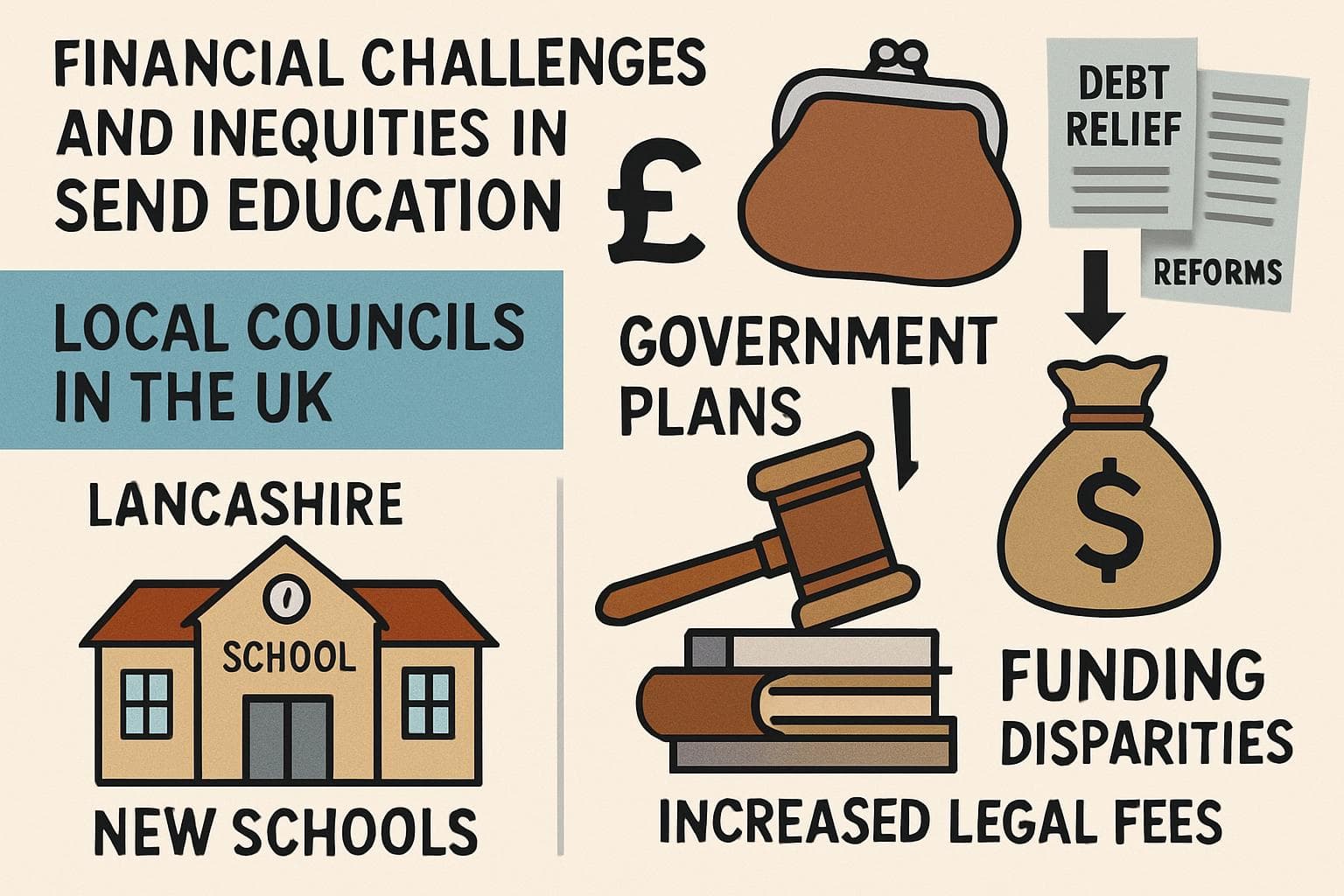
- Lancashire plans to create nearly 400 new SEND school places, including two new schools and five units in mainstream schools.
- Norfolk County Council's legal fees for SEND tribunals have nearly doubled to £1.4m due to a lack of specialist school places.
- A report highlights that SEND spending has increased faster in affluent areas, leaving deprived regions behind.
- The UK government plans to spend £5bn to alleviate SEND-related debts for local councils, aiming to prevent potential bankruptcies.
- Former education secretaries call for equitable SEND funding and systemic reform to address disparities.
The United Kingdom is grappling with significant challenges in its special educational needs and disabilities (SEND) sector, as local councils face rising costs and inequities in funding distribution. Recent developments highlight the urgent need for reform and increased support for SEND education across the country.
Expansion Plans in Lancashire
Lancashire County Council has unveiled plans to create nearly 400 new school places for children with SEND. This initiative includes the construction of two new special schools and the expansion of existing facilities. The council aims to open a new social, emotional, and mental health school by September 2028, providing 70 places for students aged nine to 18. Additionally, a new autism-focused school is set to open in 2027, offering access to mainstream curricula up to A-Level. These efforts are intended to reduce travel times and integrate SEND students into local communities.
Rising Legal Costs in Norfolk
Meanwhile, Norfolk County Council is experiencing a surge in legal fees related to SEND tribunals, with costs nearly doubling to £1.4 million. These tribunals arise when families challenge council decisions on special school placements. James Wilson, the council's director of sufficiency, attributes the increase to a shortage of specialist school places. Independent council member Maxine Webb criticized the spending, highlighting the need for more effective support for disabled children.
Disparities in SEND Funding
A report by the Policy Exchange think tank reveals that SEND spending has risen more rapidly in affluent areas, leaving deprived regions struggling to keep up. The analysis shows a 65% increase in spending in wealthier councils compared to a 51% rise in deprived areas. Former education secretaries Ruth Kelly and Estelle Morris have called for systemic reform to ensure equitable distribution of resources.
Government Intervention
In response to these challenges, the UK government has announced a £5 billion initiative to clear 90% of local authority SEND debt. This move aims to prevent potential bankruptcies among councils and provide much-needed relief. The government is also preparing to unveil comprehensive SEND reform plans, which are expected to address funding disparities and improve support for children with special needs.
WHAT THIS MIGHT MEAN
The UK's SEND education system is at a critical juncture, with potential reforms on the horizon. If the government's £5 billion debt relief plan is successful, it could stabilize local councils and enable them to focus on expanding and improving SEND services. However, without addressing the underlying disparities in funding distribution, deprived areas may continue to lag behind. Experts emphasize the importance of equitable resource allocation and early intervention to ensure all children with special needs receive the support they require. As the government prepares to release its reform proposals, stakeholders will be watching closely to see if these measures can bring about meaningful change in the SEND sector.
Images from the Web


Related Articles

UK Government's SEND Reforms: A Critical Turning Point for Special Education

Government Announces £4 Billion Overhaul of SEND Support in England

UK Government Announces Major Overhaul of SEND System with £3.4 Billion Investment

Government Unveils Ambitious Plan to Halve Attainment Gap in England's Schools

Breakthrough Drug Offers Hope for Children with Severe Epilepsy

Middle East Conflict Drives UK Energy Prices to New Highs
UK Faces SEND Education Challenges Amid Rising Costs and Inequities
In This Article
 Aya Nakamura| Published
 HIGHLIGHTS
- Lancashire plans to create nearly 400 new SEND school places, including two new schools and five units in mainstream schools.
- Norfolk County Council's legal fees for SEND tribunals have nearly doubled to £1.4m due to a lack of specialist school places.
- A report highlights that SEND spending has increased faster in affluent areas, leaving deprived regions behind.
- The UK government plans to spend £5bn to alleviate SEND-related debts for local councils, aiming to prevent potential bankruptcies.
- Former education secretaries call for equitable SEND funding and systemic reform to address disparities.
The United Kingdom is grappling with significant challenges in its special educational needs and disabilities (SEND) sector, as local councils face rising costs and inequities in funding distribution. Recent developments highlight the urgent need for reform and increased support for SEND education across the country.
Expansion Plans in Lancashire
Lancashire County Council has unveiled plans to create nearly 400 new school places for children with SEND. This initiative includes the construction of two new special schools and the expansion of existing facilities. The council aims to open a new social, emotional, and mental health school by September 2028, providing 70 places for students aged nine to 18. Additionally, a new autism-focused school is set to open in 2027, offering access to mainstream curricula up to A-Level. These efforts are intended to reduce travel times and integrate SEND students into local communities.
Rising Legal Costs in Norfolk
Meanwhile, Norfolk County Council is experiencing a surge in legal fees related to SEND tribunals, with costs nearly doubling to £1.4 million. These tribunals arise when families challenge council decisions on special school placements. James Wilson, the council's director of sufficiency, attributes the increase to a shortage of specialist school places. Independent council member Maxine Webb criticized the spending, highlighting the need for more effective support for disabled children.
Disparities in SEND Funding
A report by the Policy Exchange think tank reveals that SEND spending has risen more rapidly in affluent areas, leaving deprived regions struggling to keep up. The analysis shows a 65% increase in spending in wealthier councils compared to a 51% rise in deprived areas. Former education secretaries Ruth Kelly and Estelle Morris have called for systemic reform to ensure equitable distribution of resources.
Government Intervention
In response to these challenges, the UK government has announced a £5 billion initiative to clear 90% of local authority SEND debt. This move aims to prevent potential bankruptcies among councils and provide much-needed relief. The government is also preparing to unveil comprehensive SEND reform plans, which are expected to address funding disparities and improve support for children with special needs.
WHAT THIS MIGHT MEAN
The UK's SEND education system is at a critical juncture, with potential reforms on the horizon. If the government's £5 billion debt relief plan is successful, it could stabilize local councils and enable them to focus on expanding and improving SEND services. However, without addressing the underlying disparities in funding distribution, deprived areas may continue to lag behind. Experts emphasize the importance of equitable resource allocation and early intervention to ensure all children with special needs receive the support they require. As the government prepares to release its reform proposals, stakeholders will be watching closely to see if these measures can bring about meaningful change in the SEND sector.
Images from the Web
Related Articles
UK Government's SEND Reforms: A Critical Turning Point for Special Education
Government Announces £4 Billion Overhaul of SEND Support in England
UK Government Announces Major Overhaul of SEND System with £3.4 Billion Investment
Government Unveils Ambitious Plan to Halve Attainment Gap in England's Schools
Breakthrough Drug Offers Hope for Children with Severe Epilepsy
Middle East Conflict Drives UK Energy Prices to New Highs