
Solar Power Initiatives Transforming Communities and Energy Landscape in the UK
In This Article
HIGHLIGHTS
- Wallacetown in Ayr, Scotland, has launched a community solar panel project to combat local deprivation and generate income.
- The UK government has awarded contracts for 157 solar projects, aiming to increase solar power capacity to 45GW by 2030.
- Energy Secretary Ed Miliband announced a £1bn fund for community-owned green energy schemes to democratize the energy system.
- Local opposition exists against large solar farms, fearing industrialization of rural areas.
- The UK government targets 95% of electricity from clean sources by 2030, including solar and wind power.
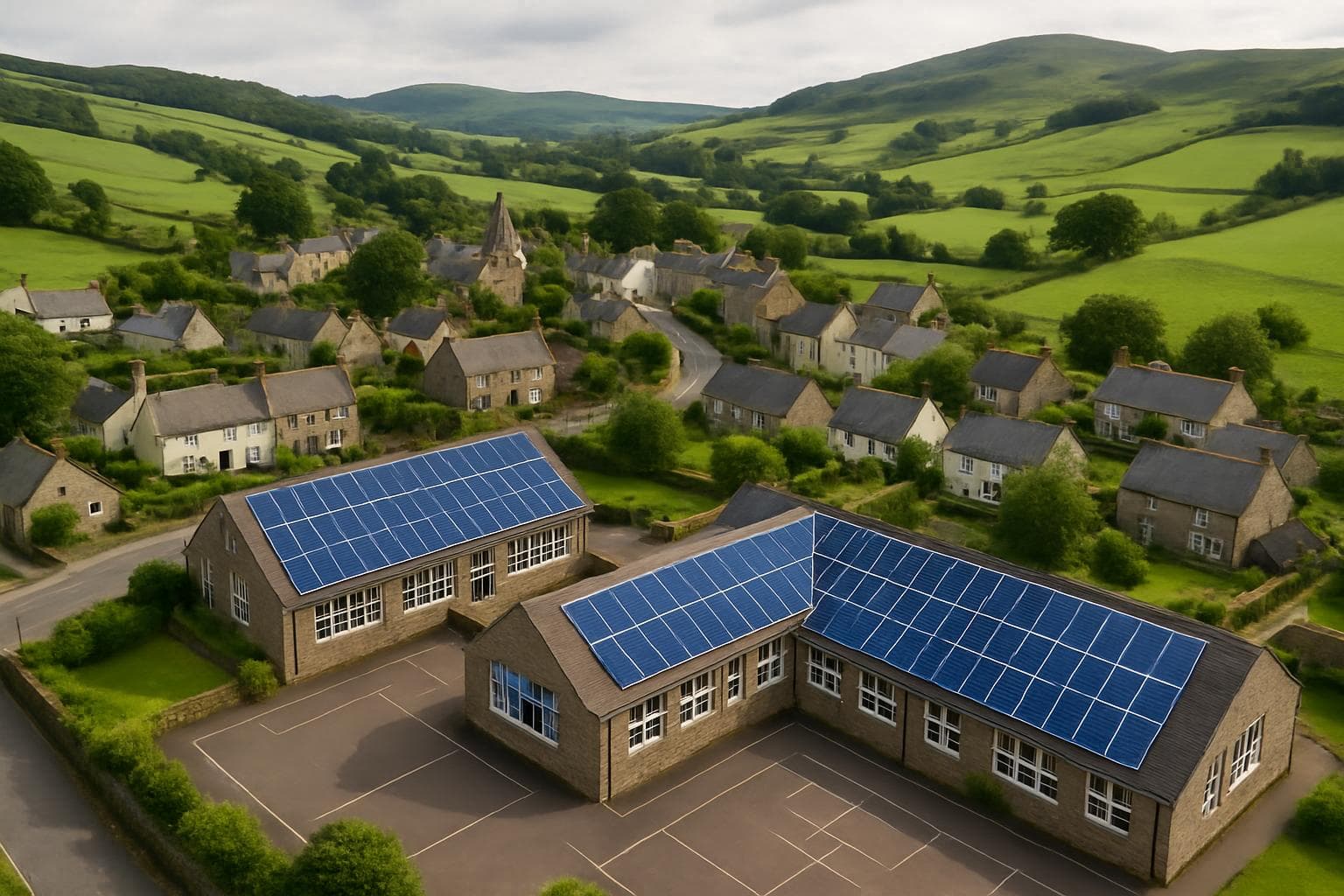
Wallacetown, a community in Ayr, Scotland, is taking significant strides towards revitalization through a solar panel initiative aimed at addressing local deprivation. Spearheaded by resident Denise Sommerville, the project has successfully installed solar panels on three local schools, with the aim of generating approximately £1 million over 25 years. This income is intended to be reinvested into the community, fostering a sense of unity and purpose among residents. "It brings people together and gives them purpose, and something to hope for in the future," Sommerville remarked.
The project, initially proposed by retired engineering lecturer Alan Roseweir, was funded by the Scottish government and Scottish Power Energy Networks. The solar panels, installed over the summer, began generating electricity in August, selling power to the schools at a discounted rate and exporting excess to the national grid. The community controls the profits, which will be allocated to local projects after a year of operation. Ideas for fund allocation are already being discussed, with suggestions ranging from educational technology to support for struggling families.
Meanwhile, the UK government is making strides in its clean energy goals, awarding contracts for 157 solar projects across England, Scotland, and Wales. This move is part of a broader strategy to increase the country's solar power capacity to 45GW by 2030. Energy Secretary Ed Miliband emphasized the importance of community-owned green energy schemes, announcing a £1bn fund to support such initiatives. "Local and community energy is at the heart of our government’s vision," Miliband stated, highlighting the potential for these projects to democratize the energy system and reduce local energy bills.
Despite the positive outlook, some communities express concerns over large solar farms, fearing they could lead to the "mass industrialization" of rural landscapes. The West Burton solar farm, the largest to secure a government contract, has faced local opposition. Nonetheless, the government remains committed to its target of sourcing 95% of Great Britain's electricity from clean sources by 2030, including solar and wind power.
WHAT THIS MIGHT MEAN
The success of Wallacetown's solar initiative could serve as a model for other communities seeking sustainable solutions to economic challenges. If the project achieves its financial and social goals, it may encourage further investment in community energy projects across the UK. However, balancing the expansion of solar farms with local concerns will be crucial. The government's commitment to clean energy targets will likely face scrutiny, particularly if local opposition intensifies. As the UK progresses towards its 2030 goals, the interplay between national energy policies and community interests will be pivotal in shaping the future energy landscape.
Related Articles

Saharan Dust to Illuminate UK Skies with Vivid Sunrises and Sunsets

US Supreme Court Ruling on Tariffs Sparks Uncertainty for UK and Global Trade
Middle East Conflict Drives UK Energy Prices to New Highs

Government Announces £4 Billion Overhaul of SEND Support in England

UK Government Announces Major Overhaul of SEND System with £3.4 Billion Investment

Government Unveils Ambitious Plan to Halve Attainment Gap in England's Schools
Solar Power Initiatives Transforming Communities and Energy Landscape in the UK
In This Article
 Daniel Rivera| Published
 HIGHLIGHTS
- Wallacetown in Ayr, Scotland, has launched a community solar panel project to combat local deprivation and generate income.
- The UK government has awarded contracts for 157 solar projects, aiming to increase solar power capacity to 45GW by 2030.
- Energy Secretary Ed Miliband announced a £1bn fund for community-owned green energy schemes to democratize the energy system.
- Local opposition exists against large solar farms, fearing industrialization of rural areas.
- The UK government targets 95% of electricity from clean sources by 2030, including solar and wind power.
Wallacetown, a community in Ayr, Scotland, is taking significant strides towards revitalization through a solar panel initiative aimed at addressing local deprivation. Spearheaded by resident Denise Sommerville, the project has successfully installed solar panels on three local schools, with the aim of generating approximately £1 million over 25 years. This income is intended to be reinvested into the community, fostering a sense of unity and purpose among residents. "It brings people together and gives them purpose, and something to hope for in the future," Sommerville remarked.
The project, initially proposed by retired engineering lecturer Alan Roseweir, was funded by the Scottish government and Scottish Power Energy Networks. The solar panels, installed over the summer, began generating electricity in August, selling power to the schools at a discounted rate and exporting excess to the national grid. The community controls the profits, which will be allocated to local projects after a year of operation. Ideas for fund allocation are already being discussed, with suggestions ranging from educational technology to support for struggling families.
Meanwhile, the UK government is making strides in its clean energy goals, awarding contracts for 157 solar projects across England, Scotland, and Wales. This move is part of a broader strategy to increase the country's solar power capacity to 45GW by 2030. Energy Secretary Ed Miliband emphasized the importance of community-owned green energy schemes, announcing a £1bn fund to support such initiatives. "Local and community energy is at the heart of our government’s vision," Miliband stated, highlighting the potential for these projects to democratize the energy system and reduce local energy bills.
Despite the positive outlook, some communities express concerns over large solar farms, fearing they could lead to the "mass industrialization" of rural landscapes. The West Burton solar farm, the largest to secure a government contract, has faced local opposition. Nonetheless, the government remains committed to its target of sourcing 95% of Great Britain's electricity from clean sources by 2030, including solar and wind power.
WHAT THIS MIGHT MEAN
The success of Wallacetown's solar initiative could serve as a model for other communities seeking sustainable solutions to economic challenges. If the project achieves its financial and social goals, it may encourage further investment in community energy projects across the UK. However, balancing the expansion of solar farms with local concerns will be crucial. The government's commitment to clean energy targets will likely face scrutiny, particularly if local opposition intensifies. As the UK progresses towards its 2030 goals, the interplay between national energy policies and community interests will be pivotal in shaping the future energy landscape.
Related Articles
Saharan Dust to Illuminate UK Skies with Vivid Sunrises and Sunsets
US Supreme Court Ruling on Tariffs Sparks Uncertainty for UK and Global Trade
Middle East Conflict Drives UK Energy Prices to New Highs
Government Announces £4 Billion Overhaul of SEND Support in England
UK Government Announces Major Overhaul of SEND System with £3.4 Billion Investment
Government Unveils Ambitious Plan to Halve Attainment Gap in England's Schools