
UK Government Unveils Ambitious Animal Welfare Reforms
In This Article
HIGHLIGHTS
- The UK government plans to ban hen cages and pig farrowing crates as part of a new animal welfare strategy by 2030.
- The reforms aim to transition to non-cage systems and include consultations on banning enriched colony cages.
- The strategy also targets puppy farming, trail hunting, and the use of electric shock collars for dogs.
- The National Farmers' Union stresses the need for import standards to match domestic welfare laws to prevent unfair competition.
- Animal welfare groups, such as Compassion in World Farming, praise the reforms as a significant step forward.
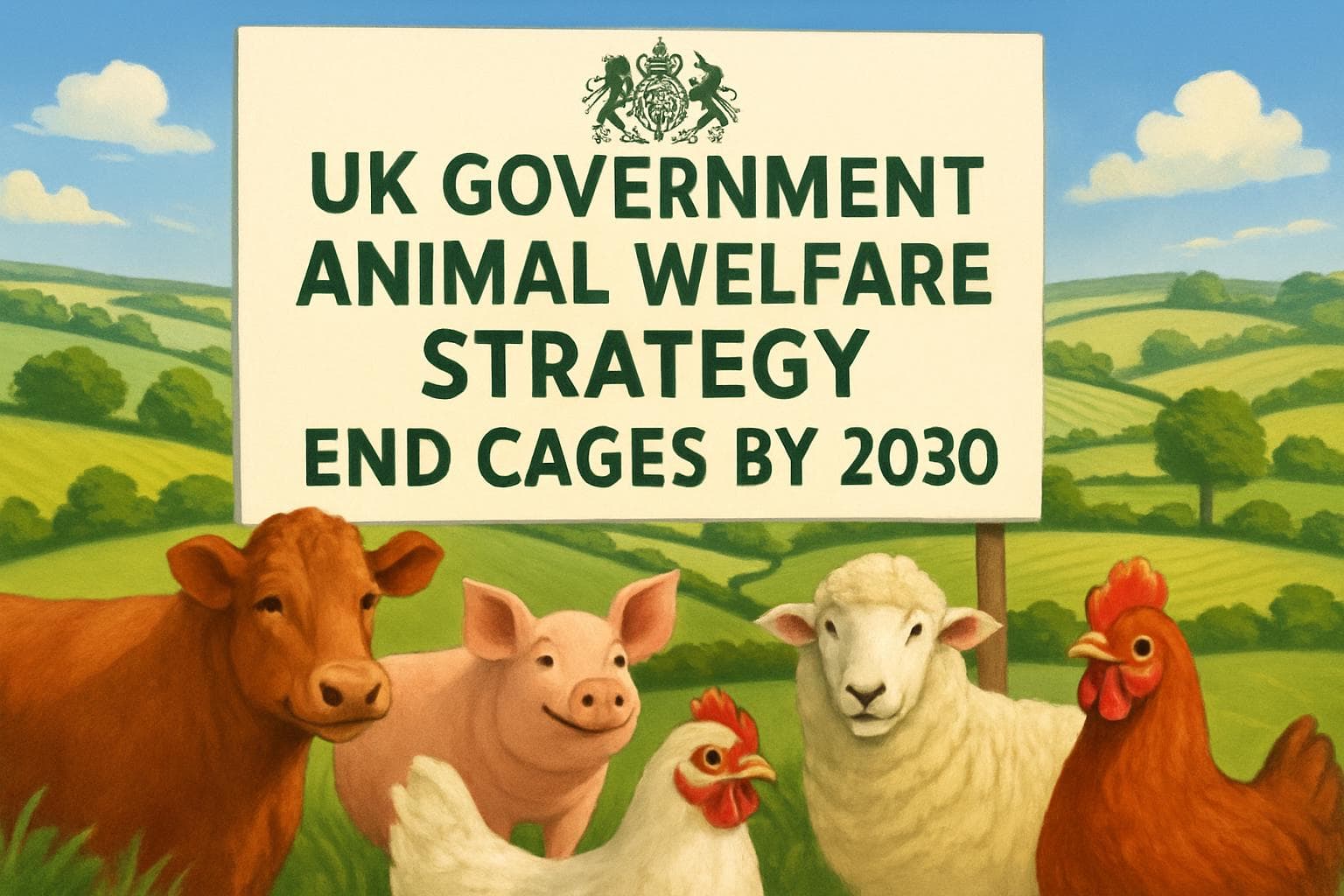
In a landmark move, the UK government has announced plans to ban hen cages and pig farrowing crates as part of a comprehensive animal welfare strategy set to be implemented by 2030. The reforms, described by Environment Secretary Emma Reynolds as "the most ambitious animal welfare strategy in a generation," aim to significantly improve living conditions for farmed animals across England.
Transition to Non-Cage Systems
The proposed changes will see the phasing out of enriched colony cages, which currently house about 21% of the UK's hens. These cages, although larger than the previously banned battery cages, still restrict hens to a space roughly the size of an A4 sheet of paper. The government plans to consult with the farming industry on transitioning to non-cage systems, ensuring that the welfare needs of chickens are met.
Pig farrowing crates, used to prevent sows from rolling over onto their young, will also be banned. These crates have been criticized for severely restricting the movement of sows. Anthony Field, head of Compassion in World Farming UK, hailed the reforms as a "landmark step forward," noting that over 7 million hens and 150,000 pigs will benefit annually.
Broader Animal Welfare Measures
The strategy extends beyond farm animals, targeting practices such as puppy farming and trail hunting. The government will also consult on banning electric shock collars for dogs and snare traps, which are known to cause suffering to animals. Humane slaughter requirements for farmed fish are also included to minimize avoidable pain.
Ensuring Fair Competition
The National Farmers' Union (NFU) has emphasized the importance of aligning import standards with domestic welfare laws to prevent British farmers from facing unfair competition. NFU President Tom Bradshaw warned that without such measures, the UK risks exporting its industry overseas due to cheaper, lower-standard imports.
The Department for Environment, Food and Rural Affairs (Defra) has assured that food standards will not be lowered and that high animal welfare standards will be upheld in trade agreements.
WHAT THIS MIGHT MEAN
As the UK government moves forward with these reforms, the agricultural sector may face significant adjustments. Farmers will need support to transition to non-cage systems, which could involve financial incentives or subsidies. The success of these reforms will largely depend on the government's ability to enforce import standards that match domestic welfare laws, ensuring a level playing field for UK farmers.
Politically, the strategy could face opposition from rural communities and industries reliant on current practices. However, the widespread support from animal welfare groups suggests a strong public mandate for these changes. As consultations progress, the government will need to balance the interests of various stakeholders to achieve its ambitious animal welfare goals.
Related Articles

Government Announces £4 Billion Overhaul of SEND Support in England

Prince Andrew's Ties to Epstein Under Scrutiny Amid Calls for Inquiry

Government Criticized for Mishandling Maccabi Tel Aviv Fan Ban

Prince Andrew's Arrest Intensifies Scrutiny on Royal Succession and Prince William's Future Role

UK Government's SEND Reforms: A Critical Turning Point for Special Education

UK Defence Faces Scrutiny Amid Ajax Armoured Vehicle Delays and Soldier Safety Concerns
UK Government Unveils Ambitious Animal Welfare Reforms
In This Article
 Ethan Brooks| Published
 HIGHLIGHTS
- The UK government plans to ban hen cages and pig farrowing crates as part of a new animal welfare strategy by 2030.
- The reforms aim to transition to non-cage systems and include consultations on banning enriched colony cages.
- The strategy also targets puppy farming, trail hunting, and the use of electric shock collars for dogs.
- The National Farmers' Union stresses the need for import standards to match domestic welfare laws to prevent unfair competition.
- Animal welfare groups, such as Compassion in World Farming, praise the reforms as a significant step forward.
In a landmark move, the UK government has announced plans to ban hen cages and pig farrowing crates as part of a comprehensive animal welfare strategy set to be implemented by 2030. The reforms, described by Environment Secretary Emma Reynolds as "the most ambitious animal welfare strategy in a generation," aim to significantly improve living conditions for farmed animals across England.
Transition to Non-Cage Systems
The proposed changes will see the phasing out of enriched colony cages, which currently house about 21% of the UK's hens. These cages, although larger than the previously banned battery cages, still restrict hens to a space roughly the size of an A4 sheet of paper. The government plans to consult with the farming industry on transitioning to non-cage systems, ensuring that the welfare needs of chickens are met.
Pig farrowing crates, used to prevent sows from rolling over onto their young, will also be banned. These crates have been criticized for severely restricting the movement of sows. Anthony Field, head of Compassion in World Farming UK, hailed the reforms as a "landmark step forward," noting that over 7 million hens and 150,000 pigs will benefit annually.
Broader Animal Welfare Measures
The strategy extends beyond farm animals, targeting practices such as puppy farming and trail hunting. The government will also consult on banning electric shock collars for dogs and snare traps, which are known to cause suffering to animals. Humane slaughter requirements for farmed fish are also included to minimize avoidable pain.
Ensuring Fair Competition
The National Farmers' Union (NFU) has emphasized the importance of aligning import standards with domestic welfare laws to prevent British farmers from facing unfair competition. NFU President Tom Bradshaw warned that without such measures, the UK risks exporting its industry overseas due to cheaper, lower-standard imports.
The Department for Environment, Food and Rural Affairs (Defra) has assured that food standards will not be lowered and that high animal welfare standards will be upheld in trade agreements.
WHAT THIS MIGHT MEAN
As the UK government moves forward with these reforms, the agricultural sector may face significant adjustments. Farmers will need support to transition to non-cage systems, which could involve financial incentives or subsidies. The success of these reforms will largely depend on the government's ability to enforce import standards that match domestic welfare laws, ensuring a level playing field for UK farmers.
Politically, the strategy could face opposition from rural communities and industries reliant on current practices. However, the widespread support from animal welfare groups suggests a strong public mandate for these changes. As consultations progress, the government will need to balance the interests of various stakeholders to achieve its ambitious animal welfare goals.
Related Articles
Government Announces £4 Billion Overhaul of SEND Support in England
Prince Andrew's Ties to Epstein Under Scrutiny Amid Calls for Inquiry
Government Criticized for Mishandling Maccabi Tel Aviv Fan Ban
Prince Andrew's Arrest Intensifies Scrutiny on Royal Succession and Prince William's Future Role
UK Government's SEND Reforms: A Critical Turning Point for Special Education
UK Defence Faces Scrutiny Amid Ajax Armoured Vehicle Delays and Soldier Safety Concerns