
UK Government Launches Major Initiative to Combat Youth Unemployment
In This Article
HIGHLIGHTS
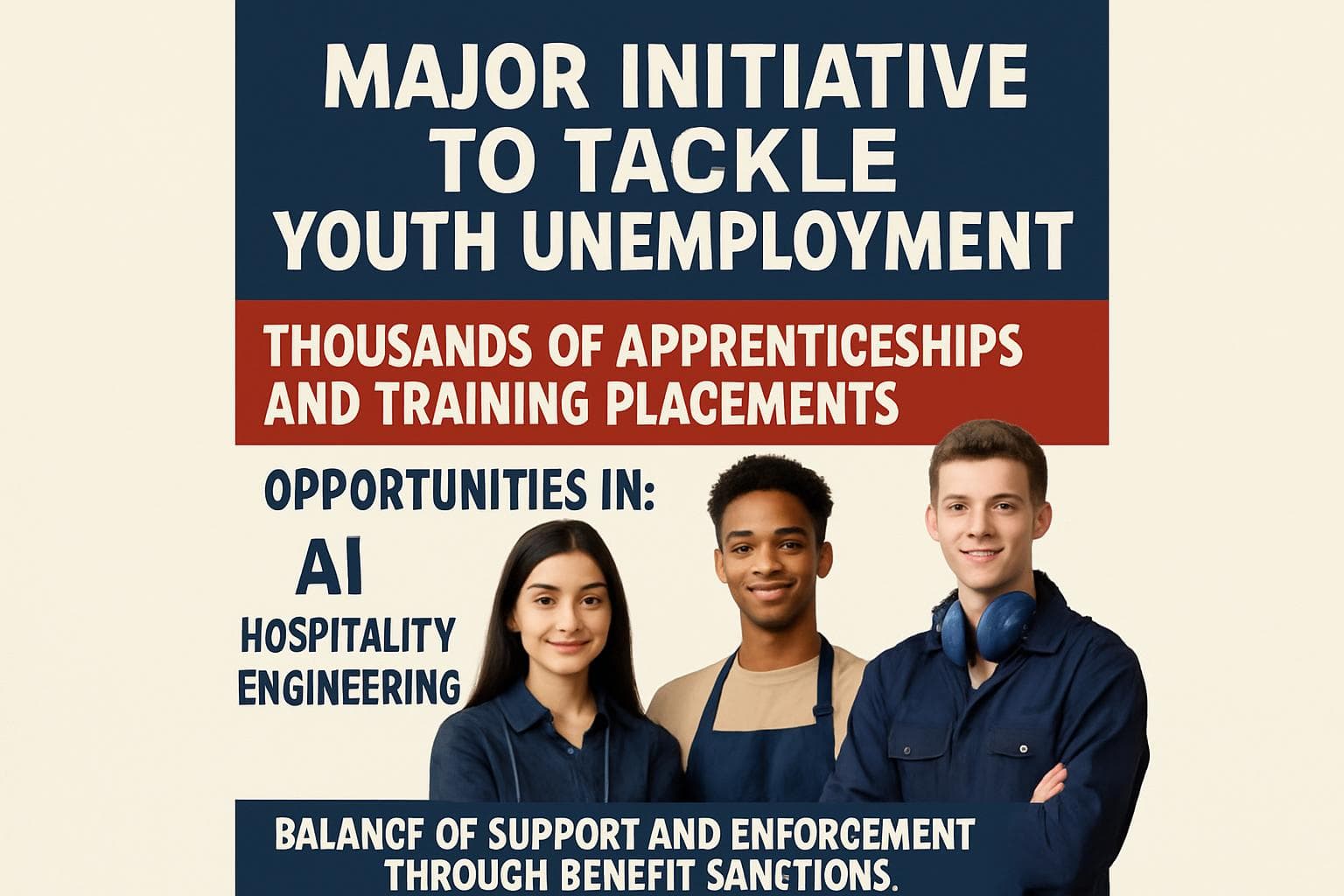
- The UK government has announced a £725 million initiative to create 50,000 new apprenticeships, targeting sectors like AI, hospitality, and engineering.
- An additional £820 million will fund 350,000 training and work experience placements, with 55,000 guaranteed jobs in high-need areas by spring 2026.
- Young people on Universal Credit risk benefit cuts if they do not engage with the new job opportunities.
- The number of young people classified as Neets has been rising, with nearly a million currently not in employment, education, or training.
- Critics argue that the threat of benefit sanctions may push young people into unsuitable jobs, potentially harming long-term employment prospects.
In a bold move to address the escalating youth unemployment crisis, the UK government has unveiled a comprehensive plan to create 50,000 new apprenticeships and 350,000 training and work experience placements. This initiative, backed by a £725 million funding package, aims to reverse the decline in apprenticeship starts over the past decade and provide young people with viable career pathways in sectors such as artificial intelligence, hospitality, and engineering.
Apprenticeship Expansion and Job Placements
The government’s strategy includes fully funding apprenticeships for individuals under 25 at small and medium-sized businesses, eliminating the 5% contribution previously required. This effort is part of a broader £820 million investment to facilitate 350,000 training and work experience placements, with 55,000 guaranteed jobs set to roll out by spring 2026 in regions with high youth unemployment, including Birmingham, Greater Manchester, and parts of Wales and Scotland.
Support and Sanctions for Young Job Seekers
Work and Pensions Secretary Pat McFadden emphasized the dual nature of the scheme, which offers opportunities but also imposes expectations. Young people on Universal Credit who fail to engage with the new job opportunities may face benefit sanctions. McFadden stated, "This is an offer on one hand, but it’s an expectation on the other," highlighting the government's commitment to reducing the number of Neets—young people not in employment, education, or training.
Criticism and Concerns
While the initiative has been welcomed by some as a necessary step to tackle youth unemployment, critics have raised concerns about the potential negative impact of benefit sanctions. Ben Harrison, director of the Work Foundation, warned that pushing young people into unsuitable jobs could harm their long-term employment prospects. He stressed the importance of connecting individuals to "good" jobs that offer a living wage and opportunities for advancement.
WHAT THIS MIGHT MEAN
As the UK government rolls out this ambitious plan, the success of the initiative will largely depend on its execution and the quality of jobs offered. If the program effectively connects young people to sustainable employment, it could significantly reduce the number of Neets and bolster the economy. However, the threat of benefit sanctions remains controversial, with potential legal and social implications if young people are pressured into precarious employment. Moving forward, the government will need to balance enforcement with support to ensure that the initiative leads to meaningful and lasting employment outcomes for the nation's youth.
Related Articles

Saharan Dust to Illuminate UK Skies with Vivid Sunrises and Sunsets

Sisters Tragically Drown at Eryri National Park's Watkin Path

Labour MP's Husband Arrested in UK-China Espionage Probe

Police Federation Chief Arrested Amid Fraud Investigation

Birmingham's Proactive Approach to Measles Outbreak Offers Lessons for North London

Government Criticized for Mishandling Maccabi Tel Aviv Fan Ban
UK Government Launches Major Initiative to Combat Youth Unemployment
In This Article
 Aya Nakamura| Published
 HIGHLIGHTS
- The UK government has announced a £725 million initiative to create 50,000 new apprenticeships, targeting sectors like AI, hospitality, and engineering.
- An additional £820 million will fund 350,000 training and work experience placements, with 55,000 guaranteed jobs in high-need areas by spring 2026.
- Young people on Universal Credit risk benefit cuts if they do not engage with the new job opportunities.
- The number of young people classified as Neets has been rising, with nearly a million currently not in employment, education, or training.
- Critics argue that the threat of benefit sanctions may push young people into unsuitable jobs, potentially harming long-term employment prospects.
In a bold move to address the escalating youth unemployment crisis, the UK government has unveiled a comprehensive plan to create 50,000 new apprenticeships and 350,000 training and work experience placements. This initiative, backed by a £725 million funding package, aims to reverse the decline in apprenticeship starts over the past decade and provide young people with viable career pathways in sectors such as artificial intelligence, hospitality, and engineering.
Apprenticeship Expansion and Job Placements
The government’s strategy includes fully funding apprenticeships for individuals under 25 at small and medium-sized businesses, eliminating the 5% contribution previously required. This effort is part of a broader £820 million investment to facilitate 350,000 training and work experience placements, with 55,000 guaranteed jobs set to roll out by spring 2026 in regions with high youth unemployment, including Birmingham, Greater Manchester, and parts of Wales and Scotland.
Support and Sanctions for Young Job Seekers
Work and Pensions Secretary Pat McFadden emphasized the dual nature of the scheme, which offers opportunities but also imposes expectations. Young people on Universal Credit who fail to engage with the new job opportunities may face benefit sanctions. McFadden stated, "This is an offer on one hand, but it’s an expectation on the other," highlighting the government's commitment to reducing the number of Neets—young people not in employment, education, or training.
Criticism and Concerns
While the initiative has been welcomed by some as a necessary step to tackle youth unemployment, critics have raised concerns about the potential negative impact of benefit sanctions. Ben Harrison, director of the Work Foundation, warned that pushing young people into unsuitable jobs could harm their long-term employment prospects. He stressed the importance of connecting individuals to "good" jobs that offer a living wage and opportunities for advancement.
WHAT THIS MIGHT MEAN
As the UK government rolls out this ambitious plan, the success of the initiative will largely depend on its execution and the quality of jobs offered. If the program effectively connects young people to sustainable employment, it could significantly reduce the number of Neets and bolster the economy. However, the threat of benefit sanctions remains controversial, with potential legal and social implications if young people are pressured into precarious employment. Moving forward, the government will need to balance enforcement with support to ensure that the initiative leads to meaningful and lasting employment outcomes for the nation's youth.
Related Articles
Saharan Dust to Illuminate UK Skies with Vivid Sunrises and Sunsets
Sisters Tragically Drown at Eryri National Park's Watkin Path
Labour MP's Husband Arrested in UK-China Espionage Probe
Police Federation Chief Arrested Amid Fraud Investigation
Birmingham's Proactive Approach to Measles Outbreak Offers Lessons for North London
Government Criticized for Mishandling Maccabi Tel Aviv Fan Ban