
UK Government Pushes Alan Turing Institute to Prioritize Defence in AI Research
In This Article
HIGHLIGHTS
- UK Science and Technology Secretary Peter Kyle has urged the Alan Turing Institute to prioritize defence and national security in its AI research.
- The government has linked future funding to the institute's alignment with this new focus, suggesting leadership changes are necessary.
- The Alan Turing Institute, which received a £100m grant last year, is undergoing restructuring amid concerns about its leadership and strategic direction.
- The institute's shift towards defence could diminish its focus on health and environmental research, sparking debate about its national role.
- Critics argue that a focus on defence and security could narrow the institute's scope, challenging its status as a national AI research body.
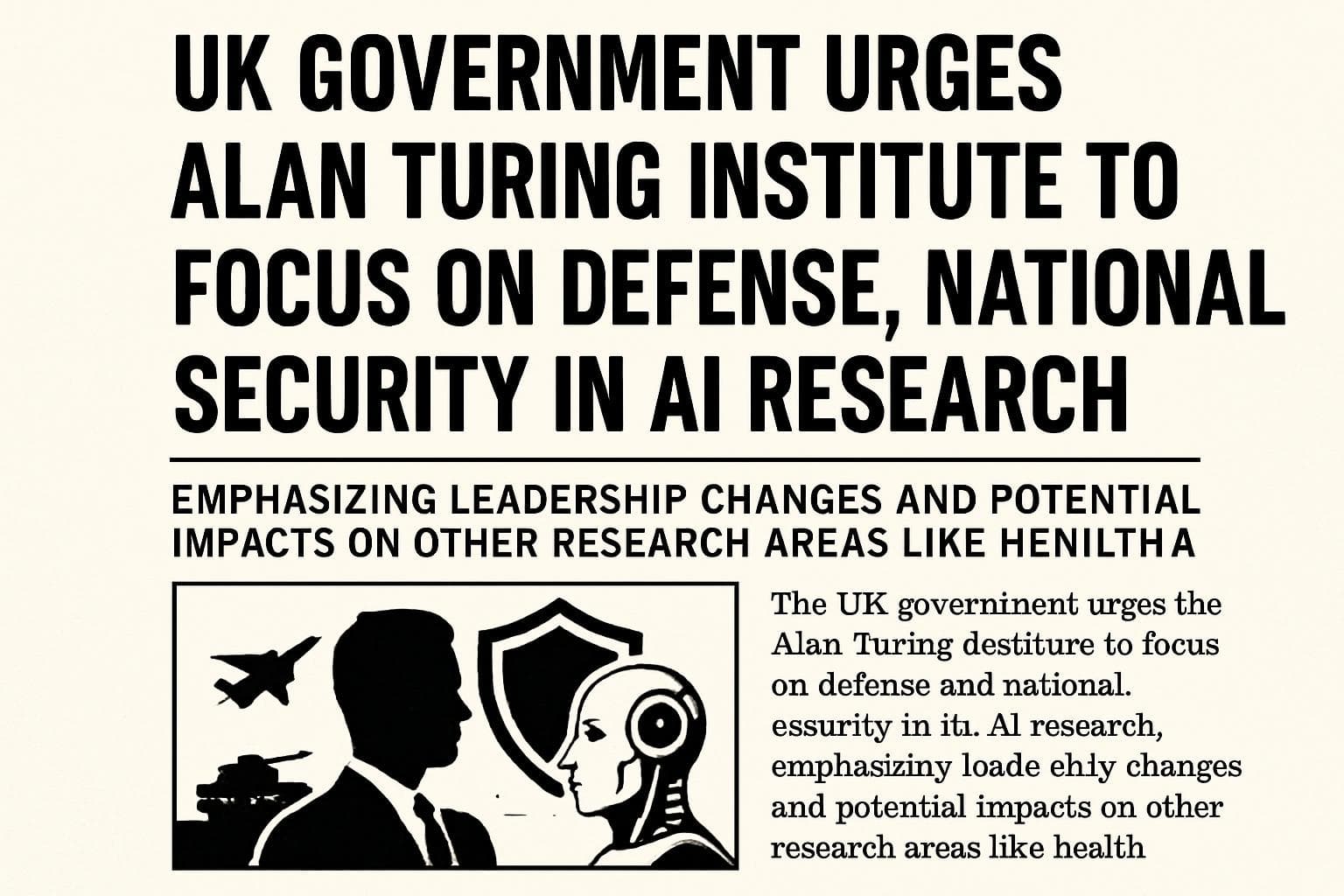
The UK government has called for a significant shift in focus at the Alan Turing Institute, urging the national AI research body to prioritize defence and national security. Science and Technology Secretary Peter Kyle has written to the institute's leadership, emphasizing the critical role of AI in bolstering the UK's national security. The letter suggests that future government funding will depend on the institute's ability to align with this new strategic direction.
Government's Strategic Shift
In his letter to the institute's chair, Dr. Douglas Gurr, Kyle highlighted the need for the Alan Turing Institute to reform its leadership and focus on defence, national security, and sovereign capabilities. This move aligns with Prime Minister Sir Keir Starmer's commitment to increasing UK defence spending to 5% of national income by 2035, with a particular emphasis on AI technology. The institute, which was established in 2015 and received a £100m grant last year, is expected to strengthen its ties with the UK's security, defence, and intelligence communities.
Leadership and Structural Changes
The call for a strategic pivot comes amid ongoing restructuring at the institute, led by Chief Executive Jean Innes. The restructuring has faced criticism, with one in five staff expressing concerns about the institute's credibility. Kyle's letter indicates that leadership changes are necessary to realize the government's vision, suggesting that the current executive team may lack the relevant background to lead this transition effectively.
Debate Over Institute's National Role
The proposed shift in focus has sparked debate about the institute's role as a national AI research body. Critics, including Dame Wendy Hall, a prominent computer science professor, argue that a focus on defence and security could narrow the institute's scope, challenging its status as a national institute. The Alan Turing Institute has traditionally focused on AI and data science research in areas such as health and environmental sustainability, alongside national security.
Future Funding and Implications
The government has indicated that the institute's longer-term funding arrangement could be reviewed next year, with an increase in defence and national security staff embedded within the institute. This strategic shift reflects a broader government focus on national security within its AI strategy, as evidenced by the recent renaming of the AI Safety Institute to the AI Security Institute.
WHAT THIS MIGHT MEAN
The government's push for the Alan Turing Institute to prioritize defence and national security could have significant implications for the UK's AI research landscape. If the institute successfully aligns with this new focus, it may secure continued government funding and strengthen its role in national security. However, this shift could also lead to a reduction in research on health and environmental issues, potentially sparking further debate about the institute's national role. As the institute undergoes restructuring, its ability to balance these competing priorities will be crucial in determining its future direction and impact on the UK's AI capabilities.
Related Articles

UK Government Considers Social Media Ban for Under-16s Amidst Growing Concerns

UK Government Launches Campaign to Tackle Harmful Online Content for Children

UK Government Considers Removing Andrew Mountbatten-Windsor from Royal Succession Amid Arrest

Labour's Push for Closer EU Ties Sparks Debate

Police Probe Peter Mandelson Over Alleged Leaks to Jeffrey Epstein

Ukraine Struggles with Power Outages Amid Renewed Russian Strikes as Peace Talks Continue
UK Government Pushes Alan Turing Institute to Prioritize Defence in AI Research
In This Article
 Himanshu Kaushik| Published
 HIGHLIGHTS
- UK Science and Technology Secretary Peter Kyle has urged the Alan Turing Institute to prioritize defence and national security in its AI research.
- The government has linked future funding to the institute's alignment with this new focus, suggesting leadership changes are necessary.
- The Alan Turing Institute, which received a £100m grant last year, is undergoing restructuring amid concerns about its leadership and strategic direction.
- The institute's shift towards defence could diminish its focus on health and environmental research, sparking debate about its national role.
- Critics argue that a focus on defence and security could narrow the institute's scope, challenging its status as a national AI research body.
The UK government has called for a significant shift in focus at the Alan Turing Institute, urging the national AI research body to prioritize defence and national security. Science and Technology Secretary Peter Kyle has written to the institute's leadership, emphasizing the critical role of AI in bolstering the UK's national security. The letter suggests that future government funding will depend on the institute's ability to align with this new strategic direction.
Government's Strategic Shift
In his letter to the institute's chair, Dr. Douglas Gurr, Kyle highlighted the need for the Alan Turing Institute to reform its leadership and focus on defence, national security, and sovereign capabilities. This move aligns with Prime Minister Sir Keir Starmer's commitment to increasing UK defence spending to 5% of national income by 2035, with a particular emphasis on AI technology. The institute, which was established in 2015 and received a £100m grant last year, is expected to strengthen its ties with the UK's security, defence, and intelligence communities.
Leadership and Structural Changes
The call for a strategic pivot comes amid ongoing restructuring at the institute, led by Chief Executive Jean Innes. The restructuring has faced criticism, with one in five staff expressing concerns about the institute's credibility. Kyle's letter indicates that leadership changes are necessary to realize the government's vision, suggesting that the current executive team may lack the relevant background to lead this transition effectively.
Debate Over Institute's National Role
The proposed shift in focus has sparked debate about the institute's role as a national AI research body. Critics, including Dame Wendy Hall, a prominent computer science professor, argue that a focus on defence and security could narrow the institute's scope, challenging its status as a national institute. The Alan Turing Institute has traditionally focused on AI and data science research in areas such as health and environmental sustainability, alongside national security.
Future Funding and Implications
The government has indicated that the institute's longer-term funding arrangement could be reviewed next year, with an increase in defence and national security staff embedded within the institute. This strategic shift reflects a broader government focus on national security within its AI strategy, as evidenced by the recent renaming of the AI Safety Institute to the AI Security Institute.
WHAT THIS MIGHT MEAN
The government's push for the Alan Turing Institute to prioritize defence and national security could have significant implications for the UK's AI research landscape. If the institute successfully aligns with this new focus, it may secure continued government funding and strengthen its role in national security. However, this shift could also lead to a reduction in research on health and environmental issues, potentially sparking further debate about the institute's national role. As the institute undergoes restructuring, its ability to balance these competing priorities will be crucial in determining its future direction and impact on the UK's AI capabilities.
Related Articles
UK Government Considers Social Media Ban for Under-16s Amidst Growing Concerns
UK Government Launches Campaign to Tackle Harmful Online Content for Children
UK Government Considers Removing Andrew Mountbatten-Windsor from Royal Succession Amid Arrest
Labour's Push for Closer EU Ties Sparks Debate
Police Probe Peter Mandelson Over Alleged Leaks to Jeffrey Epstein
Ukraine Struggles with Power Outages Amid Renewed Russian Strikes as Peace Talks Continue