
UK Agencies Warn of Online Dangers for Children as New Safety Regulations Take Effect
In This Article
HIGHLIGHTS
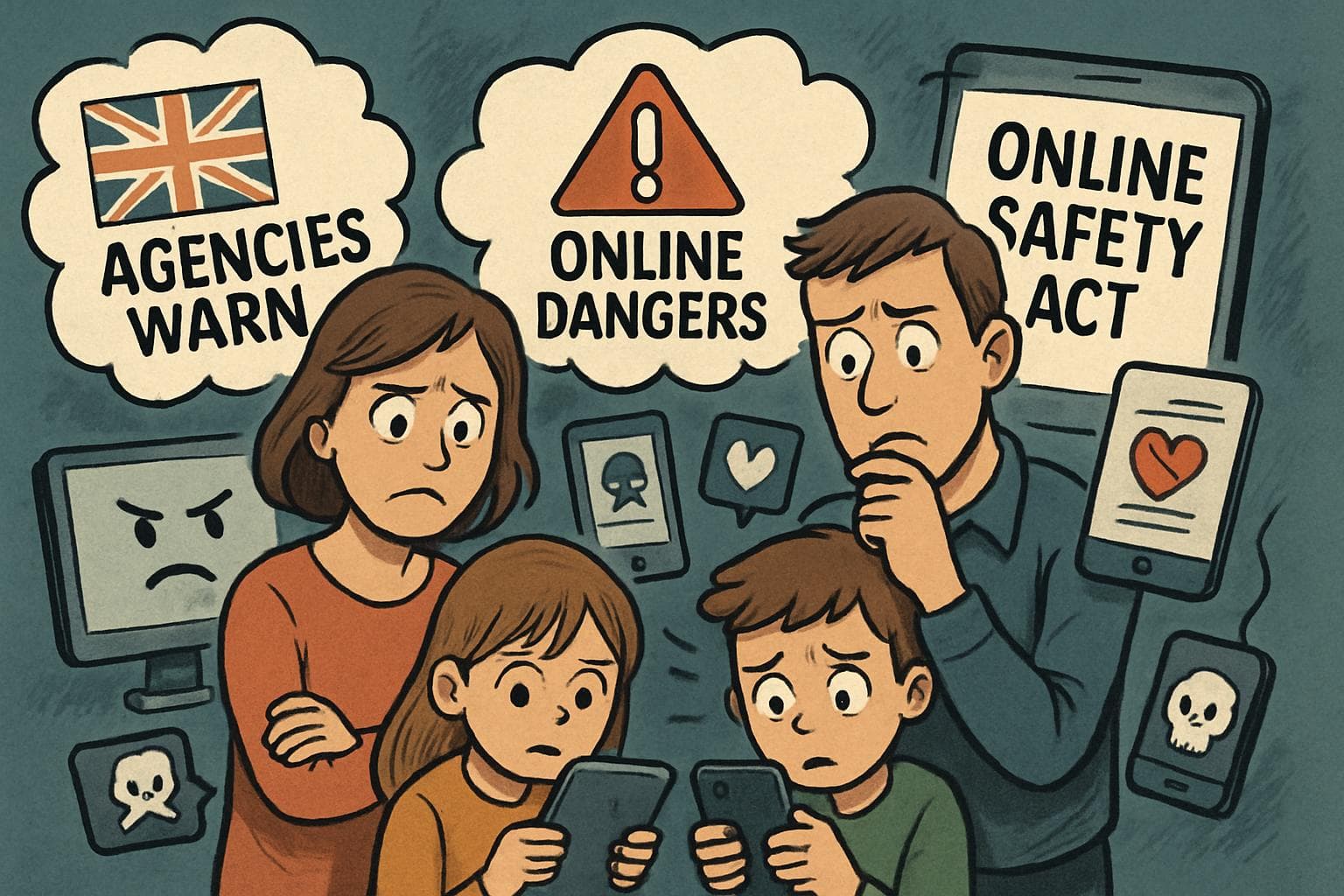
- UK agencies warn parents about the risk of children encountering harmful online content, including terrorism-related material, during summer holidays.
- The Online Safety Act mandates social media companies to implement child safety measures, risking fines for non-compliance.
- MI5 reports a concerning rise in young people involved in terrorism, with 42 under-17s investigated in 2023.
- The National Crime Agency highlights the threat from violent online gangs predominantly involving teenage boys.
- The new internet safety rules aim to protect children from harmful content, including pornography and self-harm material.
As the summer holidays unfold, UK agencies have issued a stark warning to parents about the potential dangers children face online. Counter Terrorism Policing (CTP), MI5, and the National Crime Agency (NCA) have jointly urged parents to be vigilant about their children's internet use, emphasizing the risk of exposure to harmful content, including terrorism-related material.
Rising Concerns Over Online Radicalization
The agencies report an alarming trend of young people being exposed to extreme content, such as sexual violence, self-harm, and terrorism. Vicki Evans, CTP's senior national coordinator for Prevent, highlighted the challenge of maintaining online safety in an ever-evolving digital landscape. "We want parents to empower their children to know what to do if they come across inappropriate content online," she stated.
MI5's Director General, Sir Ken McCallum, expressed concern over the increasing number of young people involved in terrorism, with 42 individuals under 17 investigated in 2023. The NCA's Alexander Murray pointed to the growing threat from violent online gangs, predominantly composed of teenage boys, engaging in various criminal activities.
New Internet Safety Regulations
In response to these concerns, the UK government has enacted the Online Safety Act, effective from tomorrow. This legislation requires social media companies to implement robust child safety measures or face significant fines. The act also mandates age verification for pornography websites, using methods like photo-ID matching and digital ID wallets.
Peter Kyle, the science and technology secretary, described the act as a "watershed moment" in combating toxic online experiences. The legislation, which applies to over 100,000 companies, aims to protect children from harmful content, including pornography and material promoting self-harm.
A Push for Greater Online Safety
The Online Safety Act represents a significant step in regulating internet safety in the UK, driven by longstanding concerns about social media's impact on mental health. Campaigners, including the family of Molly Russell, a 14-year-old who took her own life after viewing harmful content online, have been instrumental in advocating for these changes.
WHAT THIS MIGHT MEAN
The implementation of the Online Safety Act marks a pivotal moment in the UK's efforts to safeguard children online. As social media companies adapt to these new regulations, their effectiveness in curbing harmful content will be closely monitored. Experts suggest that while the act is a significant step forward, continuous updates and international cooperation may be necessary to address the evolving digital landscape.
The rise in youth involvement in terrorism underscores the need for comprehensive strategies that combine legal measures with educational initiatives. As authorities work to counter online radicalization, collaboration between parents, educators, and law enforcement will be crucial in protecting young people from extremist influences.
Looking ahead, the success of these initiatives will depend on the ability of regulators and tech companies to enforce compliance and adapt to emerging threats, ensuring a safer online environment for future generations.
Related Articles

Police Federation Chief Arrested Amid Fraud Investigation

Middle East Conflict Drives UK Energy Prices to New Highs

Canada and Australia Forge Strategic Partnership Amid Global Uncertainty
UK Government to Reform Asylum Seeker Support and Employment Policies

UK Faces Dilemmas Amid Iran Conflict and China Spying Allegations

UK Reinforces Military Presence in Cyprus Amid Middle East Tensions
UK Agencies Warn of Online Dangers for Children as New Safety Regulations Take Effect
In This Article
 Sofia Romano| Published
 HIGHLIGHTS
- UK agencies warn parents about the risk of children encountering harmful online content, including terrorism-related material, during summer holidays.
- The Online Safety Act mandates social media companies to implement child safety measures, risking fines for non-compliance.
- MI5 reports a concerning rise in young people involved in terrorism, with 42 under-17s investigated in 2023.
- The National Crime Agency highlights the threat from violent online gangs predominantly involving teenage boys.
- The new internet safety rules aim to protect children from harmful content, including pornography and self-harm material.
As the summer holidays unfold, UK agencies have issued a stark warning to parents about the potential dangers children face online. Counter Terrorism Policing (CTP), MI5, and the National Crime Agency (NCA) have jointly urged parents to be vigilant about their children's internet use, emphasizing the risk of exposure to harmful content, including terrorism-related material.
Rising Concerns Over Online Radicalization
The agencies report an alarming trend of young people being exposed to extreme content, such as sexual violence, self-harm, and terrorism. Vicki Evans, CTP's senior national coordinator for Prevent, highlighted the challenge of maintaining online safety in an ever-evolving digital landscape. "We want parents to empower their children to know what to do if they come across inappropriate content online," she stated.
MI5's Director General, Sir Ken McCallum, expressed concern over the increasing number of young people involved in terrorism, with 42 individuals under 17 investigated in 2023. The NCA's Alexander Murray pointed to the growing threat from violent online gangs, predominantly composed of teenage boys, engaging in various criminal activities.
New Internet Safety Regulations
In response to these concerns, the UK government has enacted the Online Safety Act, effective from tomorrow. This legislation requires social media companies to implement robust child safety measures or face significant fines. The act also mandates age verification for pornography websites, using methods like photo-ID matching and digital ID wallets.
Peter Kyle, the science and technology secretary, described the act as a "watershed moment" in combating toxic online experiences. The legislation, which applies to over 100,000 companies, aims to protect children from harmful content, including pornography and material promoting self-harm.
A Push for Greater Online Safety
The Online Safety Act represents a significant step in regulating internet safety in the UK, driven by longstanding concerns about social media's impact on mental health. Campaigners, including the family of Molly Russell, a 14-year-old who took her own life after viewing harmful content online, have been instrumental in advocating for these changes.
WHAT THIS MIGHT MEAN
The implementation of the Online Safety Act marks a pivotal moment in the UK's efforts to safeguard children online. As social media companies adapt to these new regulations, their effectiveness in curbing harmful content will be closely monitored. Experts suggest that while the act is a significant step forward, continuous updates and international cooperation may be necessary to address the evolving digital landscape.
The rise in youth involvement in terrorism underscores the need for comprehensive strategies that combine legal measures with educational initiatives. As authorities work to counter online radicalization, collaboration between parents, educators, and law enforcement will be crucial in protecting young people from extremist influences.
Looking ahead, the success of these initiatives will depend on the ability of regulators and tech companies to enforce compliance and adapt to emerging threats, ensuring a safer online environment for future generations.
Related Articles
Police Federation Chief Arrested Amid Fraud Investigation
Middle East Conflict Drives UK Energy Prices to New Highs
Canada and Australia Forge Strategic Partnership Amid Global Uncertainty
UK Government to Reform Asylum Seeker Support and Employment Policies
UK Faces Dilemmas Amid Iran Conflict and China Spying Allegations
UK Reinforces Military Presence in Cyprus Amid Middle East Tensions